How to Cook a Prime Rib Roast: Time, Temperature and Doneness
To cook a prime rib roast, season it ahead, roast it at 450°F for 15 to 20 minutes to brown the outside, then lower the oven to 325°F and cook until a thermometer in the thickest part reads 5 to 10 degrees below the doneness you want. That is about 13 to 15 minutes per pound for medium-rare. Rest the roast for 20 to 30 minutes before you carve it. Here's how long it takes by doneness, how to read the thermometer against USDA's 145°F guidance, how much to buy, and how to carve and serve it, with Jamie Oliver's Sunday roast.

How long to cook a prime rib roast
These are starting points for a roast cooked at 325°F after the first 15 to 20 minutes of browning, in minutes per pound of the whole roast:
Rare: 11 to 13 minutes per pound
Medium-rare: 13 to 15 minutes per pound
Medium: 15 to 17 minutes per pound
Medium-well: 17 to 19 minutes per pound
So a 10 pound roast cooked to medium-rare takes about 2¼ to 2½ hours at 325°F. Recipes disagree by several minutes per pound, mostly because of oven temperature: a roast that starts in a 450°F oven, like this one, cooks faster than one held at 325°F throughout. Treat the times as a guide and cook to the thermometer, because whether the roast has a bone, how it is shaped and how cold it was when it went in all change the time. Start checking the temperature about 30 minutes before the earliest time, because the thermometer, not the clock, tells you when it is ready.
What temperature to cook it at, and when to take it out
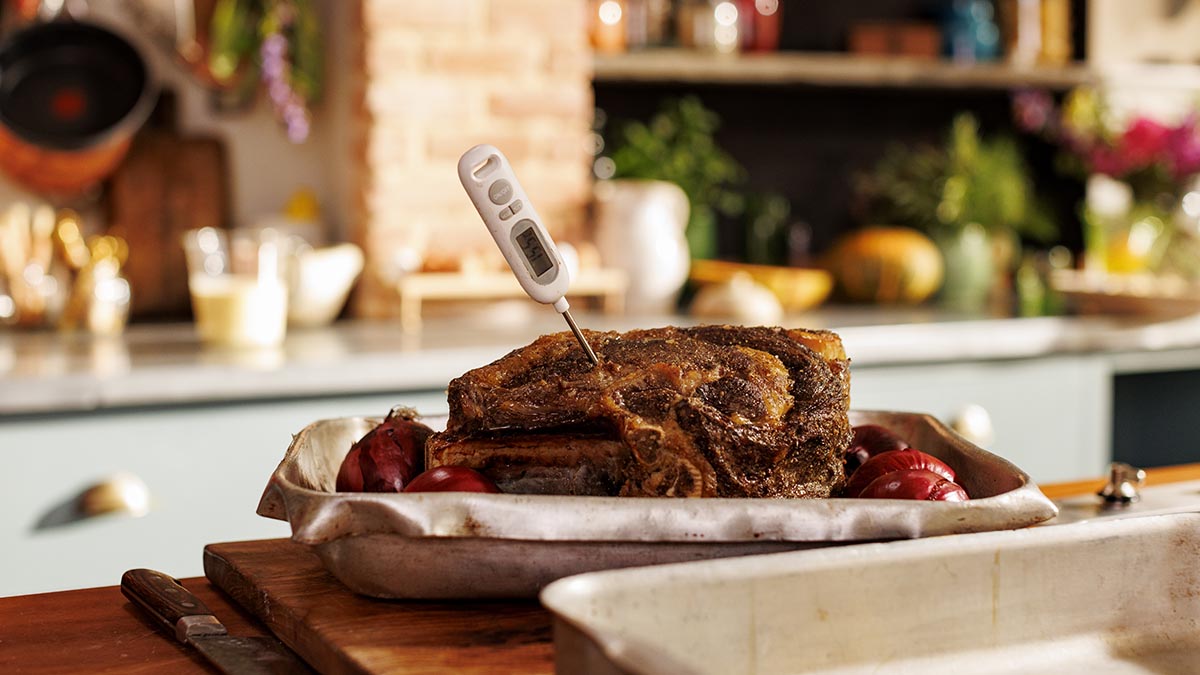
Start with the oven at 450°F and roast the seasoned meat for 15 to 20 minutes to brown the outside. Then lower it to 325°F and keep going until a thermometer pushed into the center of the thickest part, away from the bone, reaches your pull temperature. The roast keeps cooking as it rests, by roughly 5 to 10 degrees, so take it out before it reaches the temperature you want to serve it at:
Rare: pull at 115 to 120°F, ends up around 120 to 125°F
Medium-rare: pull at 120 to 125°F, ends up around 130 to 135°F
Medium: pull at 130 to 135°F, ends up around 140 to 145°F
Medium-well: pull at 140 to 145°F, ends up around 150 to 155°F
Our steak cooking chart lists the same finished temperatures. The other popular method is the reverse sear: roast at 225°F to 250°F until the center is a little below your pull temperature, rest the roast, then brown it for a few minutes in a 450°F to 500°F oven just before serving. Many recipe sites prefer it because the gentle heat cooks the roast more evenly from edge to center, and because the roast can wait while you finish the sides. It takes longer, so go by the thermometer.
What USDA says about doneness
USDA’s safe minimum for whole cuts of beef, roasts included, is 145°F measured with a food thermometer, followed by a rest of at least 3 minutes. That is medium. A roast taken out at 120 to 125°F for medium-rare finishes around 130 to 135°F, below USDA’s number, and rare is lower still. Many cooks serve prime rib that way, and it is a choice you make for yourself and your guests, not something the USDA guidance describes. If you would rather stay within it, cook the roast to 145°F and let it rest for at least 3 minutes. A longer rest suits the meat better anyway.
How much to buy, and how to prepare it
Prime rib is the name of the cut, the rib section of the beef. It is also called a standing rib roast, and Jamie Oliver’s recipe calls it a forerib. Plan on about 1 pound of bone-in roast per person, or 8 to 12 ounces per person for boneless, and a little more if you want leftovers. A bone-in roast gives less usable meat than a boneless roast of the same weight. If you want the flavor of the bones and a roast that carves cleanly, ask your butcher to cut the bones off and tie them back on. Season the whole roast with salt and pepper up to a day ahead, leave it uncovered in the refrigerator, and take it out 1 to 2 hours before roasting so the center isn’t cold when it goes in.
Resting and carving the roast
Move the roast to a board, tent it loosely with foil and rest it for 20 to 30 minutes. It stays hot, the temperature keeps rising by a few degrees, and the juices settle into the meat instead of running onto the board. Then slice it against the grain, in long, even slices, and lay them out on a warm platter. For a full Sunday roast built around this cut, Jamie Oliver teaches a classic British version in his Sunday Roast lesson, starting with his roast forerib of beef.

What to serve with it, and what to do with leftovers
The same lesson covers gravy, Yorkshire pudding and crispy roast potatoes, along with a horseradish sauce and an English mustard. For more ideas, see our roundups of holiday side dishes and potato side dishes. Put leftovers into shallow containers in the refrigerator within two hours of cooking. They keep for three to four days, and you should reheat them to 165°F.
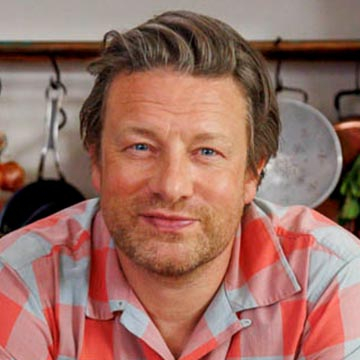
During a 20-year television and publishing career, British chef Jamie Oliver has inspired millions to cook healthy and delicious food. A global phenomenon, Jamie has published over 20 bestselling internationally acclaimed cookbooks. He leads a global food revolution helping to reduce childhood obesity and promote nutrition education.