How to Make a Vinaigrette From Scratch: Francis Mallmann’s Classic Dijon Vinaigrette
To make a vinaigrette from scratch, whisk red wine vinegar, Dijon mustard and salt together, then whisk in olive oil in a slow, steady stream. This guide follows the classic vinaigrette from Francis Mallmann's class: what goes in, the proportions he gives, how to fix it if it is too thick, and how long it keeps.
What goes into a classic vinaigrette?
Five ingredients and two tools. In Francis Mallmann‘s lesson the vinaigrette is made with red wine vinegar, Dijon mustard, olive oil, salt and pepper, and it makes a generous batch: the lesson lists it as serving 16, and Francis says he wants the vinegar to be abundant. The lesson lists:
Red wine vinegar: ½ cup
Dijon mustard: ½ cup
Olive oil: 2 cups
Sea salt: to taste
Ground pepper: to taste
Equipment: a bowl and a whisk
The lesson lists it at about 5 minutes, start to finish.
What is the ratio for a vinaigrette?
In this lesson it is one part red wine vinegar, one part Dijon mustard and three and a half to four parts olive oil. The quantities above fit that: ½ cup of vinegar, ½ cup of mustard and 2 cups of oil is one part, one part and four parts. Notice how much mustard there is. Francis says the result is going to be a bit thick, and he serves it that way, spooned onto a plate.
How do you make a vinaigrette step by step?
Follow the order, because each addition sets up the next:
1. Put the red wine vinegar in a bowl.
2. Add the Dijon mustard and whisk.
3. Add the salt and keep whisking.
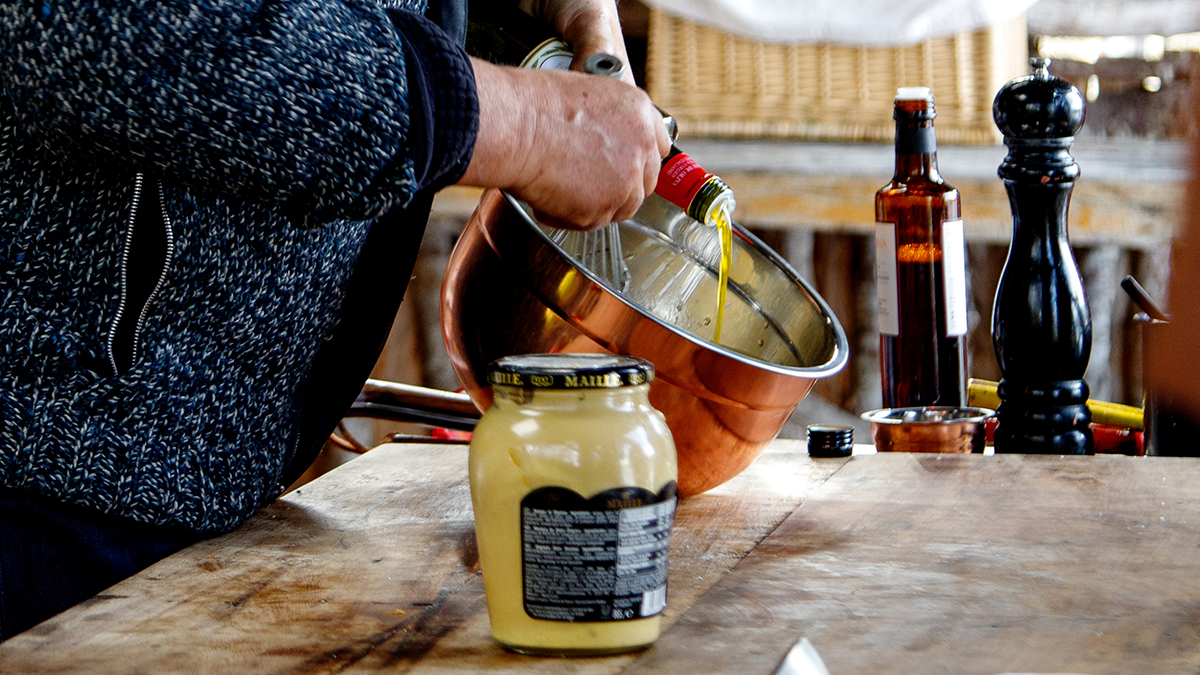
4. Whisk in the olive oil in a slow, steady stream.
5. If the vinaigrette seems too thick, whisk in 1 tablespoon of water.
6. Taste and season with salt and pepper.
It is worth watching Francis pour the oil in the lesson, to see how thin a stream he means.
Why add the oil slowly, and what does the mustard do?
Oil and vinegar do not mix on their own. Mustard is a common emulsifier, meaning it helps the two stay together, and pouring the oil in slowly while you whisk lets it blend evenly into the vinegar and mustard instead of floating on top. That is general technique rather than something stated in the lesson, which simply says to whisk in the oil in a slow, steady stream. Even done well, a simple vinaigrette is only a temporary emulsion and will separate in time, so give it a quick whisk again before you use it.
How long does homemade vinaigrette keep?
The lesson says the vinaigrette can be refrigerated for up to 3 days. Treat that as the lesson’s guideline rather than a tested limit: published guidance for homemade dressings varies a lot, and we could not find an authoritative figure to confirm it. Because the batch is generous, plan to use it up within those days, and if it smells or tastes off, throw it out.
What do you serve with Francis Mallmann's vinaigrette?
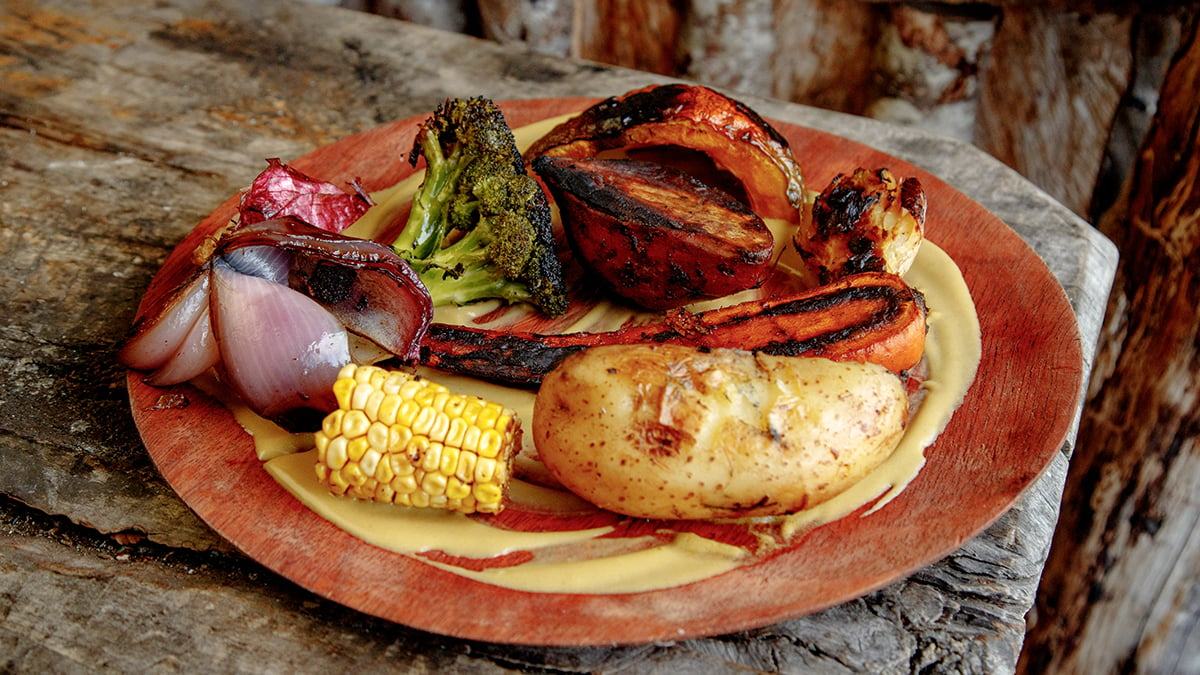
Francis built this vinaigrette for his Chapa Veggies with Vinaigrette lesson, a platter of colorful vegetables cooked slowly on the plancha. At the end he spoons the vinaigrette onto a plate and places the vegetables on top, and you can follow the Classic Vinaigrette recipe to make it yourself. The lesson page calls it a vinaigrette you will want to put on everything, so next time, try a spoonful under whatever you are roasting or grilling and see where it earns its place. To learn more of his Argentine cooking, join the class with Francis Mallmann.

Francis Mallmann, the pioneer of open-fire cooking, is South America’s most famous chef and is known for his rustic open-fire cooking style in wild and remote locations. Join the James Beard award-winning author and Chef’s Table star as he brings you on a journey into his kitchen in the Patagonian wild where he teaches you how to master the grill and his Argentine-style barbecue.