How to Make Carbonara: Jamie Oliver’s Bucatini Method with Guanciale and Pecorino
To make carbonara, render guanciale, toss in cooked bucatini off the heat, then add the eggs and pecorino once the pan stops sizzling. Jamie Oliver's version for two takes 10 minutes by the class card and hangs on one timing rule: let the pan stop sizzling, about 2 minutes, so the eggs turn silky instead of scrambling. Below: what goes in, how to prepare the pan and the egg mixture, how to bring it together, and what to know about the eggs.
What goes into Jamie Oliver's carbonara?
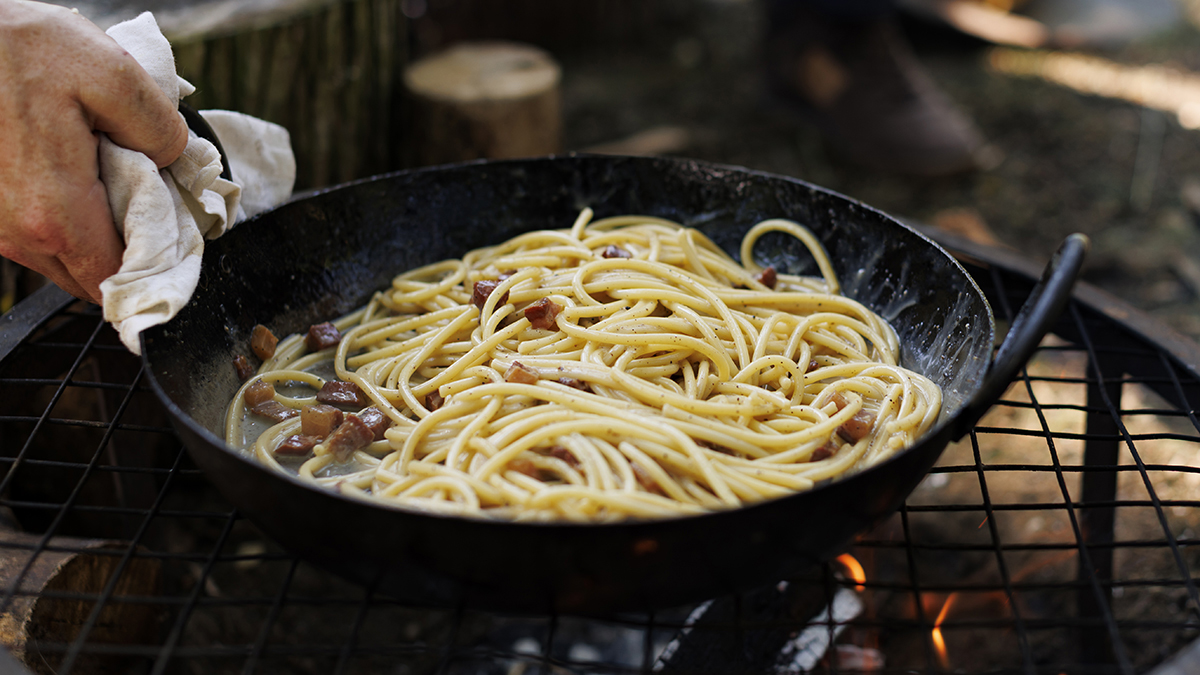
Jamie Oliver opens the Bucatini Carbonara lesson by calling carbonara one of the most famous pastas in the world, then cooks it outdoors over a fire with his mentor and friend, the chef Gennaro Contaldo. Jamie says he had never made proper pasta before he met Gennaro. The recipe card serves 2 and lists 10 minutes hands-on and 10 minutes in total. The ingredients are:
150 grams dried bucatini
40 grams higher-welfare guanciale (cured pig’s cheek) or smoked pancetta
3 large free-range eggs
50 grams pecorino cheese
The gear is a large saucepan, a chopping knife and board, a large frying pan, a bowl, a fine grater, tongs, a wooden spoon and measuring spoons. The method also uses salt in the pasta water and black pepper, 1 teaspoon in the pan and a little more to finish, though neither is on the card’s ingredient list.
How do you cook the pasta and render the guanciale?
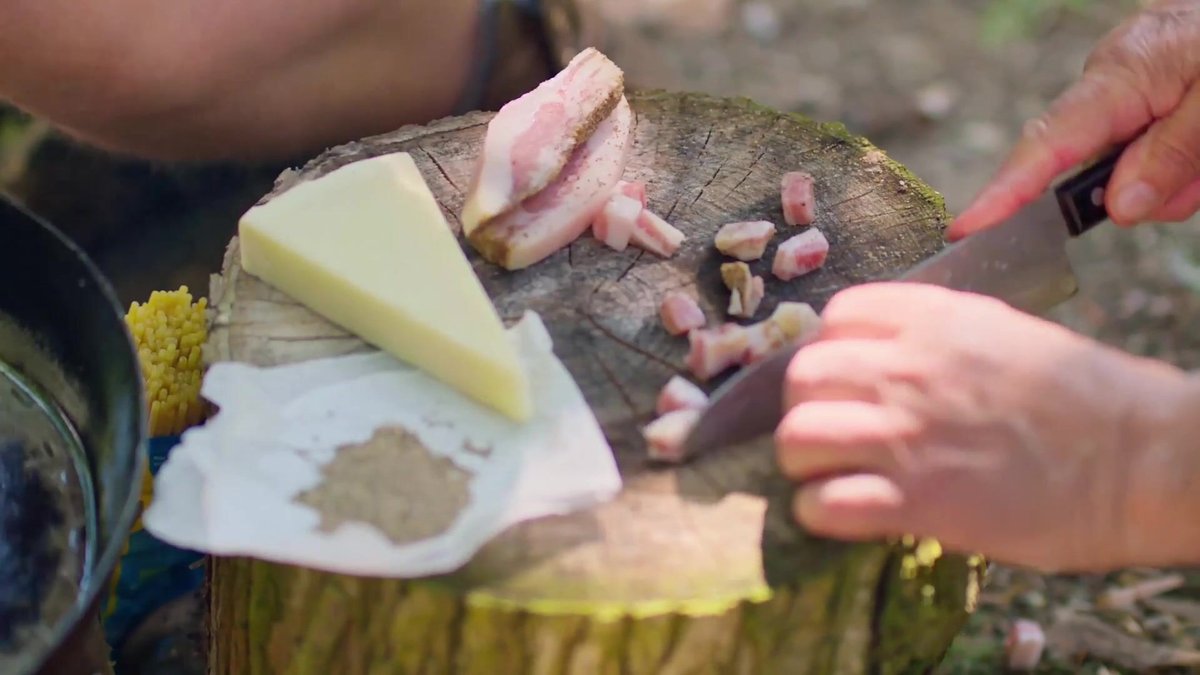
The card’s first step is to cook the pasta in a pan of boiling salted water, following the packet instructions. For the pan, put a large frying pan over medium heat, chop the guanciale into ½ centimeter chunks and sprinkle them in. Turn the heat down to medium-low and cook until the fat has rendered out and the pieces have turned golden. Then turn off the heat and stir in 1 teaspoon of black pepper. In the video Jamie remarks on the fat on the guanciale and says he is going to put in a lot of black pepper. The card is the measure to follow: 1 teaspoon here, a little more at the end. If you cannot find guanciale, the card names smoked pancetta as the alternative.
How do you make the egg and pecorino mixture?
Separate the yolks from 2 of the 3 eggs and put them in a bowl. The card says to save the whites for another recipe. Crack in the remaining whole egg, so the sauce is 2 yolks and 1 whole egg. Stir in a splash of cold water to loosen it, then finely grate in most of the 50 grams of pecorino and beat it together. Keep the rest of the cheese for the end. The card does not say how much a splash is or how much counts as most of the cheese, so judge both by eye.
How do you add the eggs without scrambling them?
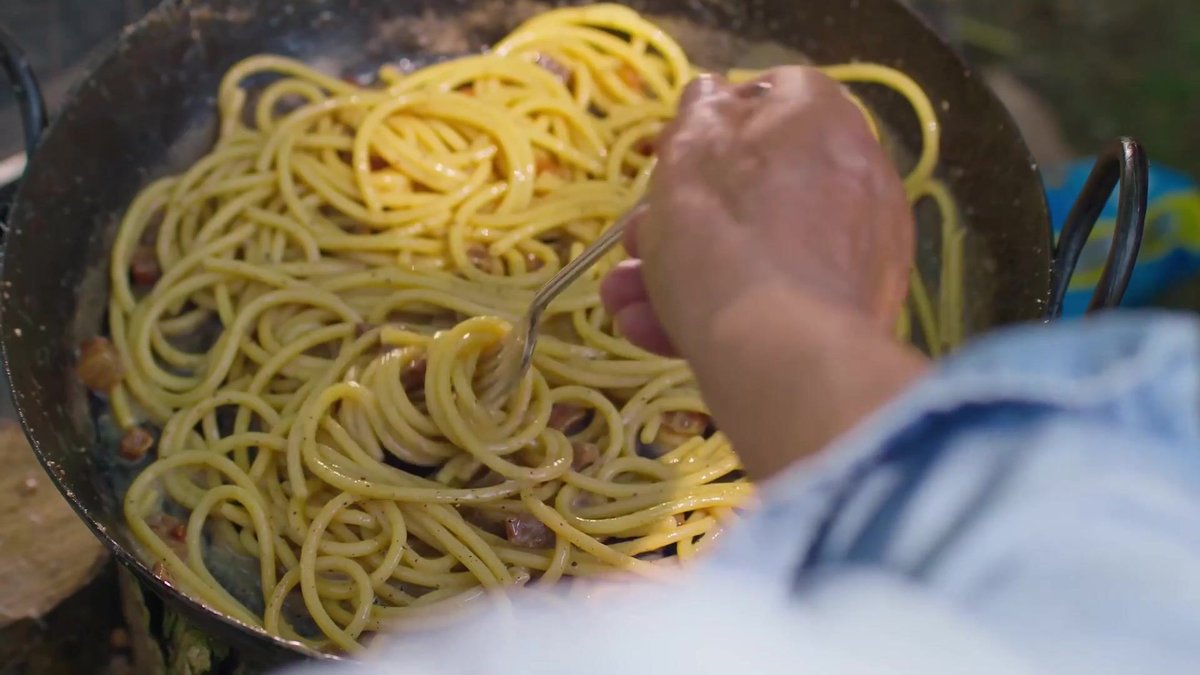
This is the step the lesson turns on. Using tongs, drag the pasta straight from the water into the guanciale pan and let some of the cooking water come with it. The card says this breaks the frying. Toss the pasta through the fat and flavor. Then wait: the card says to let the pan stop sizzling, which takes around 2 minutes, before adding the eggs. If the pan is too hot they will scramble, and if you get it right they will be smooth, silky and elegant. Keep the pasta moving as you toss in the egg mixture, and loosen it with extra cooking water if it needs it. Plate up immediately, finely grate the remaining pecorino over the top and finish with a little more black pepper.
What should you know about the eggs before you cook?
The lesson does not cover egg safety, so this section is not from the class. In this method the eggs never go on a burner: they meet the pasta in a pan that has been taken off the heat and left to stop sizzling, and the card warns that a pan that is too hot scrambles them. The US Food and Drug Administration’s page “What You Need to Know About Egg Safety” says that for recipes calling for eggs that are raw or undercooked when the dish is served, you should use shell eggs treated to destroy Salmonella by pasteurization or another approved method, or pasteurized egg products. The card lists free-range eggs and does not mention pasteurization, so if you want to follow the FDA’s advice, check the carton for the word pasteurized.
What should you cook after carbonara?
Carbonara is the fast end of Jamie Oliver‘s pasta cooking, with 10 minutes on the card. The Spaghetti Arrabbiata lesson is the other end: a 30-minute sauce for 4 packed with chilies, anchovies, tomatoes and garlic, with vodka as what the class notes call the magic ingredient and a herby pangrattato, a crunchy breadcrumb topping, to finish. To watch Jamie and Gennaro make carbonara from start to finish, cook it alongside them in the Bucatini Carbonara lesson, where the class notes promise plenty of tips for getting carbonara right every time.
During a 20-year television and publishing career, British chef Jamie Oliver has inspired millions to cook healthy and delicious food. A global phenomenon, Jamie has published over 20 bestselling internationally acclaimed cookbooks. He leads a global food revolution helping to reduce childhood obesity and promote nutrition education.