How to Make Creamy Mashed Potatoes: Timing, Butter and Method
For creamy mashed potatoes, boil peeled floury potatoes in salted water until soft, steam-dry them, then mash with butter and milk. Jamie Oliver's version, from his Chicken & Leek Pie with Mash lesson, boils the potatoes for 15 minutes and uses 25 g of butter and 150 ml of milk for 1.5 kg of potatoes. Here is which potatoes to buy, how long to boil them, how much butter and milk to add, how to mash them smooth and how to keep the leftovers.

What are the best potatoes for creamy mashed potatoes?
Starchy, floury potatoes. Jamie Oliver’s recipe calls for floury potatoes such as Maris Piper or King Edward, which are UK varieties. If you cannot find those, a russet is an example of the starchy type that the University of Arkansas Cooperative Extension recommends: it says starchy potatoes turn fluffy and creamy when mashed, while waxy potatoes do not mash well and turn gluey. The same Extension page lists red-skinned potatoes as waxy and not suited to mashing, so keep them for salads and roasting. Peel the potatoes with a speed peeler before you cook them.
How long do you boil potatoes for mash?
Boil them for 15 minutes, covered, or until soft.
Steam-dry: 2 minutes after draining
You need: a large saucepan with a lid, a colander, a speed peeler, a chopping knife and board, and a potato masher
Chop the peeled potatoes into even-sized chunks first, so every piece finishes at the same moment, and add them to the pan once the water is boiling and salted. Test a chunk by piercing it with a fork or a small knife: it should go in easily. Then drain the potatoes in a colander and leave them to steam-dry for 2 minutes, so the surface moisture evaporates and the mash does not turn watery. Tip them back into the pan.
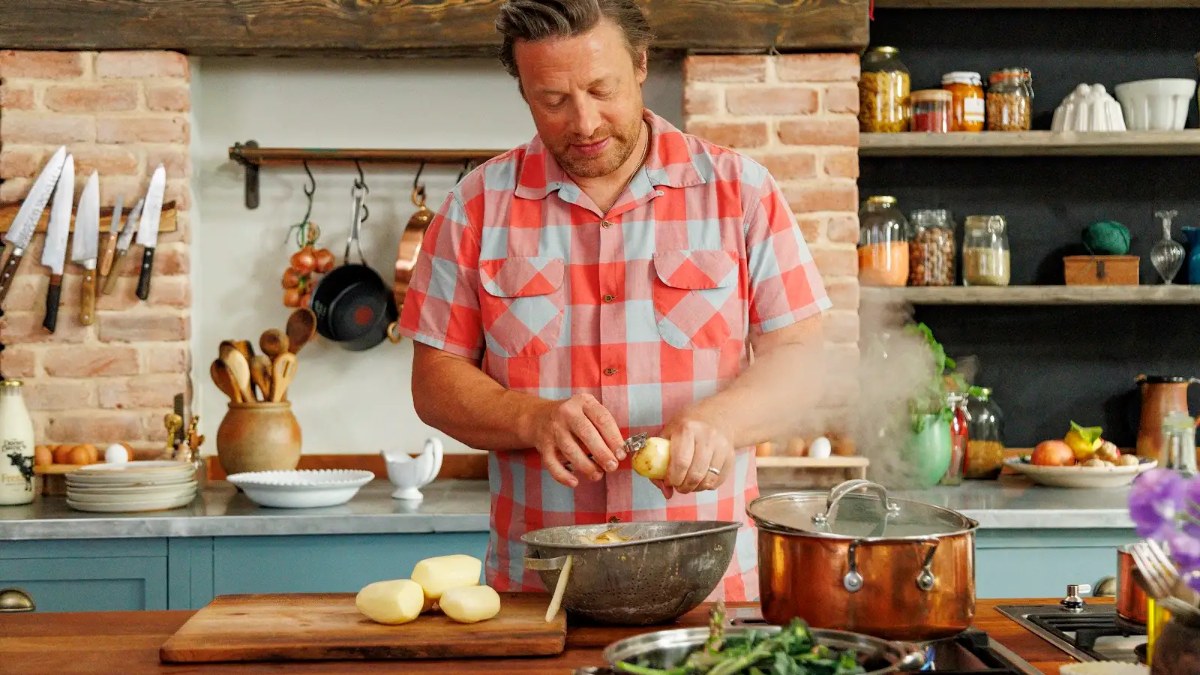
How much butter and milk do you add to mashed potatoes?
Jamie’s amounts for this batch of potatoes:
Floury potatoes: 1.5 kg (about 3⅓ pounds), peeled
Unsalted butter: 25 g (about 2 tablespoons), cut into chunks
Semi-skimmed milk: 150 ml (about ⅔ cup), plus extra splashes if needed
Salt: a pinch in the mash, plus salt in the boiling water
That is 25 g of butter and 150 ml of milk for every 1.5 kg of potatoes, so for half the potatoes use half of each. Add the butter, a pinch of salt and the milk to the potatoes in the pan, then mash. Keeping everything in the pan you boiled them in means one less pot to wash. The salt in the water seasons the potatoes all the way through, and the pinch at the end rounds off the finished mash, so taste before you add more.
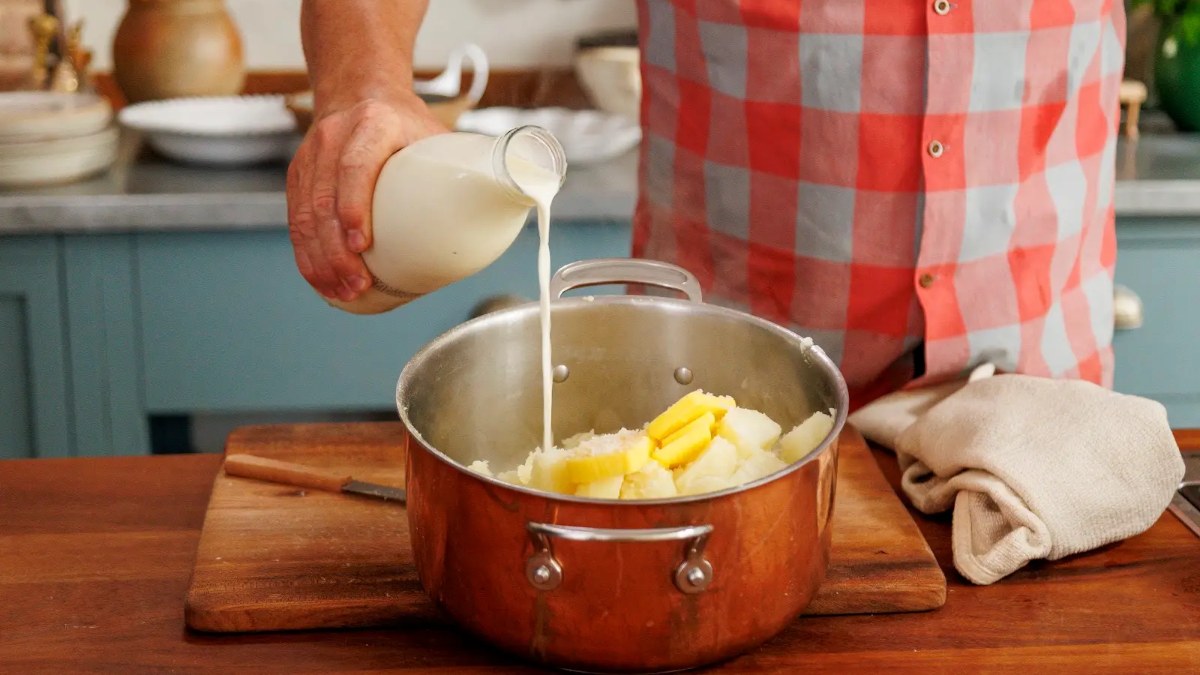
How do you mash potatoes so they are smooth, not lumpy?
Use a potato masher and keep mashing until the potatoes are soft and smooth, right in the same pan. Taste the mash to check it is ready, for salt and for texture. If it is stiff, add a little more milk, a splash at a time, and keep mashing. Lumps usually come from chunks that were cut unevenly or were not cooked through, which is why the even chopping and the fork test earlier matter more than how hard you mash.
How do you store and reheat leftover mashed potatoes?
University of Illinois Extension says to refrigerate leftovers within two hours of serving.
Refrigerate within: 2 hours of serving
Keeps in the refrigerator: 3 to 4 days
Reheat to: at least 165°F
Put the mash in a shallow container so it cools quickly. To reheat it, warm it gently in a saucepan or the microwave, stirring, and loosen it with a splash of milk if it has stiffened. Use a food thermometer to check that it has reached 165°F.

What do you serve with creamy mashed potatoes?
Jamie’s recipe suggests pies, roasted meats and steamed vegetables. Gravy is the other obvious partner, and our guide to making turkey gravy from scratch covers it, while our roundup of holiday side dishes has more to put on the table beside it. Jamie Oliver teaches his creamy mashed potatoes in the Chicken & Leek Pie with Mash lesson, where the mash cooks while the pie dough rests.
During a 20-year television and publishing career, British chef Jamie Oliver has inspired millions to cook healthy and delicious food. A global phenomenon, Jamie has published over 20 bestselling internationally acclaimed cookbooks. He leads a global food revolution helping to reduce childhood obesity and promote nutrition education.