How to Make Homemade Paneer: Asma Khan’s Two-Ingredient Method with Lemon Juice
To make paneer, boil 2 liters of whole milk, split it with 60 milliliters of lemon juice, then drain and press the curds. Asma Khan's recipe card for homemade paneer lists 5 minutes of hands-on time and 2 hours 50 minutes in total, because the curds drain for 30 minutes to 2 hours. Below: what you need, how the milk splits, how to drain and press the curds, how firm to make it and what to cook with it next.

What is paneer, and why make it at home?
Paneer is a fresh cheese. In the Saffron Sandesh lesson, Asma Khan opens with it, calling it one of the few cheeses in India. She says most people do not make it at home, but once you get it right, a lot of people never end up buying it again. All you need is milk and something to split it. She prefers lemon or lime juice to vinegar, because she does not want to taste vinegar in the cheese. She also points out that every culture has some kind of fresh cheese made by splitting milk.
What do you need to make homemade paneer?
The Homemade Paneer recipe card serves 5 and lists 5 minutes hands-on and 2 hours 50 minutes in total. You need 2 liters (about 8 cups) of whole milk, 60 milliliters of fresh lemon juice, strained, and 125 milliliters of hot water, plus more as needed (optional). The gear is a knife, a cutting board, a slotted spoon, a pot, a colander, a bowl, a small bowl, a spatula, scissors, a lemon squeezer and a muslin cloth, which the card says you can swap for cheesecloth or Indian malmaal. In the video Asma uses full-fat cow’s milk, which she says is what they use in Bengal, and the card also calls for full-fat milk. In her family home she keeps a separate pot just for milk, because milk absorbs aromas quickly. The card says 2 liters of whole milk yields about 350 grams of paneer.
How do you split the milk with lemon juice?
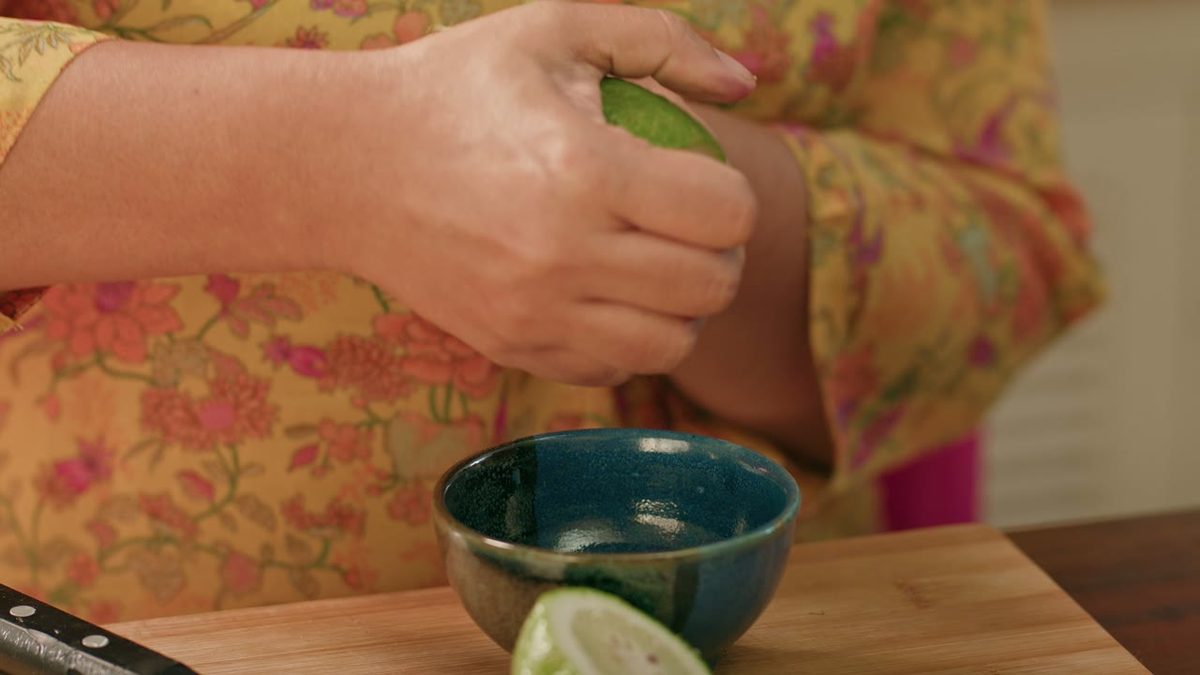
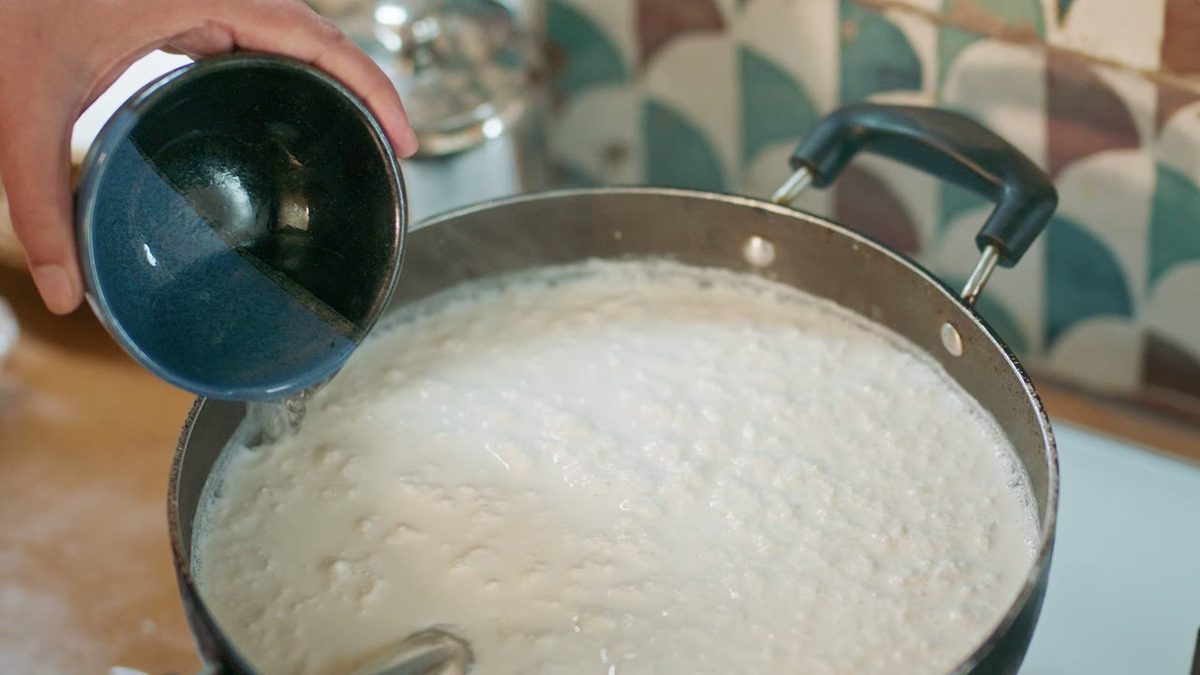
Put the milk over high heat and keep an eye on it, because Asma says it takes a while to boil. She wants to see bubbles everywhere, and milk coating the spoon is another sign it is ready. Once it boils, the card says to reduce the heat to low and stir gently in a clockwise direction (in the video she pours with the heat still high, so follow the card if you are unsure). Measure the lemon juice, because Asma says you need around 60 milliliters for 2 liters of milk. Pour it in, stir gently for a few more seconds, then turn off the heat and keep stirring the same way. The milk separates and the curds form clumps. If nothing happens, the card says to turn the heat back on low and stir gently, and if the curds still do not form, add 2 more tablespoons of lemon juice (Asma says 30 milliliters) and repeat. Once the curds have formed, let the pot sit off the heat for 10 to 15 minutes. Then pour the hot water in from the side of the pot, never on top of the curds, so you do not break them up. Asma says it should be warm, not boiling, and that it softens the curds. They sink to the bottom and the whey stays on top.
How do you drain and press the curds?
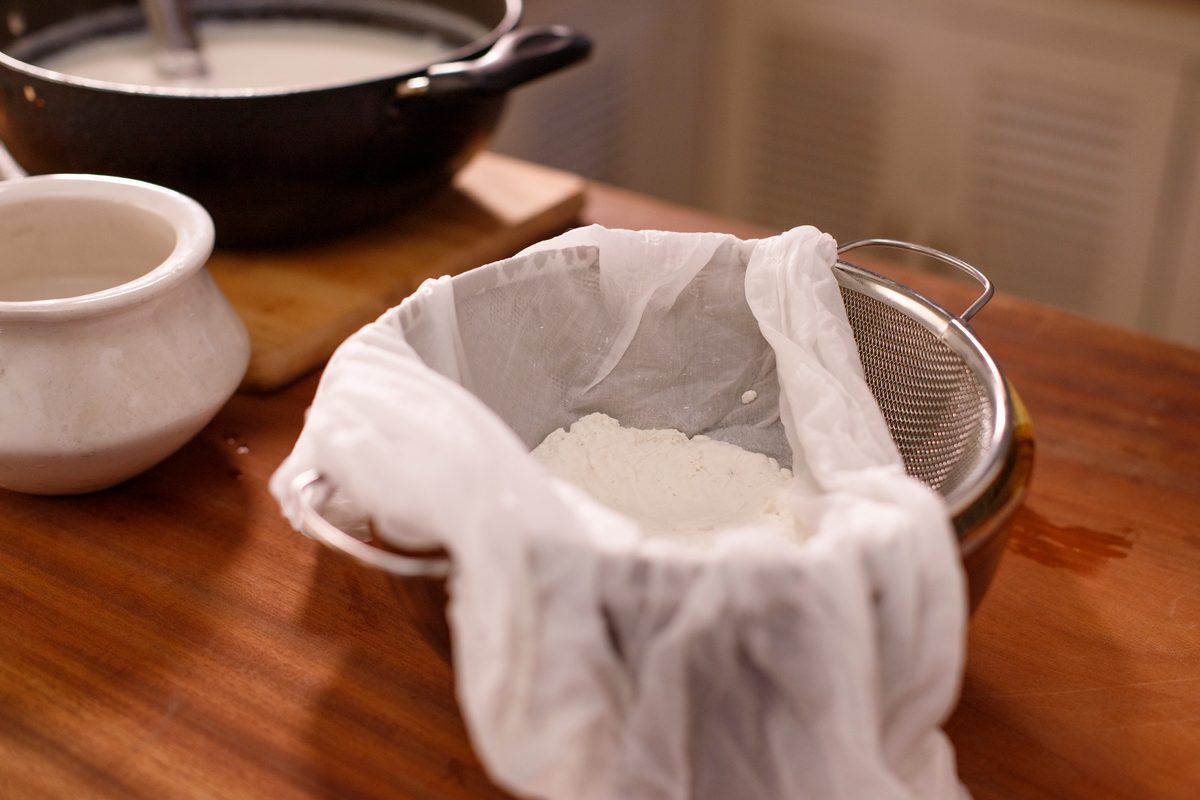
Lift the curds out with a slotted spoon, which Asma prefers so you do not take the extra liquid along, and try to keep them in clumps because she says they compact faster that way. Line a colander with muslin or cheesecloth and set it over a bowl. Asma dampens the muslin first and uses a cloth bigger than she needs, so there is enough to tie into a bundle at the end. In the video she also rinses the curds under the tap to wash out the lemony taste, which she says matters most with vinegar. The card does not list that step. Then flatten the curds, set a weight or a heavy pan on top, and press down to release any excess liquid. Let them drain for 30 minutes to 2 hours.
How firm should homemade paneer be, and how long does it keep?
The longer the curds drain, the harder the paneer. Check after about 30 minutes: the card says it should feel soft, like ricotta. Left longer, the card says it ends up like feta, and Asma says up to 2 hours gives a really solid, firm paneer. In her Saag Paneer lesson she uses store-bought paneer because it is faster, and says that for cutting into pieces, homemade paneer needs 2 to 3 hours to become compact. She adds that homemade may not be as firm as shop-bought and may be paler, but it works perfectly well. When it is the texture you want, unwrap the muslin and use the paneer, or keep it in the refrigerator for up to one week, per the card.
What can you make with homemade paneer next?
In the same Saffron Sandesh lesson, Asma Khan turns the paneer into one of Bengal’s favorite desserts. She presses out the excess liquid and breaks the cheese down by hand, using the palm instead of kneading it, because kneading would make it hard and springy. Then she adds sugar to taste and cooks it gently with saffron. The Saffron Sandesh recipe card starts from 350 grams of paneer, which is what the card says 2 liters of whole milk makes, plus 110 grams of caster sugar, 2 pinches of saffron and 1/2 tablespoon of warm milk. Asma also tells a story in the lesson: since Vedic times it was considered unlucky to split milk, until the Portuguese arrived and began splitting milk to make cheese, and then people started using that cheese to make sweets. The sandesh card lists only 10 minutes in total once the paneer is made, so a batch of homemade paneer can become a dessert the same day.

Asma Khan, owner of famed London eatery Darjeeling Express and bestselling cookbook author of “Asma’s Indian Kitchen” teaches her favorite family recipes, inspired by her childhood in Kolkata, India. The chef, restaurateur, and activist is the first UK-based chef to be featured on Netflix’s Emmy-nominated Chef’s Table and, in 2019, was listed number 1 on Business Insider’s ranking of “100 Coolest People in Food and Drink”. Join Asma on a nostalgic culinary journey to explore the smells, flavors, and ingredients of her ancestral Bengali roots.