How to Make Pasta Bianco: Jamie Oliver’s Silky Butter and Parmesan Pasta
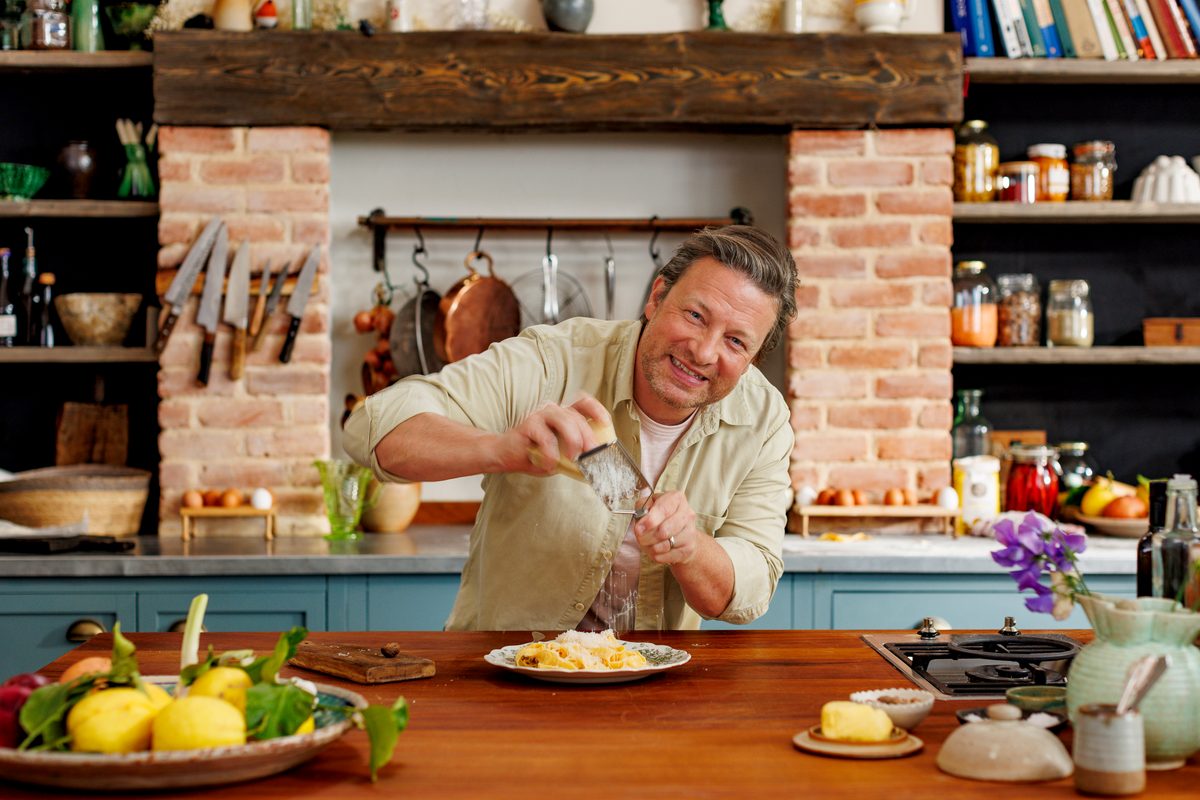
To make pasta bianco, melt butter in a bowl over boiling water, add Parmesan, then toss in fresh pasta and starchy cooking water. Jamie Oliver's version serves 2 and takes 10 minutes by the recipe card, 5 of them hands-on, with no cream in it. Below: what it is, what goes in, the steps, how to keep the sauce silky, how Jamie rolls the fresh pasta, and what to add.

What is pasta bianco?
Pasta bianco is pasta tossed in a sauce of butter, Parmesan and starchy cooking water, with no tomato and no cream. In his class, Jamie Oliver calls it the mother of all pastas, and the Pasta Bianco lesson teaches it. Jamie says the whole point is that the pasta ends up silky and smooth, and that the dish is about two jobs at once: cooking the pasta right and finding the basic sauce of starchy cooking water, fat and a little cheese. He adds that kids go mad for it. The Pasta Bianco recipe card calls it creamy and silky, and the ingredient list shows where the creaminess comes from: butter and Parmesan, with no cream on it. Bianco is Italian for white. The lesson does not explain the name, so that part is our gloss.
What goes into pasta bianco?
The recipe card makes enough for 2 people.
Fresh tagliolini: 150 grams. The card says you can substitute tagliatelle, pappardelle or fettuccine
Parmesan cheese: 40 grams, plus extra to serve
Unsalted butter: 50 grams
Nutmeg: 1 whole nutmeg, for grating, optional (the method grates in only a little)
Gear: a large heatproof serving bowl, tongs, a fine grater and a large saucepan
The method also uses a pinch of sea salt and black pepper, salted water for the pan and some of the starchy cooking water. Only the pinch of salt is on the ingredient list. The card lists the pasta as fresh and offers only other ribbon shapes as substitutes. It gives no dried pasta option and no amount of salt for the water, so this article does not either.
How do you make pasta bianco?
The card lists the recipe at 10 minutes in total, with 5 of them hands-on.
1. Sit a large heatproof serving bowl over a large pan of boiling salted water.
2. Put the butter in the bowl so it starts to melt.
3. Add a pinch of sea salt and black pepper.
4. Finely grate in a little nutmeg, if using, and the Parmesan.
5. Cook the pasta in the pan for 45 seconds, or until al dente. Sit the bowl back on the pan to bring the water back to the boil, if needed, before carefully moving the bowl to a heatproof surface.
6. Gently stir 1 tablespoon of the starchy cooking water into the bowl.
7. Use tongs to drag the pasta straight into the sauce and toss together.
8. Add splashes of starchy cooking water, if needed, to loosen.
9. Toss together again and finish with a little extra grating of Parmesan and nutmeg, if you like.
The pasta is never drained: the tongs move it straight from the pan to the bowl.
How do you keep the sauce silky?
Jamie says the dish comes down to cooking the pasta right and finding the sauce, and on the card that means timing and a light hand with the water. The fresh tagliolini cooks for 45 seconds, and in the video Jamie says it took about a minute. The starchy water goes in twice. First, 1 tablespoon is stirred into the melted butter and cheese before the pasta arrives. Then, after tossing, you add splashes only if the sauce needs loosening. The card gives no larger amount, so the safe reading of “if needed” is to add a little, toss, and look before adding more. The lesson gives no cooking time for dried pasta, so treat 45 seconds as a fresh pasta number.
How does Jamie roll the fresh pasta for it?
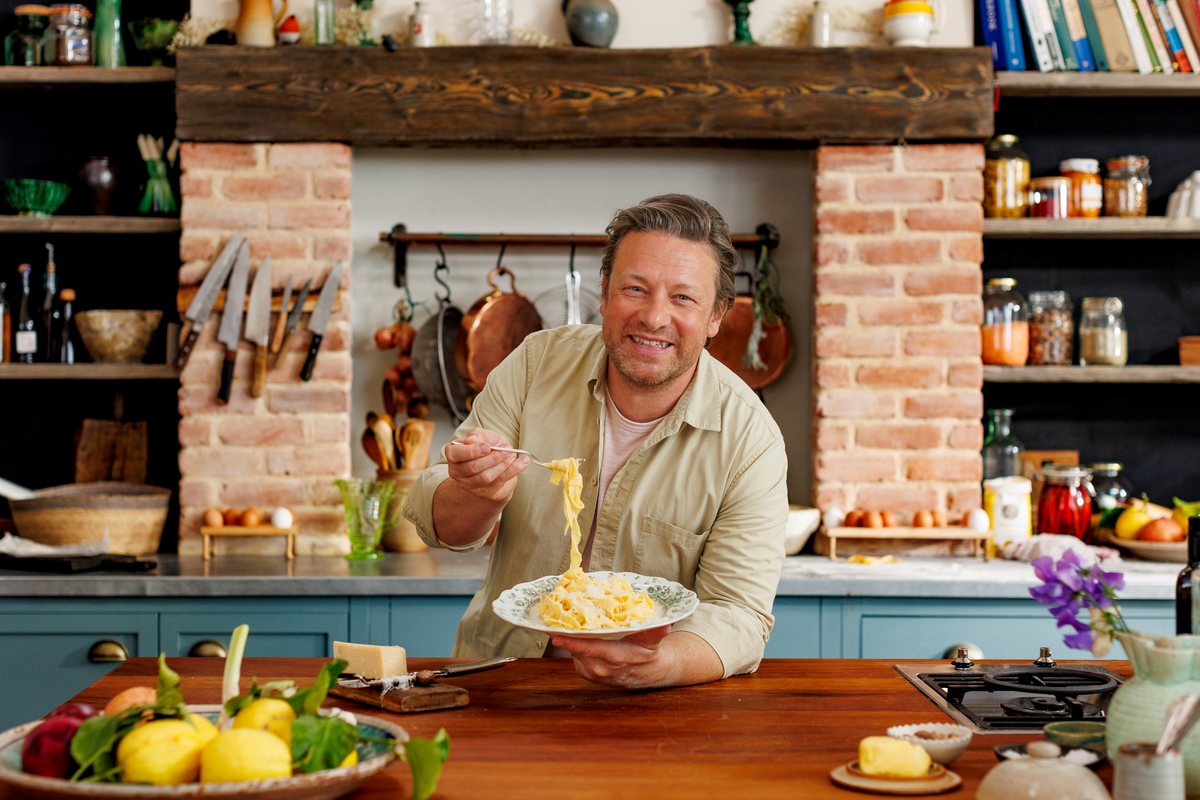
For this lesson Jamie rolls pasta for two by machine. He divides the homemade dough into four pieces and keeps the rest under a damp, clean tea towel so it does not dry out. He pushes a piece out with his hands, flours the surface lightly and starts the machine on its thickest setting, using as little flour as he can. Then he takes the rollers down two settings to make it thinner. In the video he calls this proving the pasta, says that is the wrong word, and explains that he wants to amplify the silkiness, so he goes a little thinner still. Next he folds the sheet in half and runs it back through the thickest setting, and he repeats this a few times. This encourages the pasta to fill the full width of the machine and come out smooth. Once it is smooth he rolls the sheet down through each setting, dusting it lightly with flour. His tip for the crank is to turn it with one hand and keep a little tension on the sheet with the other, to avoid kinks, folds and ripples. To cut, he trims the ends, divides the sheet in two and rolls each half up, dusting as he goes. Tagliolini is cut just less than half a centimeter wide and tagliatelle just less than 1 centimeter wide, and he is cutting thin tagliolini. Shake the noodles to separate them and shed the extra flour. If you want to make the dough first, Jamie teaches it in the Fresh Pasta Dough lesson.
What can you add to pasta bianco once you can make it?
The card calls pasta bianco a principle recipe, one you can take in many directions. Traditionally you would slice white or black truffles over the top. You can also toss in a handful of spring peas, finely grate in a little lemon zest or lay freshly sliced prosciutto over the pasta. A seasonal green salad on the side goes well, and Jamie has a whole A Celebration of Salad lesson on building one. In the lesson, Jamie says he teaches pasta bianco because it calibrates your brain to the opportunity in pasta, a dish with thousands of directions, and the card ends with its own invitation: have fun with it and see where you end up. To cook it alongside the chef, learn it from Jamie Oliver in the Pasta Bianco lesson. When the ribbons and the sauce feel natural, the class goes on to more pasta, including the Bucatini Carbonara and Green Ravioli lessons.
During a 20-year television and publishing career, British chef Jamie Oliver has inspired millions to cook healthy and delicious food. A global phenomenon, Jamie has published over 20 bestselling internationally acclaimed cookbooks. He leads a global food revolution helping to reduce childhood obesity and promote nutrition education.