Railway Curry: Asma Khan’s Bengali Mutton and Potato Curry with Coconut Milk
Railway curry is a Bengali mutton and potato curry: bone-in meat browned in oil flavored with whole spices, simmered in a masala of onion, garlic and ginger pastes, tomato and ground spices with a little vinegar, then finished with coconut milk and served with rice. In the Railway Curry lesson, Asma Khan cooks it as First-Class Railway Mutton Curry; the Railway Curry lesson lists 30 minutes of hands-on time and 1 hour in total, rice included, with no serving size listed. Below: what railway curry is, what goes in, the steps, how the oil is infused, when the potatoes go in and how to tell the masala is ready, and what to serve with it.

What is railway curry?
In the Railway Curry lesson, Asma Khan cooks First-Class Railway Mutton Curry and tells its story. In colonial times, supposedly, first-class railway carriages were for the British; one passenger passed the dining car where the cooks were making the classic Bengali goat curry, kosha mangsho, and asked to taste it. It was a bit too spicy for him, so the cook added coconut milk, and that became the railway curry served to first-class passengers. The Railway Curry lesson adds that the vinegar was probably there to keep the meat on longer journeys. The Railway Curry recipe calls it the Indian version of meat and potatoes.
What do you need to make railway curry?
The Railway Curry lesson uses these ingredients, with the rice:
Hands-on: 30 minutes | Total: 60 minutes
Units:
Ingredients
- 4 tablespoons vegetable oil
- 1 piece cassia bark, 4 centimeters long
- 3 cloves
- 3 green cardamom pods
- 1 Indian bay leaf
- 1 dried red chili
- 500 grams mutton shanks, substitute with beef shanks for stewing
- 1 tablespoon onion paste
- 2 tablespoons garlic paste
- 1 tablespoon fresh ginger paste
- 4 garlic cloves, crushed to a paste
- 2 small onions, finely chopped then crushed to a paste
- 1 tomato, cut into thin slices
- ½ teaspoon ground turmeric
- ½ teaspoon ground chili powder
- 1 tablespoon salt
- ½ tablespoon ground coriander
- ½ tablespoon ground cumin
- 2 tablespoons malt vinegar
- Warm water
- 2 large potatoes, peeled and cut into 4
- 200 milliliters coconut milk
- 1 green chili
Gear
- Heavy based pan
- Plate
- Slotted spoon
- Bowl
- Mortar and pestle
- Wooden spoon
- Chopping board
- Knife
- Lid
- Peeler
- Serving spoon
The full list is on the Railway Curry recipe page.
What are the steps for railway curry?
The Railway Curry lesson lists 30 minutes hands-on and 1 hour in total, rice included:
Recipe
- In a heavy-based pan that has a lid, heat the oil over medium-high heat.
- Add the cassia bark, cloves, cardamom pods, and bay leaf.
- Stir until the clove pops.
- Using a slotted spoon, remove the spices and chili from the pan.
- Place on a plate and set aside.
- In the same pan and using the chili-infused oil, fry the mutton pieces until brown on all sides.
- Do not allow the meat to cook through, the aim is just to seal the meat.
- Remove the meat from the pan and set it aside, leaving as much of the oil in the pan as possible.
- Add the onion, garlic, and ginger pastes to the pan.
- Be careful because the hot oil will splatter when you add the pastes.
- Turn the heat to low.
- To make the masala, add the red chili powder, ground turmeric, ground coriander, and ground cumin to the pan.
- Then add the diced tomato and cook for 2 minutes, or until the oil has reached the edge of the pan and liquid has dried out.
- The masala will get stuck to the pan so add a few sprinkles of water and stir.
- Add back the whole fried spices, dried chili.
- Add the mutton back to the pan.
- Mix and coat the masala paste in the mutton.
- Add the salt.
- Cover with 700 milliliters of warm water.
- Add the vinegar.
- Bring to a boil.
- After 1 minute, cover the pan with the lid and lower the heat to a simmer.
- When the meat is 3/4 cooked, add the potatoes and coat with the meat and spice base.
- Put the lid on but open to stir at regular intervals to ensure the potatoes are cooking evenly.
- Do not shake them too much as they may break.
- Once the mutton and potatoes are cooked, remove the lid.
- Reduce any remaining liquid until the oil seeps to the edges of the pan.
- Taste and adjust the salt and vinegar seasoning.
- Turn off the stove and add the coconut milk.
- Serve warm with white rice.
How do you infuse the oil for railway curry?
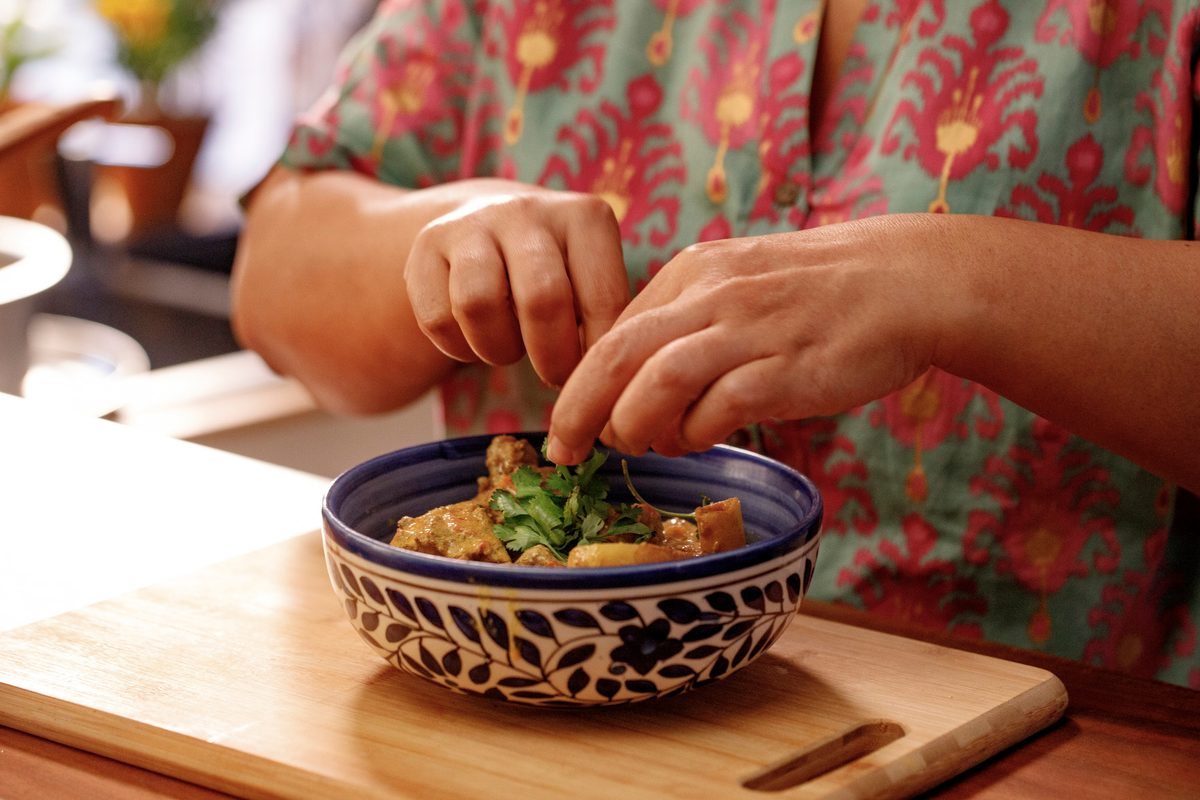
The Railway Curry lesson cooks the whole spices in the oil before anything else goes in, which it calls the art of layering. It uses a flavorless vegetable oil, because flavored oils clash with Indian spices, and says to be patient and check the oil is at the right temperature. The clove is the signal: its back turns light brown, it swells, then it pops, and everything comes off the heat, since the cassia bark will not change color and the chili only darkens a little. The cardamom stays in its pod, so the oils come out and the seeds stay contained. The meat then picks up those flavors at its edges.
When do you add the potatoes, and how do you know the masala is ready?
For the masala, the Railway Curry lesson watches the oil: when bubbles and oil come to the edges of the pan, a lot of the liquid has dried out, and the paste is ready. If it sticks, a splash of water releases it. The potatoes go in when the meat is about three quarters cooked, because added with the meat they would turn to mush. The Railway Curry lesson leaves the skin on and cuts them chunky, since small pieces break down and get lost among the meat. It says the curry should cook in about half an hour, depending on the meat, and that too long makes it fall apart into shreds. The coconut milk turns the gravy orange with hints of gold.
What do you serve with railway curry?
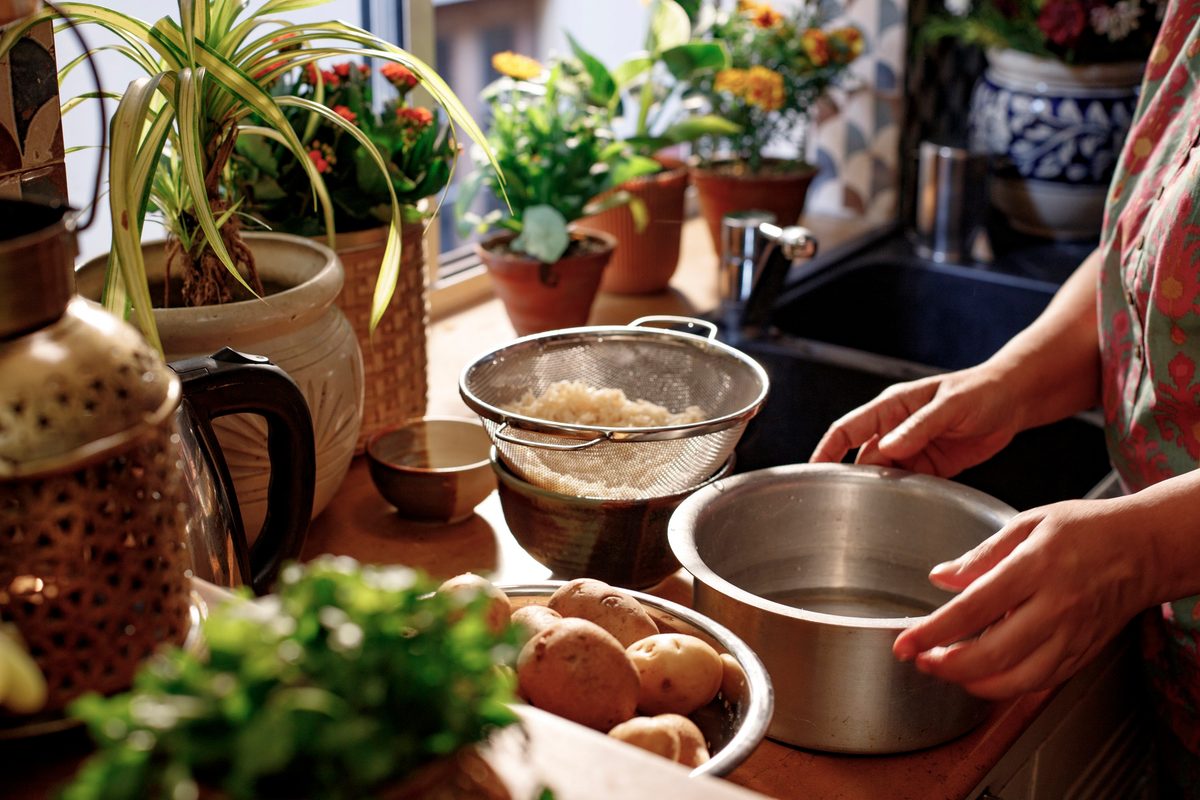
In the Railway Curry lesson the curry is served with white rice, and the gravy matters because it is eaten over the rice, so ladle in plenty. The Railway Curry lesson says the family fights over the potatoes and over the piece of meat around the bone, which is the most succulent. For the rice, see how to cook basmati rice. To watch the oil infused and the clove pop, cook along with Asma Khan in the Railway Curry lesson.

Asma Khan, owner of famed London eatery Darjeeling Express and bestselling cookbook author of “Asma’s Indian Kitchen” teaches her favorite family recipes, inspired by her childhood in Kolkata, India. The chef, restaurateur, and activist is the first UK-based chef to be featured on Netflix’s Emmy-nominated Chef’s Table and, in 2019, was listed number 1 on Business Insider’s ranking of “100 Coolest People in Food and Drink”. Join Asma on a nostalgic culinary journey to explore the smells, flavors, and ingredients of her ancestral Bengali roots.