How to Make Self-Rising Flour at Home (and When to Swap It for All-Purpose)
To make self-rising flour, whisk 1 cup (about 120 g) of all-purpose flour with 1½ teaspoons of baking powder and ¼ teaspoon of salt. That is all it is: ordinary flour with its raising agent and salt already mixed in, and it goes into a recipe one for one in place of the store-bought kind. Below: the ratio in cups and grams, how to mix it evenly, how to swap it in both directions, how to tell whether your baking powder is still good, and a real pancake batter from one of our classes that asks for it.
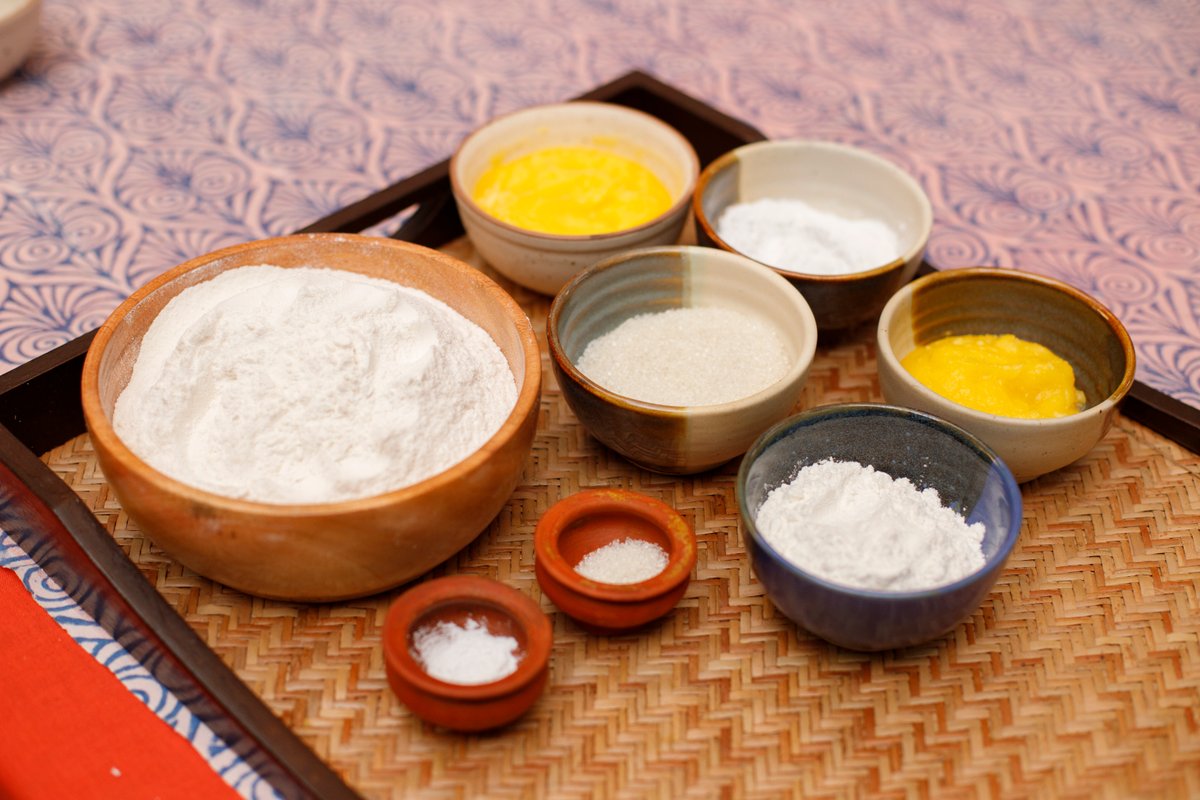
What is self-rising flour, and how is it different from all-purpose flour?
Self-rising flour is flour with baking powder and salt already mixed in, so a recipe that uses it needs no separate raising agent. All-purpose flour is just flour. King Arthur Baking adds a second difference: store-bought self-rising flour is milled from softer wheat, with less protein than all-purpose (it gives about 8.5 percent against 11.7 percent), and less protein means a softer, more tender crumb. That is why the homemade version, which starts from all-purpose flour, works in the same recipes but can come out a little less tender. It is a flour for recipes that rise with baking powder: pancakes, biscuits, quick breads and cakes.
How do you make self-rising flour from all-purpose flour?
For every 1 cup of self-rising flour you need:
All-purpose flour: 1 cup, about 120 grams
Baking powder: 1½ teaspoons, about 7 grams
Salt: ¼ teaspoon
Scale it by the cup. 2 cups of flour (about 240 grams) take 1 tablespoon of baking powder (3 teaspoons) and ½ teaspoon of salt. 3 cups (about 360 grams) take 4½ teaspoons and ¾ teaspoon.
A cup of flour weighs a little differently depending on how you fill it: King Arthur counts 120 grams, and the USDA lists 125 grams for a cup of all-purpose flour. If a recipe gives grams, use a scale and weigh the flour.
You will see other amounts. King Arthur and Colorado State Extension use ¼ teaspoon of salt per cup. Mississippi State and Nebraska extension tables, and an older Utah State sheet, use ½ teaspoon, and the first two also take 2 teaspoons out of the cup of flour. Colorado State uses 1¼ teaspoons of baking powder where the rest use 1½. We use the lower salt amount, because a recipe can always take more salt but never less.
How do you mix it evenly, and how much should you make?
1. Put the flour in a bowl.
2. Add the baking powder and the salt.
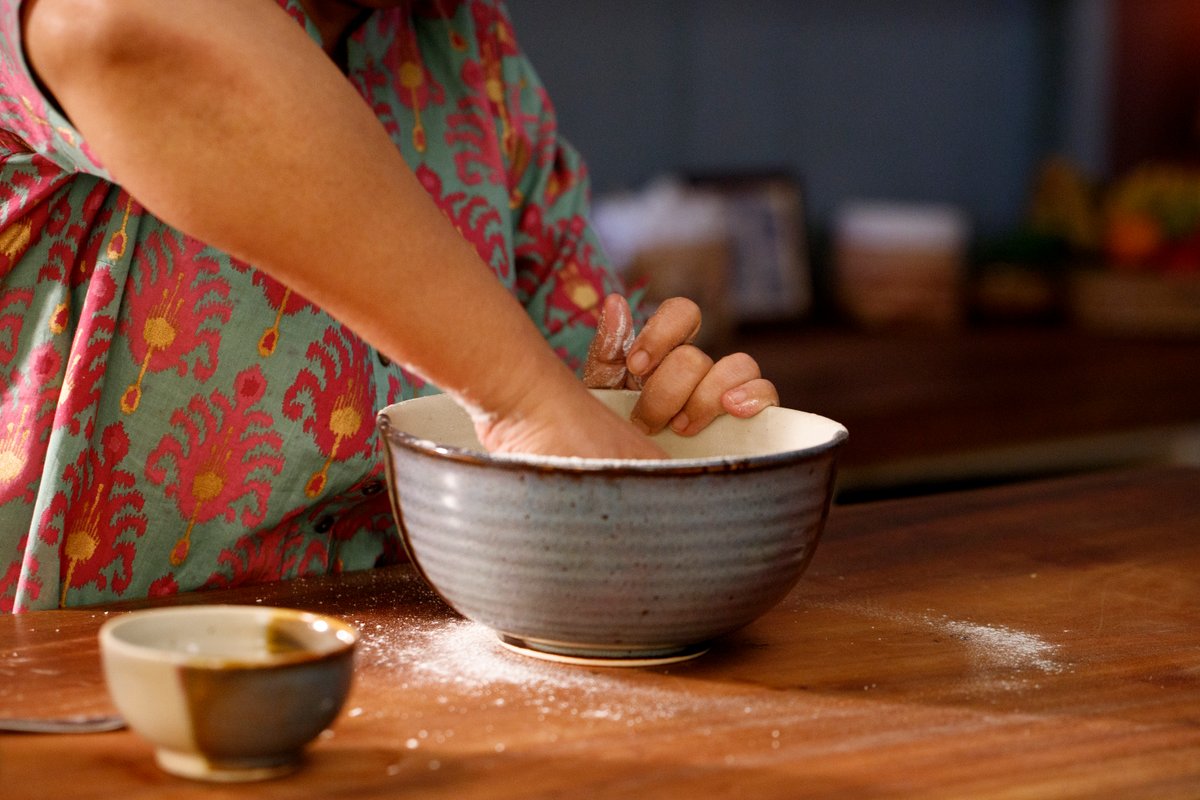
3. Whisk until it is evenly mixed. Whisking is King Arthur’s method, and sifting works too: Francis Mallmann’s pancake card below sifts its flour.
4. Use it straight away, or keep it airtight in a cool, dry place.
The baking powder is a small amount spread through a lot of flour, so a couple of stirs is not enough. Mix it well before it goes near the wet ingredients.
Make only what you will use soon. None of the sources we read gives a shelf life for homemade self-rising flour. King Arthur says the baking powder in self-rising flour gradually loses strength, so older flour may not rise as well, and America’s Test Kitchen found baking powder losing lift within months (more on that below). A batch for the next few bakes is safer than a canister for the year. That limit is our advice, not a tested number.
How do you swap self-rising flour and all-purpose flour in a recipe?
The recipe calls for self-rising flour and you have all-purpose: make the mix above and use it one for one. King Arthur says to expect a slightly less tender result.
The recipe calls for all-purpose flour and you only have self-rising: use the same amount of flour and leave out the recipe’s baking powder and salt. King Arthur adds two checks. The recipe should call for about ½ teaspoon of baking powder per cup of flour (up to 1 teaspoon per cup works), and if it calls for more than that, add the difference back. If the recipe uses baking soda, keep it.
America’s Test Kitchen is more cautious and advises against using self-rising flour in recipes that were not written for it. In its muffin test, self-rising flour in place of all-purpose flour and baking powder gave muffins that were slightly squat and much saltier. The salt is the reason you leave out the recipe’s own.
Can you use homemade self-rising flour in Francis Mallmann’s pancakes?
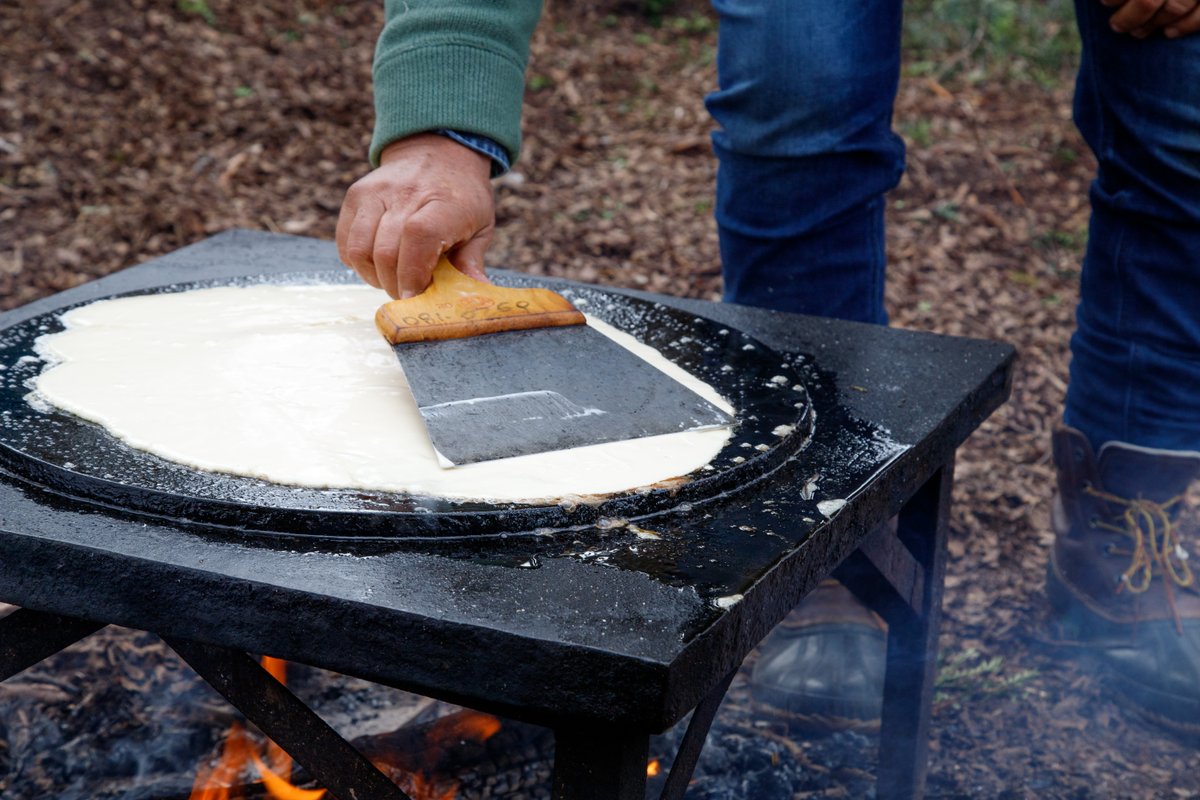
Yes, and it makes a good test, because one of our class recipes names self-rising flour outright. In the Panqueques – Dulce de Leche & Apple Pancakes lesson, Francis Mallmann cooks two dessert pancakes on the plancha, and the Pancakes recipe card lists 400 grams (3⅓ cups) of self-rising flour with 6 eggs, 1 liter of whole milk and a pinch of salt, plus optional melted butter for a creamier batter. The method on the card: whisk the eggs and milk, add the salt, sift in the flour, whisk to blend, then rest the batter in the fridge for 1 to 24 hours if you like. Francis says he makes it the day before. He also calls it a heavier batter than the one he usually uses, because it has to take the heat of the plancha.
If you only have all-purpose flour, scale the mix to his flour: 400 grams of all-purpose flour (3⅓ cups) takes 5 teaspoons of baking powder and a scant teaspoon of salt. Whisk them together first, then follow the card. The salt is now in the flour, so you can skip the separate pinch. That conversion is our arithmetic from the ratio above, not something Francis teaches, and homemade flour is a little less tender than the soft-wheat kind, so expect a slightly different pancake.
How do you know your baking powder is still good?
Homemade self-rising flour only rises as well as the baking powder in it, so check the tin before you mix. The University of Georgia Extension test: stir 1 teaspoon of baking powder into ⅓ cup of hot water, and if it foams vigorously it still has rising power.
America’s Test Kitchen warns that the fizz test is not enough on its own. In its tests every sample bubbled, including powder opened a year earlier, yet biscuits showed the real loss: the rise declined as the powder aged and was about half the height of fresh at 10 months. Its advice is to write the date you open the tin on it and replace the powder after about six months. Georgia Extension is more generous and says baking powder keeps 12 to 18 months in a tightly covered, dry place; we would follow the shorter figure. If you want to see how baking powder differs from baking soda, our guide to baking soda versus baking powder covers it.
So the next time you open a new tin, write the date on the lid. It is a ten-second habit that tells you when to start over, and it is what keeps a batch of homemade self-rising flour, and Francis’s pancakes in the lesson, rising the way you expect.

Francis Mallmann, the pioneer of open-fire cooking, is South America’s most famous chef and is known for his rustic open-fire cooking style in wild and remote locations. Join the James Beard award-winning author and Chef’s Table star as he brings you on a journey into his kitchen in the Patagonian wild where he teaches you how to master the grill and his Argentine-style barbecue.