What Is Ghee? Ghee vs Clarified Butter and How to Make Clarified Butter
Ghee is clarified butter that has been cooked a little longer, until the milk solids brown, which gives it a nutty flavor. Plain clarified butter is strained earlier, while the solids are still pale, so it tastes clean and buttery. Below: how the two compare, when to use each, and the clarified butter method from Francis Mallmann's class.
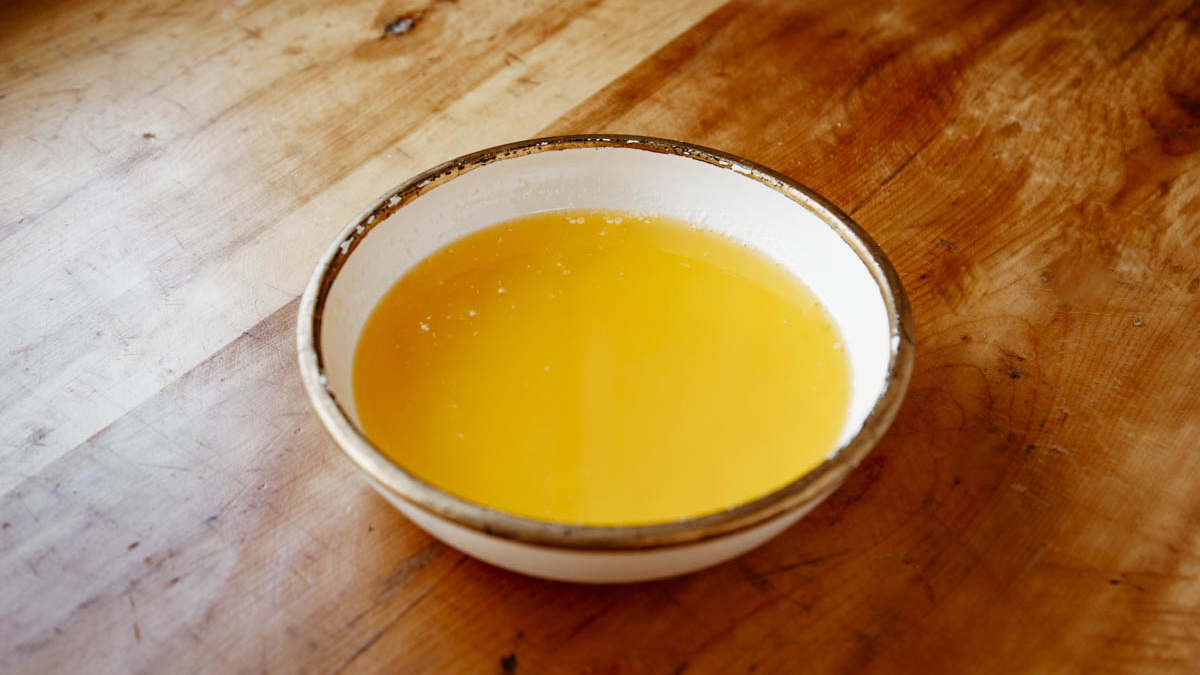
What is ghee?
Ghee is butter with the water and milk solids cooked out of it, leaving golden butterfat. It comes from South Asian cooking, where it is widely used, and it is made by simmering butter until the water cooks off, the milk solids settle and toast, and the clear fat can be poured away from them. The toasting is what gives ghee its nutty, aromatic smell. With the water and most of the milk solids gone, ghee tolerates much more heat than butter before it burns.
How is ghee different from clarified butter?
They are close relatives, and the difference is how long the butter cooks:
Clarified butter: butter melted gently until the water evaporates and the milk solids separate, then poured off while still pale. The fat tastes clean and buttery.
Ghee: the same process taken further, so the milk solids brown before they are strained out. The fat tastes nutty and toasty.
Both are mostly pure butterfat, and both stand up to far more heat than regular butter, which starts to smoke at roughly 325 to 375°F (163 to 191°C). Clarified butter and ghee are usually put at about 480°F (250°C). Published smoke points for the two are close and vary by source, so choose between them on flavor, not heat. Both also have most of the milk solids removed, so very little lactose or milk protein is left, but not none: if someone has a milk allergy, ask a doctor first.
When should you use ghee, and when clarified butter?
Reach for clarified butter when you want butter’s flavor at high heat: searing meat, crisping potatoes, frying in a hot pan. Francis Mallmann’s class calls it the secret weapon behind his crispy, luxurious food. With no milk solids to burn, it suits cooking over open flames and gives crunchier potatoes, a better char on seared meat and vegetables that sizzle in butterfat without scorching. Reach for ghee when the nutty flavor is part of the dish, as in many South Asian recipes, or when you want a toasty note on rice, toast or vegetables. In a hot pan the two do the same job, so the choice is mostly the taste you want.
How do you make clarified butter the way Francis Mallmann's class teaches it?
This follows the Clarified Butter lesson in Francis Mallmann’s class, where his sous chef Ricki Motta shows the method. It takes one ingredient and a little patience:
Butter: 400 grams (14 ounces)
Equipment: a glass or metal bowl, a pot for the water bath, and a second bowl
1. Put the butter in the glass or metal bowl.
2. Set it over a bain-marie, a water bath, on low heat and let it melt slowly, about 30 to 40 minutes.
3. Take it off the heat and skim the white foam from the top.
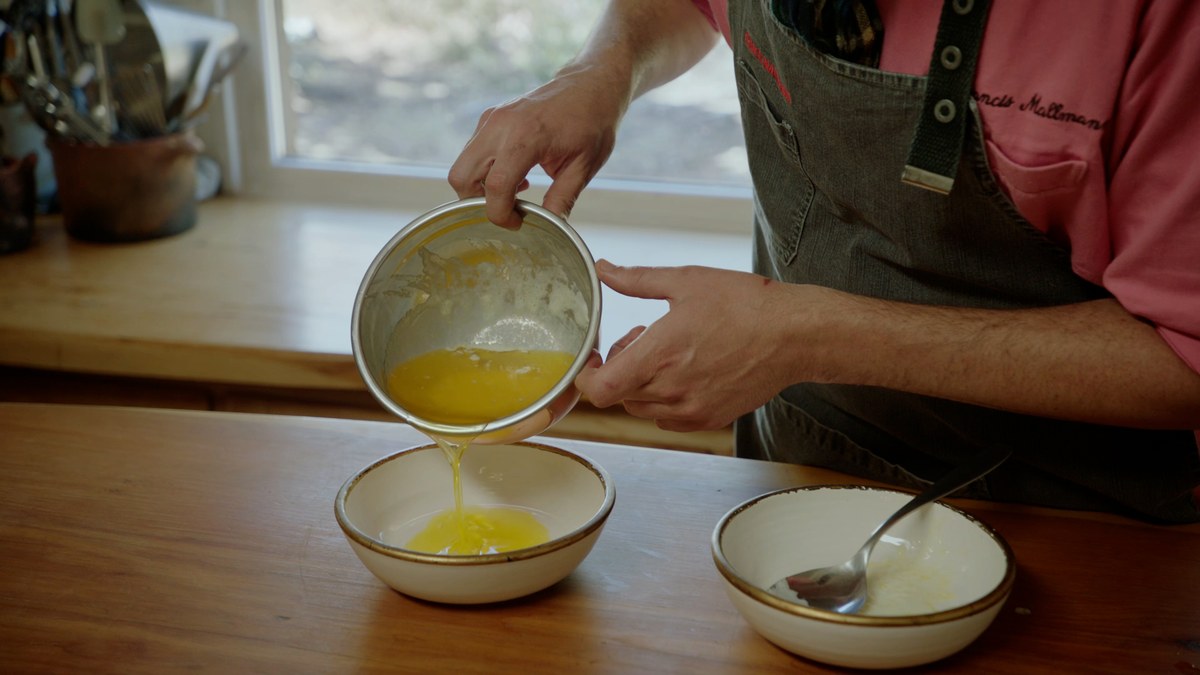
4. Once the butter is completely melted, pour the golden liquid carefully into the second bowl, leaving the milk solids and any brown bits behind.
5. Let it cool. What is in the second bowl is your clarified butter.
Pouring slowly is the whole trick: the brown bits stay in the first bowl, so none of them end up in the finished butter.
How do you store clarified butter, and how long does it keep?
Once it has cooled, move the clarified butter to a sealed container and put it in the refrigerator. Francis Mallmann’s lesson says it keeps for at least 6 months there, and many cooks say up to a year. That is far longer than regular butter because the water is gone. Go by smell and taste: if it turns rancid or sour, throw it out. To keep it longer, freeze it, and do not can it at home, since university extension guidance says there are no safe home canning instructions for ghee, butter or cooking oils.
What should you cook with clarified butter first?
Start with potatoes. Francis Mallmann cooks his smashed potatoes slowly in clarified butter on a plancha, and our crispy smashed potatoes guide shows how to get that crisp edge at home. After that, use it to sear a steak or toss vegetables in a hot pan, anywhere regular butter would brown too fast. Cook along with the Clarified Butter recipe, and find the rest of his Argentine cooking in the class with Francis Mallmann.

Francis Mallmann, the pioneer of open-fire cooking, is South America’s most famous chef and is known for his rustic open-fire cooking style in wild and remote locations. Join the James Beard award-winning author and Chef’s Table star as he brings you on a journey into his kitchen in the Patagonian wild where he teaches you how to master the grill and his Argentine-style barbecue.