What Is Tahini
Tahini is a smooth paste made from ground sesame seeds, nutty, slightly bitter, and pourable when it's fresh. It's the ingredient that makes hummus taste like hummus instead of just mashed chickpeas, but treating it as "the hummus ingredient" undersells it, it shows up across Middle Eastern and Mediterranean cooking in sauces, dressings, and even desserts. Here's what it actually is, why it separates in the jar, and where else it belongs on your shelf.
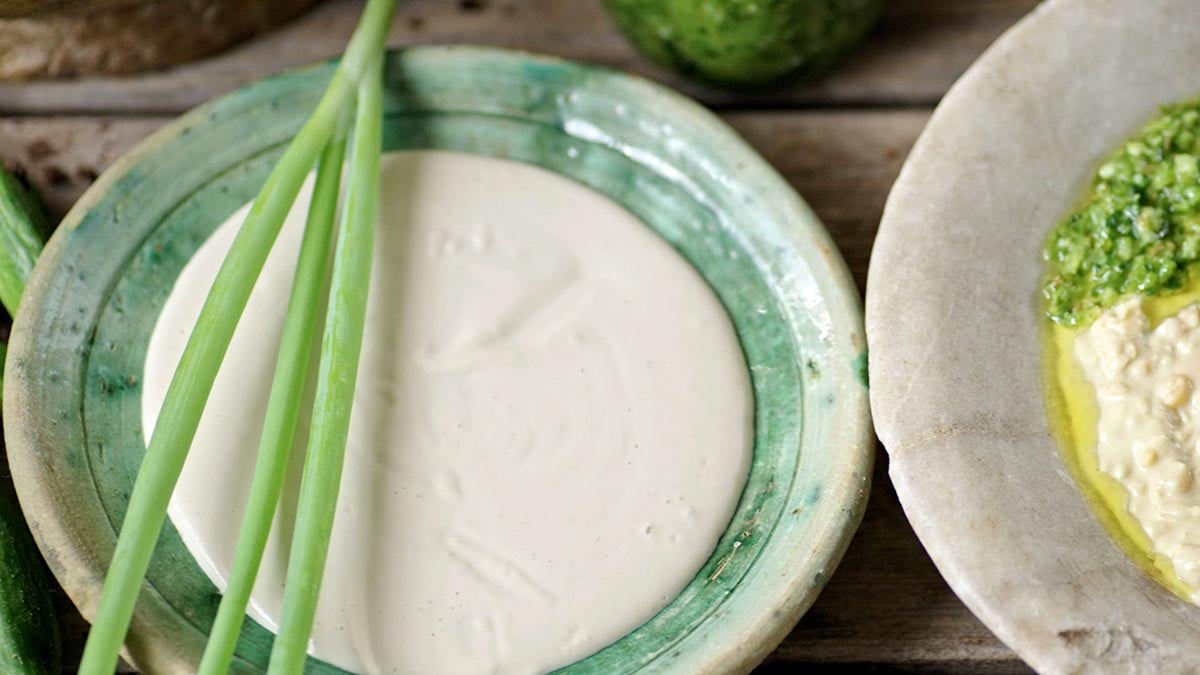
What tahini actually is, and how it's made
Tahini is made by grinding sesame seeds into a smooth, thick paste, similar in texture to natural peanut butter but with a flavor that’s more bitter and savory than sweet. Most commercial tahini is made from hulled seeds, meaning the outer husk is removed before grinding, which gives a lighter color and milder flavor. Unhulled tahini, made with the husk still on, is darker, more bitter, and less common outside specialty stores. Some producers lightly toast the seeds before grinding, which deepens the flavor further.
Why tahini separates, and what to do about it
Tahini separates in the jar for the same reason natural peanut butter does, it has no added stabilizers, so the natural oil in the sesame seeds rises to the top over time. This is normal, not a sign it’s gone bad. Stir it thoroughly before every use, scraping from the bottom of the jar where the solids settle, until it’s uniformly smooth. Storing the jar upside down between uses helps redistribute the oil so it separates less dramatically next time.
Tahini's real job in Hummus Masabacha
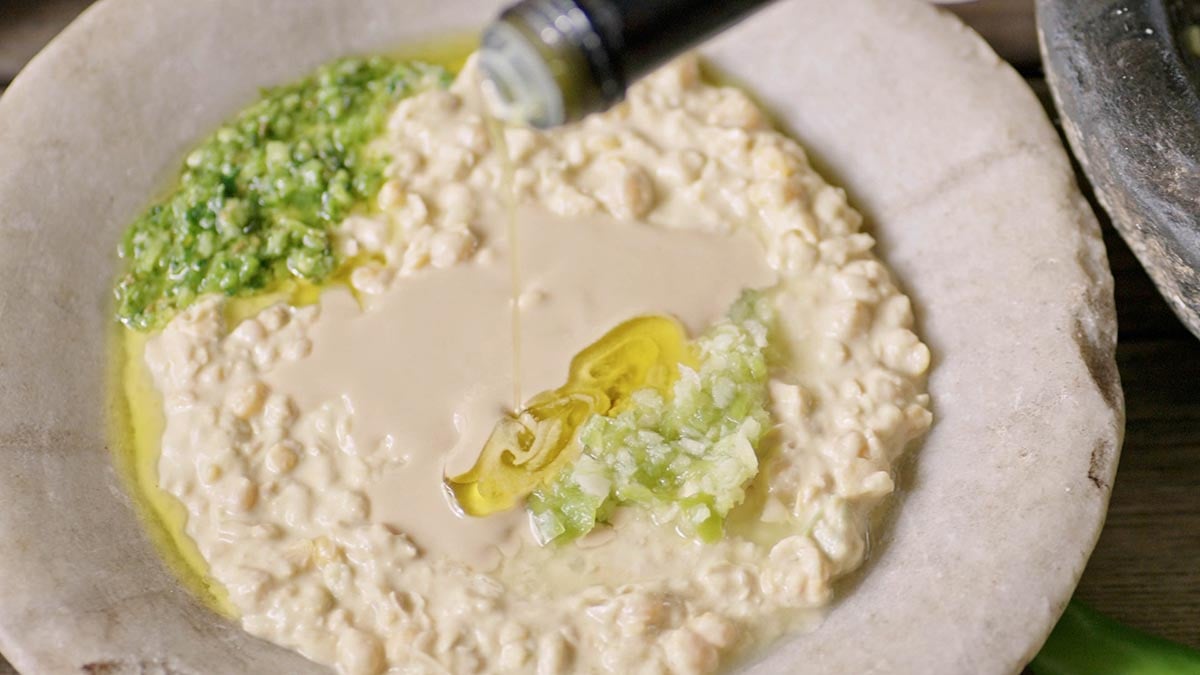
Chef Erez Komarovsky‘s Hummus Masabacha, from his Hummus Mezze lesson, uses tahini differently than most home versions of hummus: instead of blending it smooth into every chickpea, the tahini sauce is served warm, folded loosely with whole and mashed chickpeas rather than pureed into one uniform paste. It’s a reminder that tahini’s job in hummus isn’t just flavor, it’s texture and richness, and how you incorporate it changes the dish as much as the seasoning does.
Beyond hummus: where tahini actually shows up
Tahini sauce, thinned with lemon juice and water, is the standard drizzle for falafel, roasted vegetables, and grilled meats across the Middle East, not an optional garnish. Baba ganoush leans on it the same way hummus does, folded into smoky roasted eggplant instead of chickpeas. On the sweeter side, halva is essentially whipped, sweetened tahini set into a dense candy, and tahini shows up in cookies and blondies for the same nutty depth peanut butter gives American baking.
Picking a good jar of tahini
Good tahini should be pourable, not stiff, straight out of the jar once stirred, a very thick or dry paste often means it’s old or lower quality. Color is a rough guide too: a lighter, ivory tahini generally means hulled, well-processed seeds, while an unusually dark or grayish tahini tends to taste more bitter. Erez’s own recipe calls for a brand from the region, Hayona Tahini, which reflects the broader point: tahini quality varies a lot more by producer than most sesame products, so it’s worth seeking out one made specifically for eating rather than an industrial baking-grade tahini.
Storing tahini once it's opened
An unopened jar of tahini keeps in the pantry for months, well past most other condiments, but once it’s open, refrigerating it slows the sesame oil from turning rancid and extends its life to several months rather than a few weeks. Refrigeration will make it stiffer and separate faster, so plan on stirring more thoroughly, or letting it sit at room temperature for a few minutes, before using cold tahini straight from the fridge.

Renowned chef, baker, and cookbook author celebrated as the “Godfather” of modern Israeli cuisine, Erez Komarovsky takes viewers on a journey to discover the roots of his Middle Eastern cuisine. Starting from the bustling markets of Tel Aviv, Israel to his blissful home in the North Galilee, Erez teaches viewers how to bake his “flowering” Challah and Pita breads, plus his signature dishes including Lamb Kebabs, Hummus Mezze with Falafel, Harissa Chicken, Fish Crudo and more.