How to Fillet a Fish: Jamie Oliver’s Step-by-Step Method for Any Round Fish
To fillet a fish, cut down to the bone behind the head, then slice each side off the spine in long, gentle cuts. This guide follows Jamie Oliver's lesson on round fish such as salmon, trout and sea bass: how to pick a fish, what you need, each cut, and what to do with the head, spine and trimmings.

Which fish can you fillet this way, and how do you pick a good one?
Jamie Oliver says the method is a principle that applies to any round fish, whether salmon, trout, sea bass or barramundi. He demonstrates on a farmed salmon of roughly 3 kilos (about 6½ pounds), already gutted and scaled by the fishmonger, which he calls the really messy bit, so ask your fishmonger to do the same. When he buys fish, he says, he relies on his senses: smell, clear eyes and beautiful red gills. The FDA gives the same checklist for whole fish and adds firm flesh that springs back when pressed, and it advises buying only fish that is refrigerated or sitting on a thick bed of fresh ice. At home, Jamie rubs the fish down with kitchen paper. Fish is usually sold on ice and then bagged, all wet environments, and he says excess moisture promotes smells before you have even started cutting.
What equipment do you need to fillet a fish?
The setup comes from the How to Fillet & Prep Fish lesson, which lists these supplies:
Fish: 1 round fish, such as salmon, scaled and gutted
Knife: a sharp filleting knife; Jamie says a larger sharp knife with some length works too, but the filleting knife has more flex
Chopping board: 1 large board, set on a wet cloth
Kitchen paper: to pat the fish dry
Kitchen pliers: for the pin bones, or use tweezers
Bowl: 1 large, for the head and spine
Cloth: one is listed, and a wet one goes under the board
The wet cloth matters because, as Jamie puts it, you do not want to use a knife on a board that moves around. Before the first cut, pat the whole fish dry with the kitchen paper.
How do you cut the first and second fillet?
These steps follow the How to Fillet & Prep Fish recipe and the lesson captions. Jamie asks for long, clean, convincing movements, not speed: fishmongers work much quicker, and he slows it down so you can follow.
1. Feel where the pink flesh meets the bone at the shoulder, just below the head. Rest the knife there at an angle and, with a decisive motion, slice down to the bone.
2. Turn the fish over and repeat.
3. Grip the head, pull or twist it off and put it in the large bowl. Jamie says you do not have to take the head off, but with a big fish it helps you break the job down and feel confident it is in your hands.
4. Find where the spine starts and picture a line just beside the dorsal fin, all the way down. Use the length of the knife like a ruler and make long, gentle swipes from head to tail, with your free hand as a guide.
5. Keep the tip of the knife horizontal and as close to the spine as you can, and pull the flesh back with your free hand as you go.
6. When you reach the hump of the spine, keep going until you slice through and come out cleanly on the other side. Putting your hand on the other side of the knife gives you something to hold onto.
7. Turn the fish around, put the knife in along the ribs, hold the flesh up and run the knife all the way through. That frees the fillet, still with the ribs on.
8. Flip the fish over and repeat for the second fillet, then break up the spine and put it in the bowl.
Take your time. Jamie warns that rushing leaves a scruffy fillet with lots of meat on the bone, and at home you do not have to hurry.

How do you remove the ribs, pin bones and skin?
Once both fillets are off, clean up your workspace and sharpen your knife if you need to. Then, for each fillet:
1. Trim off the end so it is nice and clean.
2. With the knife at an angle, slice off the belly to remove the ribs, using the ribs as a guide so you do not take off too much flesh.
3. Trim the fillet so it is nice and clean, and save the trimmings for fishcakes.
4. Remove the pin bones, at an angle, using kitchen pliers or tweezers.
5. Repeat with the other fillet.
The lesson also shows how to take the skin off before dicing fish for sauces, pies or fillings: cut down to the skin but not all the way through, then angle the knife and gently move it all the way through.
How do you portion the fillets, and what can you cook?
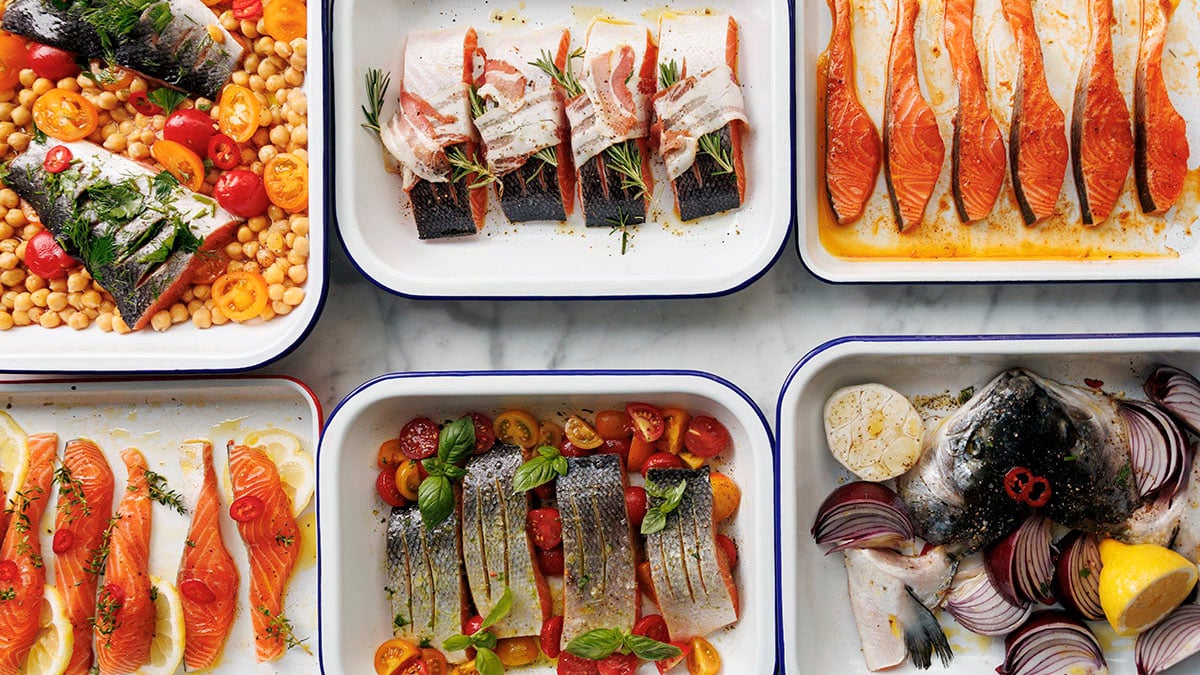
You can cook the fillets whole or break them down: cut off the tail piece and score it (for stuffing with herbs and seasoning), slice some into smaller fillets, and cut some into slices of 1 to 2 centimeters (about ½ to ¾ inch) or bite-sized chunks. Jamie’s traybake method then puts the portions into roasting trays, each covered and frozen until ready to roast, and scaled up or down to suit your family. Five of the lesson’s traybakes use the fillets and tail:
Salmon, Lemon & Smoked Paprika Traybake: thin slices with lemon zest, black pepper, smoked paprika or cayenne, and olive oil
Salmon, Chili, Lemon & Thyme Traybake: slices or fillets with sea salt, pepper, red chili, thyme, olive oil and lemon slices
Salmon, Tomatoes & Basil Oil Traybake: scored fillets with cherry tomatoes and a basil oil of basil, sea salt, olive oil and lemon juice worked into the cuts
Pancetta-wrapped Salmon & Rosemary Traybake: fillets with rosemary, wrapped in pancetta, bacon or prosciutto
Herb-studded Salmon, Tomato & Chickpea Traybake: scored salmon tails stuffed with fennel tops, dill or your favorite herbs, on chickpeas and cherry tomatoes
What do you do with the head, spine and trimmings?
The lesson is about wasting less, so every part has a use:
Trimmings: save them for fishcakes, and trim off the belly fat, cut into smaller pieces, for the same
Diced fish: use it for sauces, pies or fillings
Head: split it out, because the cheeks and collars are a real treat, then roast it with olive oil and herbs and pull the meat over a salad
The sixth traybake, Garlicky Salmon Head & Chili Traybake, does just that: the head goes in a tray with olive oil, wedges of red onion, a halved garlic bulb, sliced red chilies, sea salt, black pepper and lemon wedges, then it is covered and frozen until ready to roast. After roasting, pull all the meat from the head and toss it through crisp salad leaves. Next time you buy a whole fish, try portioning it into trays for the freezer. As the lesson puts it, one fish, endless opportunities. To cook along with the chef, learn it from Jamie Oliver.

During a 20-year television and publishing career, British chef Jamie Oliver has inspired millions to cook healthy and delicious food. A global phenomenon, Jamie has published over 20 bestselling internationally acclaimed cookbooks. He leads a global food revolution helping to reduce childhood obesity and promote nutrition education.