How to Make Dulce de Leche Pancakes: Francis Mallmann’s Panqueques from the Plancha
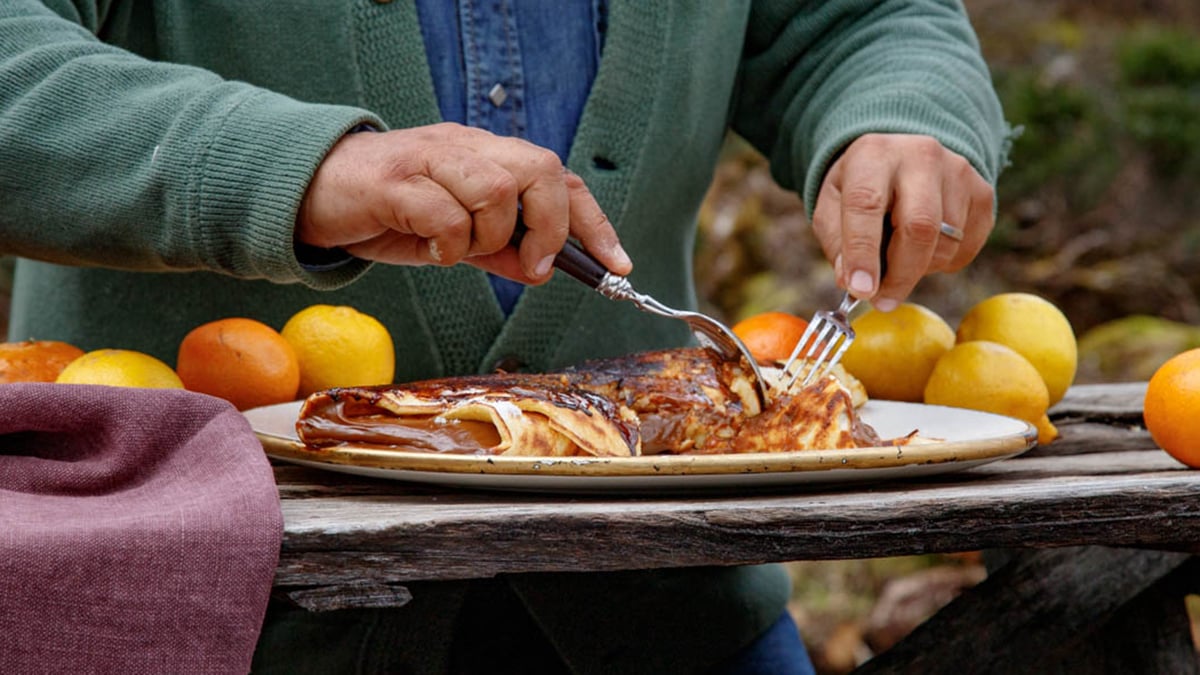
Dulce de leche pancakes are griddled pancakes spread with warm dulce de leche, rolled up and finished with a crust of burnt sugar. Francis Mallmann cooks them on a plancha in his Argentine class: a batter of eggs, milk and flour, about 5 minutes until golden, a roll around the dulce de leche, then sugar burnt on top. Below: the batter, the pan, the roll and the sugar crust, with every quantity taken from his recipe cards.
What are dulce de leche pancakes?
Panqueques are the Argentine pancake. The class notes explain that in Argentina they are generally thin crepes, served as a dessert with dollops of dulce de leche, the thick, sweet milk caramel found in almost every Argentine dessert (our homemade dulce de leche guide covers how it is made, so it is not repeated here). In Francis Mallmann‘s Dulce de Leche & Apple Pancakes lesson, he cooks two of them on a plancha: a dulce de leche pancake and a Granny Smith apple pancake. The dulce de leche one is a griddled pancake, spread with dulce de leche, rolled up and finished with a crust of burnt sugar. His batter is not an everyday crepe batter: in the lesson he calls it heavier, because it has to take the heat of the plancha, and not as thin as a crepe. He serves it for dessert, and the recipe notes say you can also serve it as a sweet breakfast.
What goes into the batter, and do you have to rest it?
The batter comes from Francis’s Pancakes recipe, which the card says serves 10:
Eggs: 6
Whole milk: 1 liter (4 cups)
Salt: 1 pinch
Self-rising flour: 400 grams (3¼ cups)
Melted butter, optional: 80 grams (¼ cup plus 1 tablespoon), for a creamier batter
Crack the eggs into a large bowl and whisk in the milk. Add the salt and mix, then sift in the flour and whisk to blend. If you want the creamier batter, add the melted butter and whisk again. Out of self-rising flour? Our guide to making self-rising flour at home shows the mix. The card also lists 100 grams of sugar (½ cup) among the batter ingredients, but none of its steps adds it and Francis does not add it on camera, so check the lesson before you decide. Resting is optional on the card: refrigerate for 1 to 24 hours. Francis likes to make the batter the day before and leave it in the fridge overnight, and he says the same in the video. The card lists 5 minutes of hands-on time for the batter.
How do you cook the pancake on a plancha or in a cast iron pan?
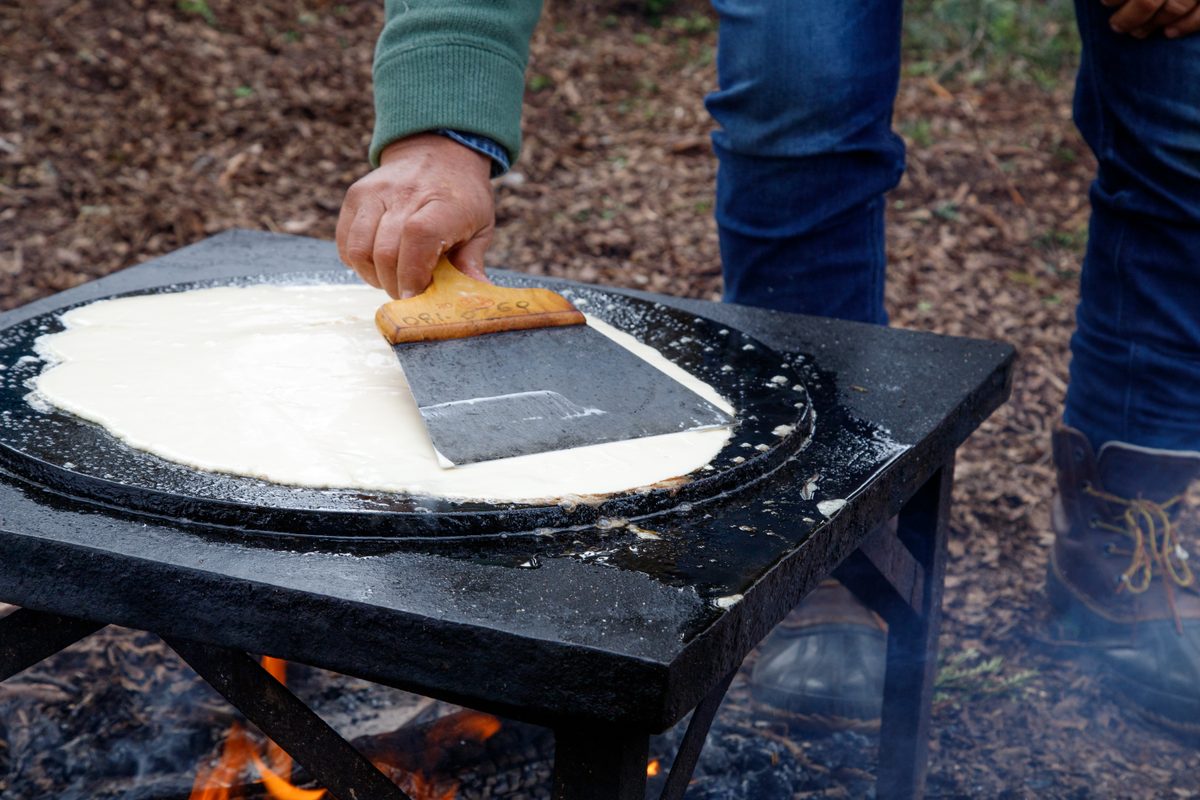
Start with 50 grams of butter (¼ cup), melted on the chapa, which is the card’s word for the plancha, or on a cast-iron griddle. Add the batter and spread it evenly over the surface with a spatula. In a cast-iron pan, heat to medium-low and tilt the pan to swirl the batter into a thin circle. Cook until lightly golden, about 5 minutes. No plancha at home? Francis says both pancakes can be made in a cast iron pan on a propane stove, a wood stove or an electric one, and the card lists a cast iron pan as the indoor option. Neither the card nor the video gives an amount of batter per pancake, so judge it by the thin circle you are after. The Dulce de Leche Pancake recipe card lists 5 minutes of hands-on time and 10 minutes in total.
When do you add the dulce de leche, and how do you roll it?
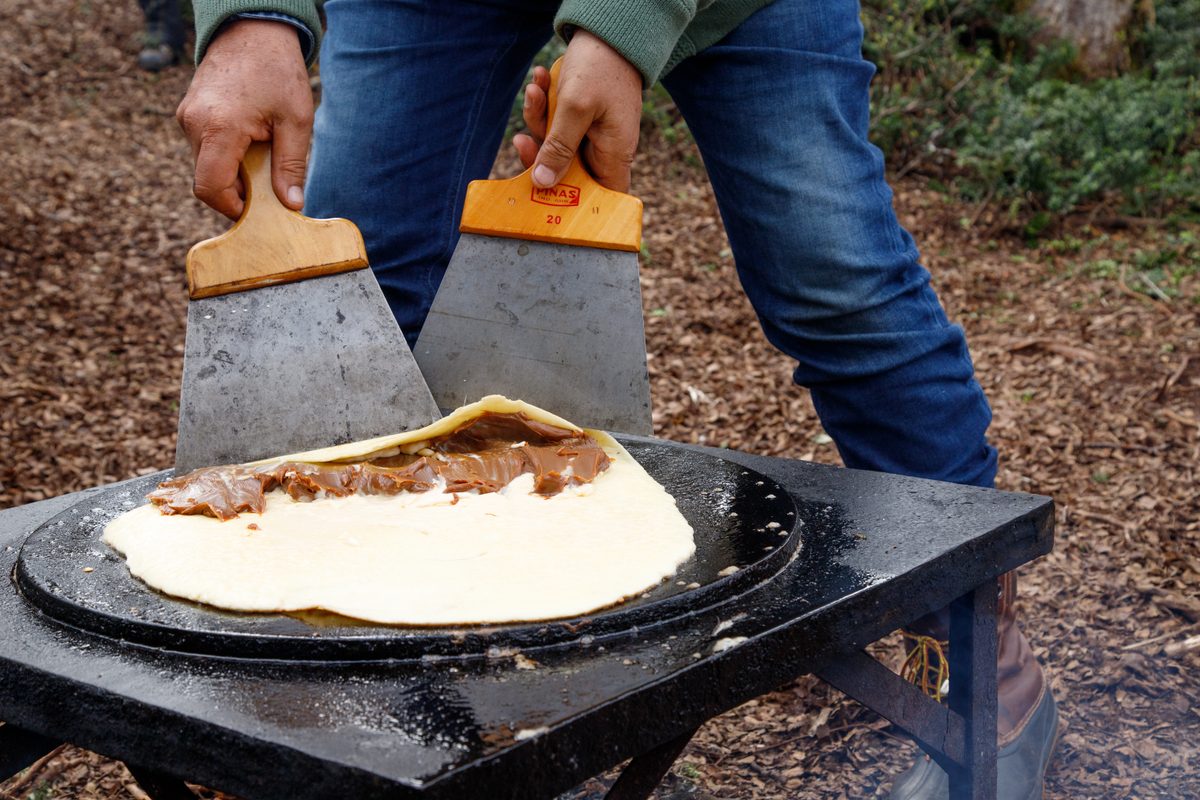
Once the pancake is lightly golden, spread 100 grams of dulce de leche over the top, then roll the pancake up. Keep cooking: the dulce de leche should become hot and loosen in texture, and the card says to cook until it starts to melt and trickle out at the edges. Francis says the same on camera: it is ready when the dulce de leche starts to move in the corners, and it has to be very hot. The card lists both the 100 grams of dulce de leche and the 50 grams of butter for a recipe that serves 10 and does not say how many pancakes that makes.
How do you get the burnt sugar crust?
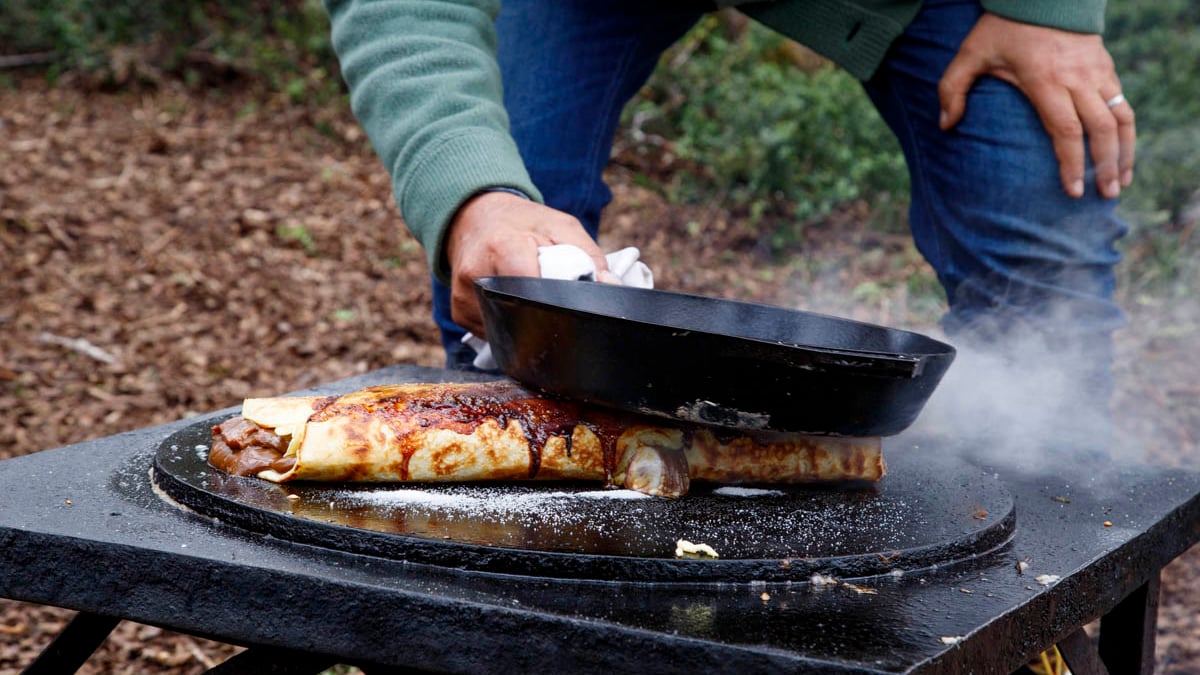
Spread sugar over the rolled pancake, then place a hot cast-iron pan on top of it. The heat melts the sugar until it slightly burns and caramelizes into a crust. Francis calls the burnt sugar on top very important. If you have a kitchen torch, the card says you can use it to carefully caramelize the sugar instead, and Francis says the same at home. The card gives no amount of sugar for the topping, so start with a light, even layer. Serve immediately, for dessert or for breakfast.
What else can you make with the same batter?
Francis makes his Granny Smith apple pancake from the same batter on the same plancha. For it he melts 50 grams of butter on the griddle, adds sugar directly to it, lays peeled apple slices on the sugar and spreads the batter between and over them, then flips the pancake when the bottom is set and golden, after about 5 minutes. He leaves a gap between the slices on purpose: the batter fills it and gives the pancake the strength to flip. He chooses Granny Smith for their acidity, a contrast to the sugar. Next, watch him lay out the apples and flip the pancake in the full Dulce de Leche & Apple Pancakes lesson.
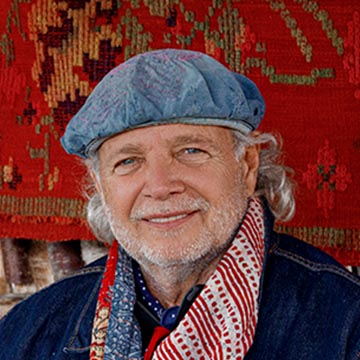
Francis Mallmann, the pioneer of open-fire cooking, is South America’s most famous chef and is known for his rustic open-fire cooking style in wild and remote locations. Join the James Beard award-winning author and Chef’s Table star as he brings you on a journey into his kitchen in the Patagonian wild where he teaches you how to master the grill and his Argentine-style barbecue.