Types of Chiles: A Guide to Heat, Flavor, and When to Use Each One
Chiles are grouped by heat and by whether they're fresh or dried: bell peppers and poblanos are mild, jalapeños and serranos are medium, and habaneros and Scotch bonnets are hot. Drying changes more than heat, turning a poblano into an ancho and a jalapeño into a chipotle. Here's how heat is measured, how to swap one chile for another, and how to handle and store them, with the Scotch bonnet in Kwame Onwuachi's Jerk Paste as the example.
Why the Scotch bonnet pepper is the backbone of Jamaican jerk
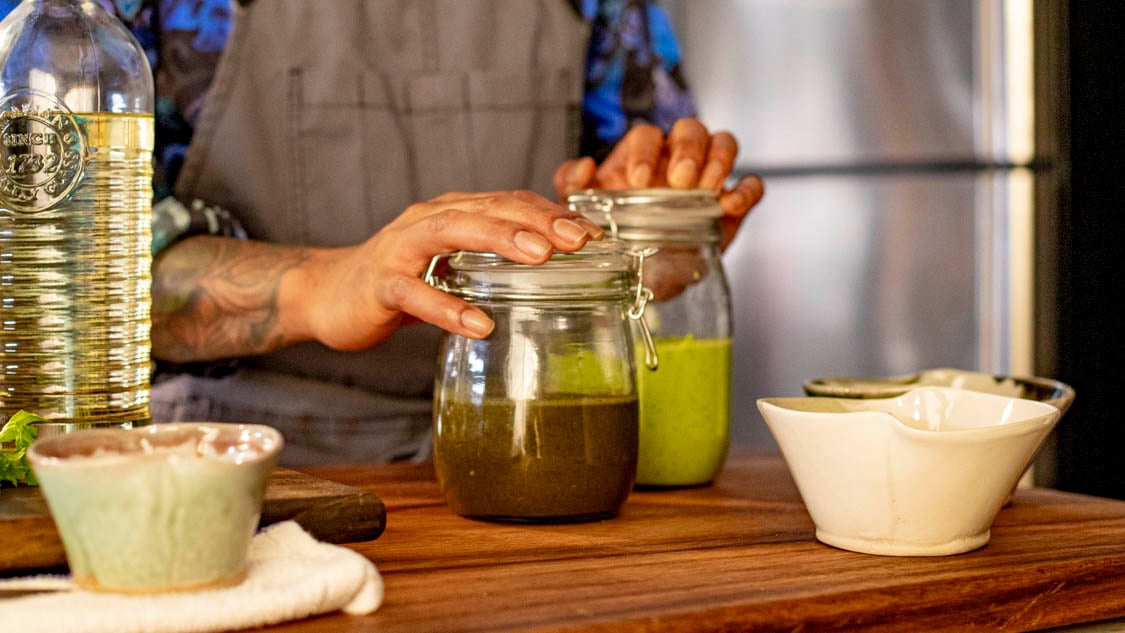
Kwame Onwuachi‘s Jerk Paste, from his Kwame’s Pantry lesson, calls for Scotch bonnet peppers specifically, not just “a hot pepper.” Scotch bonnet brings a fruity, almost apple-like sweetness alongside its heat, which is exactly what gives real jerk seasoning its character. A habanero is close in heat and can stand in when Scotch bonnet isn’t available, but it doesn’t carry quite the same fruitiness. Kwame uses the same paste in his Jerk Chicken lesson.
Mild to wild: how chile heat is actually measured
Chile heat is measured in Scoville Heat Units (SHU), based on how much capsaicin, the compound that triggers the burn, a pepper contains. A bell pepper sits at 0 SHU, a jalapeño runs 2,500 to 8,000, a serrano 10,000 to 23,000, and a habanero jumps way up to 100,000 to 350,000. Scotch bonnet sits in that same habanero range, and at the extreme end, a ghost pepper or Carolina Reaper can hit over a million SHU. The scale isn’t just a curiosity: it’s the fastest way to guess how a chile you’ve never used will behave before you commit a whole dish to it.
Drying a chile changes more than how hot it is
Drying concentrates a chile’s sugars and breaks down its cell structure, which is why a dried chile tastes deeper and more complex than the same chile fresh, often smoky, raisiny, or earthy instead of bright and grassy. A fresh poblano becomes an ancho once dried, trading its mild, vegetal snap for a mellow, almost chocolatey depth. A jalapeño smoked and dried becomes a chipotle, picking up that distinct smokiness the fresh pepper never had. Reaching for the fresh or dried version of the “same” chile can change a recipe as much as swapping to a different pepper entirely.
Types of chiles and when to use each one
Match the chile to the job. Poblanos are mild enough to stuff or roast whole, and once dried as anchos they turn up in rich, earthy sauces. Jalapeños and serranos suit salsas, pickles and fresh toppings, where their bright, grassy heat is the point, and the serrano is the sharper of the two. Habaneros and Scotch bonnets belong in dishes that can carry real heat and fruitiness, like jerk marinades and pepper sauces, and a little goes a long way. Chipotles bring smoke, so they suit braises, marinades and anything that wants a slow, smoky warmth. If you’d rather work with a paste, Erez Komarovsky‘s harissa is a hot red chili pepper paste you can make at home.
Substituting one chile for another without ruining the dish
Match heat level first, then flavor profile, not just “hot for hot.” Serrano works as a hotter stand-in for jalapeño since they share the same bright, grassy quality. Habanero is the closest realistic substitute for Scotch bonnet, close enough in heat and fruitiness to work in most jerk-style marinades. What doesn’t work is swapping a mild dried chile like ancho into a recipe built around a fiery fresh one, or the reverse. The flavor gap is too wide even when a heat chart says they’re comparable.
Handling chiles without regretting it later
Capsaicin is an oil, not something water washes off easily, so wear gloves when working with hot chiles, especially Scotch bonnet or habanero, and avoid touching your eyes or face until you’ve washed your hands with soap. Most of a chile’s heat lives in the white membrane (the pith) that holds the seeds, not in the flesh, so removing it gives you the chile’s flavor with meaningfully less burn. If you do get a mouthful more than you bargained for, reach for milk or yogurt rather than water. The casein in dairy binds capsaicin and carries it away instead of just spreading it around.
Storing fresh and dried chiles
Fresh chiles keep for one to two weeks in the fridge’s crisper drawer, and freeze well whole for several months if you want to stock up while they’re in season. Dried chiles last far longer, six months to a year, in an airtight container kept away from light and heat, which is what keeps their flavor from fading into dust. Either way, a whole chile holds up better in storage than a chopped or paste form, so it’s worth prepping just before you cook rather than ahead of time.

Kwame Onwuachi started peeling shrimp and stirring roux at 5 years old in his mother’s catering kitchen in the Bronx. The James Beard Award-winning chef has received many accolades since then, including FOOD & WINE’S Best New Chef, Esquire Magazine’s 2019 Chef of the Year, 30 Under 30 honoree by both Forbes and Zagat, and has appeared on Bravo’s Top Chef as both a contestant and judge. In his class, Onwuachi embraces the richness of Afro-Caribbean culture and cuisine, and teaches home cooks how to cook his favorite Jamaican recipes.