How to Make Dal: Asma Khan’s Tamarind Dal with Tempering and Rice
To make dal Asma Khan's way, soak red lentils, cook them in a chili, onion and garlic base, add tamarind, and finish with a tempering. This is her tamarind dal, a soupy comfort dish eaten with rice, not a method for every dal; below are the ingredients, the steps, the tempering and the rice from her lesson.
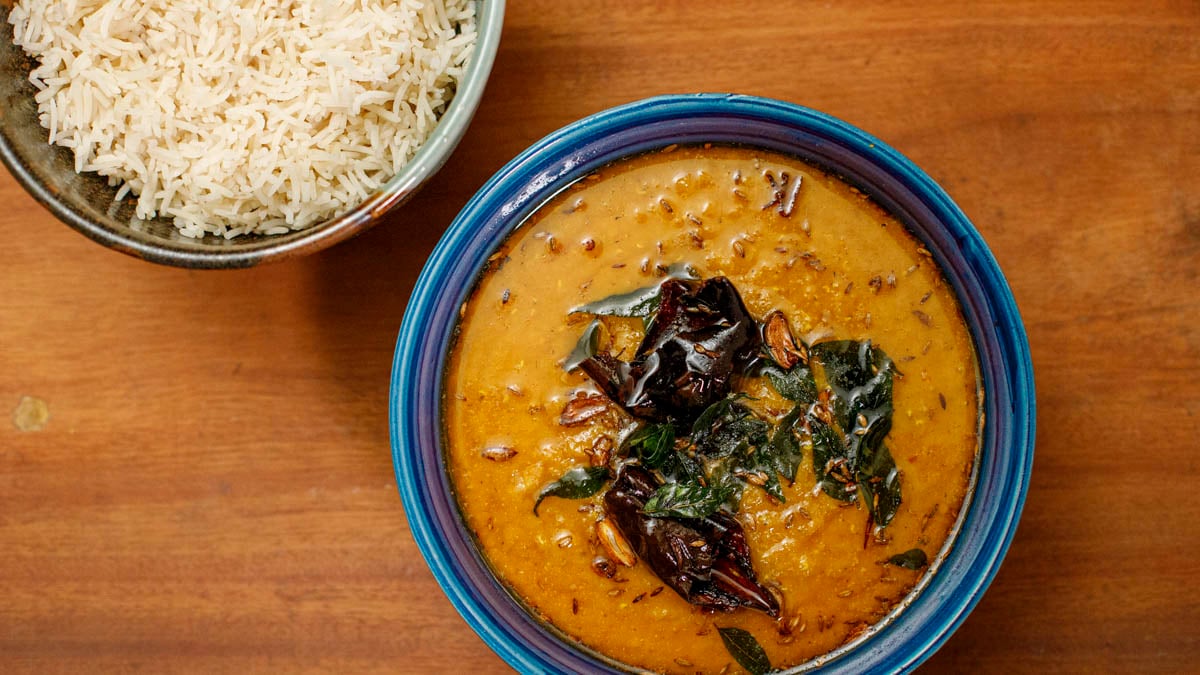
What is dal, and what kind of dal is Asma Khan's tamarind dal?
In Indian cooking, dal (also spelled daal) means dried split pulses such as lentils, peas and beans, and it is also the name of the dish cooked from them. Asma Khan says there are endless varieties, winter dal and summer dal among them, and that in most families dal is something you have every day. The one she teaches is tamarind dal, the easy comfort food she grew up with and serves in her restaurant. It is a little more watery than some dals, closer to a soup, and it is eaten with rice; she says it is called dal bhat in Bengal. The lesson describes it as sweet and sour, with balanced flavors, and it uses masoor dal, which is red lentils. The sour note comes from real tamarind pulp, which she prefers to a concentrate because she finds the taste quite different.
So this guide answers the question one way: how to make her dal. Other dals use other pulses and other flavorings.
What do you need to make Asma Khan's tamarind dal?
This follows Asma Khan’s Tamarind Dal & Rice lesson. The dal serves 6 and takes about an hour in total, with about 5 minutes of hands-on time. The lesson lists:
Masoor dal (red lentils): 500 grams
Onion: 1 small, chopped
Garlic: 4 cloves, chopped
Dried red chili peppers: 3
Vegetable oil: 2 tablespoons
Ground turmeric: 1 teaspoon
Salt: 1 teaspoon
Tomato puree: 2 tablespoons
Tamarind pulp: 3 tablespoons, dried or wet with seeds
Warm water for the tamarind: 2 cups
Warm water for cooking the dal: about 1.2 liters (about 5 cups)
You also need a heavy-based pan with a lid, a sieve, and a hand masher, a whisk or a wooden spoon. Chop the onion and garlic small; the pieces do not have to be even, because they break down in the pot. The lesson lists the whole dish, dal and rice together, as serving 6, and Asma says this makes dal for two meals.
How do you cook the dal, step by step?
1. Check the lentils for stray bits such as grit or grains of wheat. They are harmless, Asma says, but they are not dal.
2. Wash the lentils in cold water, not hot, which makes them hard to wash. Be gentle, break up any clumps with your hands, pour off the murky water and refill. It takes about four rinses, until the water runs clear.
3. Soak the lentils in fresh cold water for 30 minutes. The lesson says this speeds up the cooking.
4. While they soak, chop the onion and garlic and make the tamarind pulp. Put the 3 tablespoons of tamarind in 2 cups of warm water, warm enough to touch but not boiling, and squeeze it with your hands until the pulp comes away. Strain it through a sieve, squeezing again, before it goes into the dal. Then drain the lentils and throw away the soaking water.
5. Heat 2 tablespoons of oil in a heavy pan with a lid over medium-high heat. To check it is ready, touch the tip of a piece of onion to the oil and listen for a sizzle. Break up the 3 dried chilies and add them first, then the onion and garlic. Stir until they just start to turn golden. Stay at the stove: Asma warns that this can go black very quickly.
6. Add the drained lentils, pouring them in from low down so the oil does not splash, and stir until they are coated in oil.
7. Add the salt and the turmeric, then about 1.2 liters of warm water, and bring it to a boil. Do not let lentils stick to the base of the pan. If the dal rises too high or cooks down, top it up with warm water: the goal is neither full of liquid nor very thick.
8. When the surface is bubbling, stir in the 2 tablespoons of tomato puree. It is only a little, because this is tamarind dal and tomato should not be the main flavor.
9. Simmer for about 10 to 15 minutes, then turn off the heat, cover the pan and leave it for about 15 minutes. Stir now and then so nothing catches.
10. Stir in the tamarind. Start with half, taste, and add more, because Asma says it is hard to know how sour tamarind will be. Taste for salt now too.
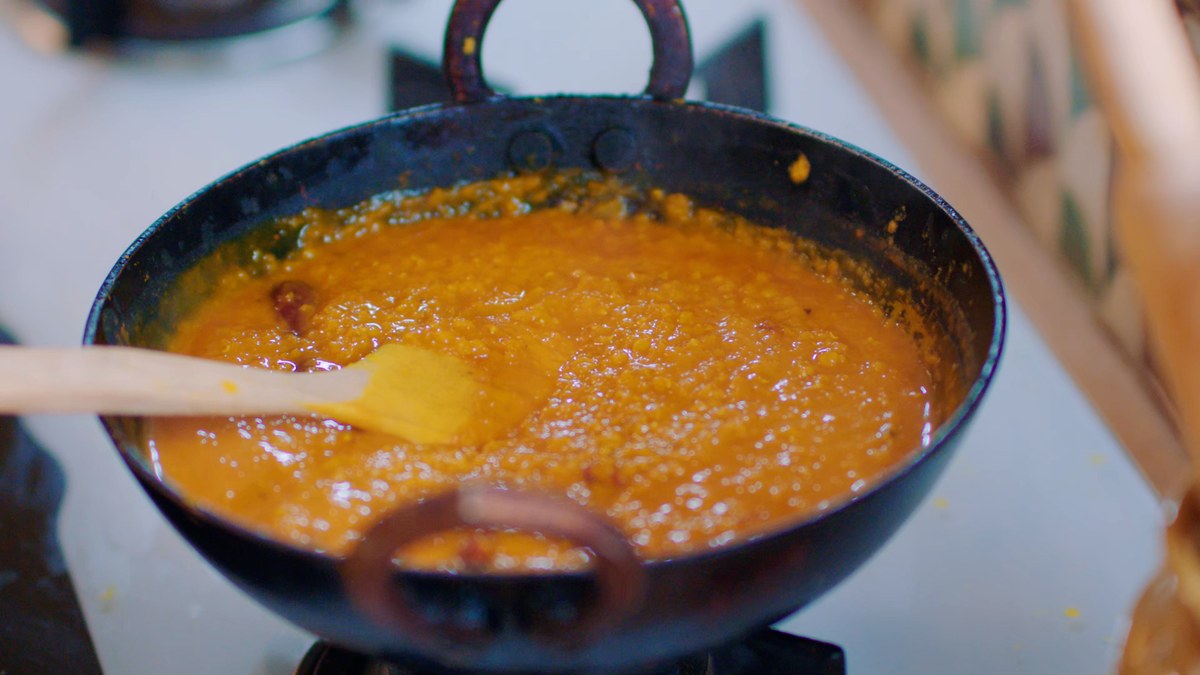
11. Lightly crush the lentils with a masher, a whisk or the back of a spoon. The dal is not meant to be smooth: it is not a soup. Keep it warm until you are ready to temper it.
The full recipe is Asma Khan’s Tamarind Dal.
What is tempering, and how do you finish dal with it?
Tempering is the second stage of flavoring the dal, after the chili, onion and garlic base. In India it is called chaunk or baghar, and it is always added at the very end, even better once the dal is in the bowl you will serve it from. The lesson lists:
Oil: 2 tablespoons (Asma says ghee also works)
Cumin seeds: ½ teaspoon
Dried red chili peppers: 4
Garlic: 1 clove, cut into slivers
Fresh curry leaves: 8
1. Heat the oil in a small frying pan or a tadka, a tiny tempering pan, over high heat.
2. Work quickly so the tempering does not burn. Add the cumin seeds first and wait until they start to dance.
3. Add the dried chilies and the garlic slivers.
4. Watch the garlic until it begins to turn light brown.
5. Add the fresh curry leaves.
6. Pour the hot oil over the dal and serve at once.
Three details from the lesson: the dal should be warm when the tempering goes on, never cold, or it will not take up the flavors; if it has thickened while it waited, loosen it with a little water first; and temper only the dal you are about to eat. Asma uses mild chilies so the tamarind still tastes of tamarind, and she says dried curry leaves have no flavor, so leave them out if you cannot find fresh ones. The tempering has its own recipe, Tempering Spices.

How do you cook the rice to serve with dal?
Asma serves the dal with basmati rice cooked by the absorption method, where the rice absorbs all of its water. The lesson lists 1 cup of basmati rice, 2 cups of boiled water and 1 teaspoon of salt, plus a pot with a lid, a colander and a fork.
1. Measure 1 cup of rice, spread it out on a tray and check it for stray bits.
2. Put the rice in a large bowl. Asma uses a ceramic or wooden bowl, not glass, because a chip could fall in unseen.
3. Pour water in from a jug at the side of the bowl so it does not hit the grains with force. Wash by moving your hand in one direction only, so the tips of the grains do not break.
4. Pour off the water, refill and repeat until it runs clear, about 3 to 4 times.
5. Soak the rice for 30 minutes, or up to 2 hours.
6. Bring 2 cups of water to a boil in a pot with a lid, and drain the rice in a colander.
7. Add the rice gently and stir once or twice. When the water boils again, add the salt and stir in one direction.
8. Cook until almost all the water has been absorbed or has evaporated; Asma looks for the grains dancing up and down. Then put the lid on and simmer. After 10 to 15 minutes, check that the water has gone, and cook a little longer if it has not.
9. Press a grain: it should still have a little hardness inside. Turn off the heat, cover the pot with a clean kitchen cloth and leave it undisturbed for 10 minutes.
10. Separate the grains with a fork before serving.
The full recipe is Basmati Rice: Absorption Method.

Can you make dal ahead, and how long do leftovers keep?
Yes, and it is the reason the lesson says to temper only the dal you are about to eat: keep the rest plain and add a fresh tempering to each portion when you serve it. For leftovers in general, the USDA advises refrigerating cooked food within 2 hours of serving, keeping leftovers for 3 to 4 days in the refrigerator, and reheating them to 165°F (74°C). The lesson says nothing about how long the dal keeps, so that guidance is the one to follow. If the dal has thickened when you reheat it, loosen it with a little water, as Asma does.
Once the method feels familiar, the tempering is where you can make it your own: Asma says any dried chilies will do, so try a few until you find the heat you like. For a sweet dish from the same class, see our guide to rice pudding with jaggery. To cook along with the chef, learn it from Asma Khan.

Asma Khan, owner of famed London eatery Darjeeling Express and bestselling cookbook author of “Asma’s Indian Kitchen” teaches her favorite family recipes, inspired by her childhood in Kolkata, India. The chef, restaurateur, and activist is the first UK-based chef to be featured on Netflix’s Emmy-nominated Chef’s Table and, in 2019, was listed number 1 on Business Insider’s ranking of “100 Coolest People in Food and Drink”. Join Asma on a nostalgic culinary journey to explore the smells, flavors, and ingredients of her ancestral Bengali roots.