How to Make Parathas: Asma Khan’s Two Ways to Fold, Roll and Fry
Work ghee into plain flour, knead a soft dough, rest it, fold and roll it, then fry each paratha on a tawa until it puffs. This guide follows Asma Khan's Parathas lesson: the dough, her two ways to fold and roll it, and how to cook it on a flat griddle.
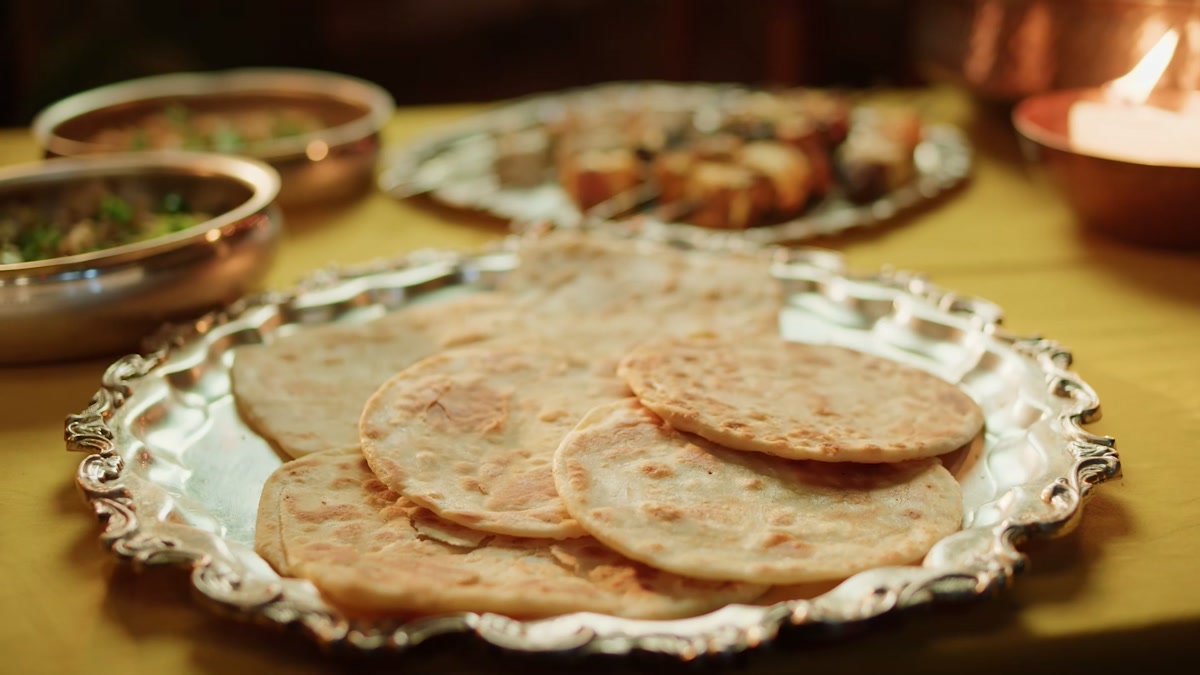
How is a paratha different from naan, and which flour should you use?
Asma Khan opens her Parathas lesson by saying that Indian homes eat parathas, not naan. A paratha is a flatbread cooked on a tawa, a flat griddle pan. She points out that there is no tradition of baked bread in India: the bread is always cooked on fire. She also says it is easy to make for a crowd, because you can fry two or three at the same time. What she teaches is the classic, unfilled paratha she grew up with in Calcutta.
The flour matters. Asma uses maida, an Indian flour, and says to use plain flour if you cannot find it. Her warning is not to use bread flour or strong flour. Her reasoning is that Western wheat has too much gluten, so the dough springs back when you press it. Plain flour gives the soft paratha she wants. The class card calls for white unbleached all-purpose flour, sifted.
What goes into parathas?
The Parathas recipe in the class makes six parathas. The card says it serves 8. Here is the list:
Plain flour: 300 grams, sifted, plus extra for dusting
Ghee: 3 tablespoons, melted (unsalted butter works, and so does oil)
Warm water: 180 milliliters
Sugar: 1/2 teaspoon
Baking powder: 1/2 teaspoon
Salt: 1/2 teaspoon
The gear is an 8-inch tawa or a flat griddle pan, a chakla (the board) with a rolling pin, and a flat tray or big round bowl.
Asma admits the ghee looks like a lot, but it is for six parathas, and she does not want a dry one: the ghee brings flavor and moisture. She says oil is fine if you want the dough vegan. If you use butter, choose unsalted, and if all you have is salted, cut back on the salt. The sugar is there because Bengalis are known for a sweet tooth, and she says a touch of it gives away the Calcutta connection. If ghee is new to you, our guide What Is Ghee? explains what it is and how to make clarified butter at home.
How do you mix, knead and rest the dough?
1. Sift the flour into a bowl, add the baking powder, sugar and salt, and mix. Asma says sifting brings air in and matters.
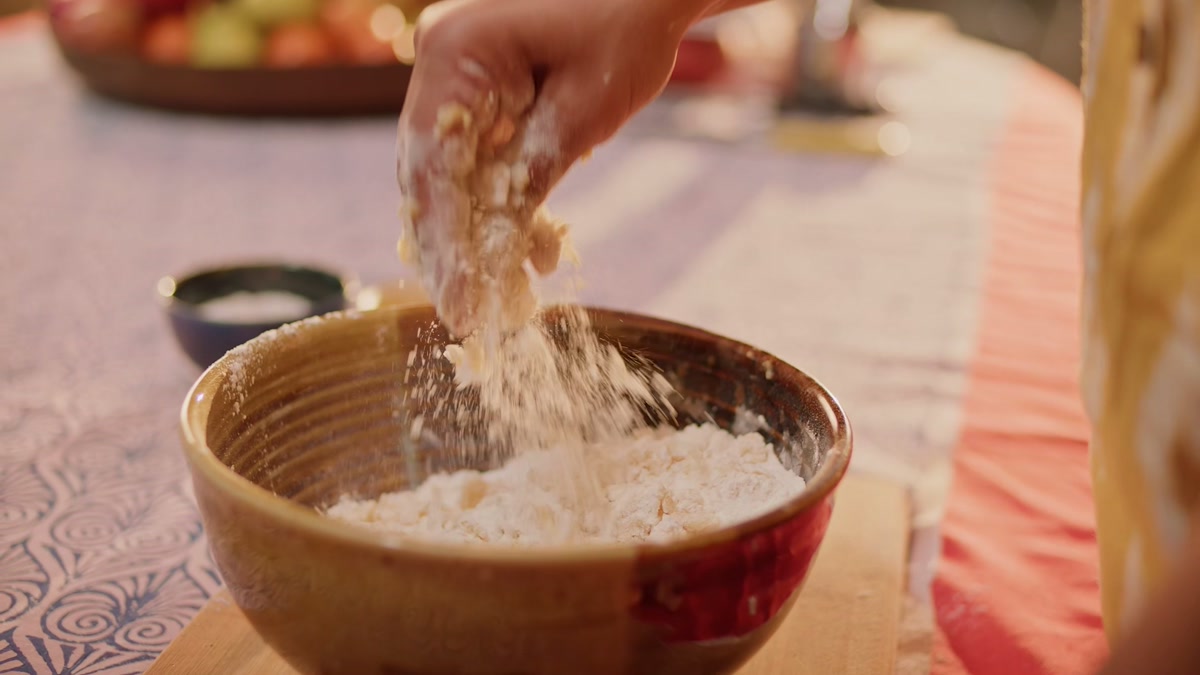
2. Add the 3 tablespoons of ghee and rub it through until the flour looks like breadcrumbs. This is her key step: the fat goes in before the water, so every portion of dough gets some, and you would not know where it went once the water is in. Be thorough but do not overdo it, a few lumps are fine.
3. Make a well in the middle and add the warm water, 180 milliliters. Asma holds some back in the bowl, because too much water makes the dough soggy. The card describes the result as a medium stiff dough.
4. Knead. You can do it in the bowl, but Asma prefers a flat floured surface where you can put some pressure on it. Asma says to knead with your knuckles, and the card says to do it for 10 minutes, until the dough is smooth and silky. Her test: push a finger in and it should stay. If the dough pushes back, you are wrestling with it. If you are new to parathas, she suggests starting with a small amount, so you learn how the dough should feel.
5. Cover with a damp cloth, not a soaking wet one, and keep it away from a radiator or the sun. The card gives a rest of 30 minutes to an hour. In the video, Asma gives it half an hour and says not to be upset when the dough looks the same size afterwards: you feel the difference, and it is softer and easier to roll.
How do you shape parathas: the cone method and the four-corner method?
Asma teaches two methods. The first is the traditional lachay dar paratha, or paratha with folds (laccha means folds). This guide calls it the cone method, after its shape.
1. Roll the rested dough into a tube and divide it into six equal parts. Asma scores the tube without cutting all the way through first, in case the pieces come out uneven. Shape each part into a ball.
2. Grease the board with ghee. Asma says to use whatever the dough was made with, and only a little.
3. Roll a ball into a circle about 7 inches across. She says it does not need to be perfectly round, because it is about to become another shape.
4. Cut it halfway through with a sharp knife.
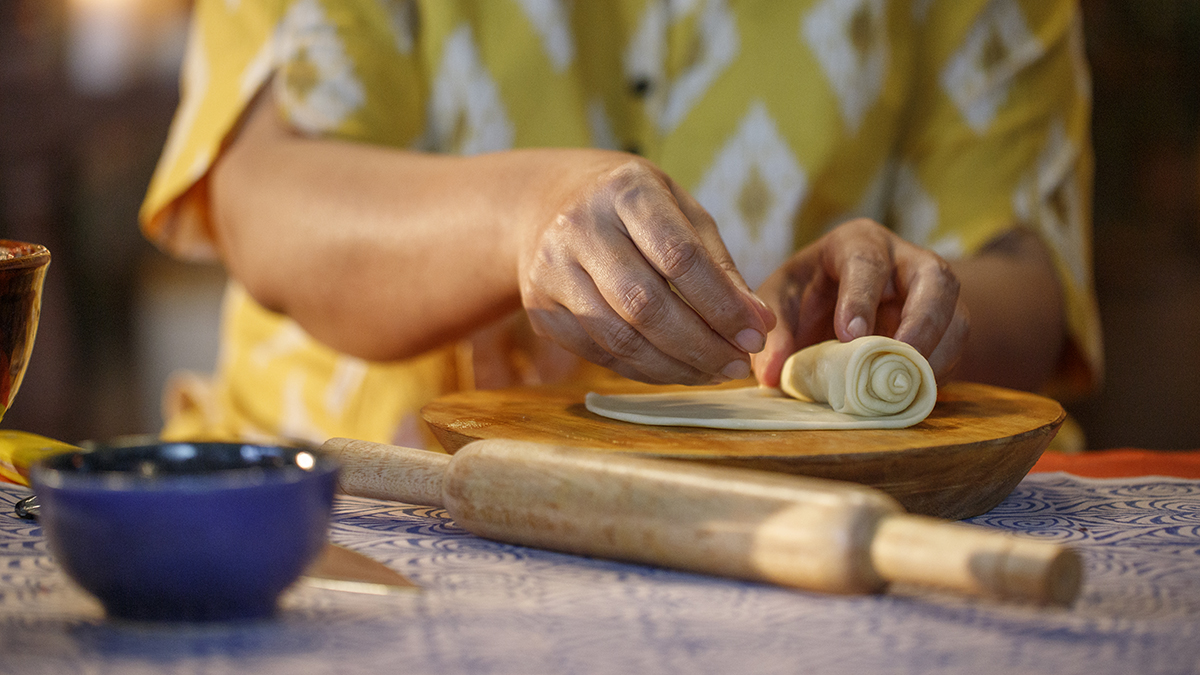
5. Start rolling it up gently, tucking it in as you go. It must be tight: a loose, flappy roll gives you a loose paratha.
6. It now looks like a cone, with a pointy end and a flat end. Stand it with the flat end down and squeeze it into a patty.
7. Cover with a damp cloth and rest it for another 30 minutes.
The second method, in Asma’s family, is called chaar corner, and she says it is the standard Sunday paratha. She likes it for cooking with children: it is a little simpler, not too messy, and she thinks kids should learn to make their own bread. The card calls it the standard four-corner method.
1. Roll a ball of dough into a circle about 7 inches across.
2. Spread a thin layer of ghee over it. Asma compares it to buttering bread: you are not drowning it.
3. Sprinkle plain flour over the ghee and make sure it reaches everywhere, or the dough will be hard to roll later.
4. Fold one flap into the middle, then the opposite flap, then fold the other two ends into the middle as well. You are aiming for a square.
5. Fold it together and press it compact. Asma says it does not always come out square.
6. Cover with a damp cloth and rest it for another 30 minutes.
How do you roll the dough and cook parathas on a tawa?
After the second rest, dust the board lightly with flour. Do not add more ghee now, Asma says, because the paratha is already firm and more ghee would make it too soft. Roll it out and let the rolling pin do the work. Pressure opens up the folds you made, and you want a flat surface with the folds inside. Her mother’s tip is to use two fingers on the pin, because two fingers cannot press hard. Roll to about 6 inches across, a circle for the cone paratha and a rough square for the four-corner one. You can go thinner if you are confident, she says, but there is a risk it tears. The card says to roll out all six and separate them with parchment paper so they do not stick together.
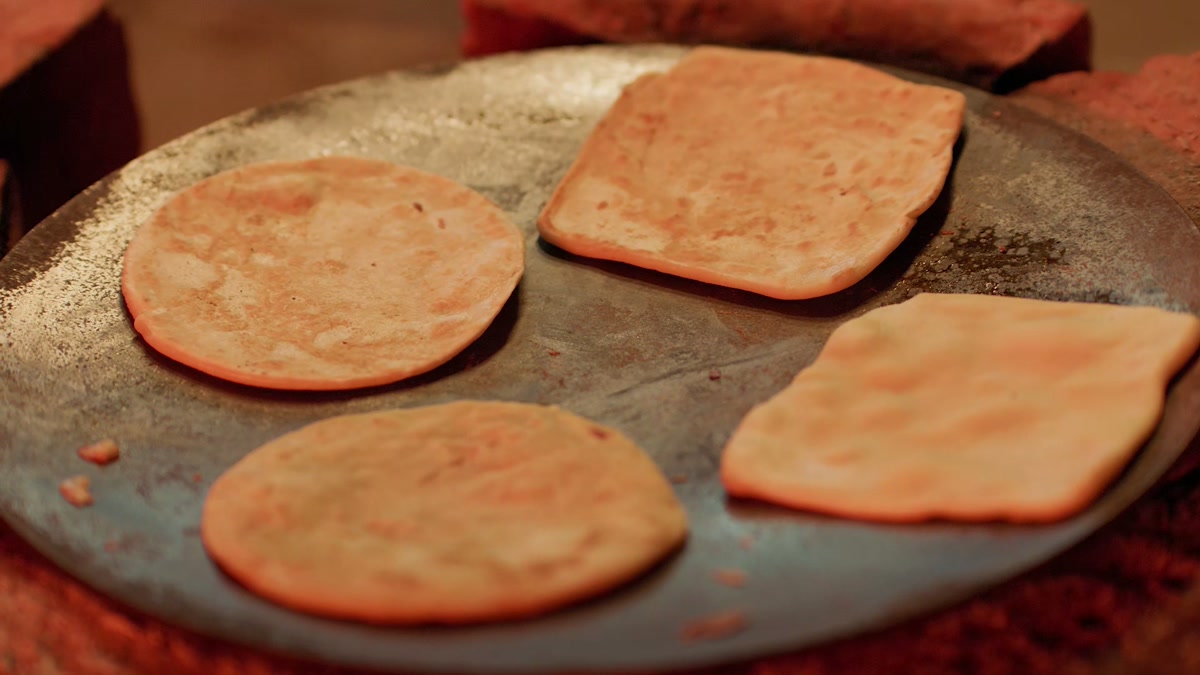
For cooking, Asma uses a cast iron tawa because you want low but diffused heat. A non-stick pan works if the heat is even. If it is not, parts of the paratha burn and parts stay raw. The tawa takes time to heat up.
1. Put the paratha on the hot tawa with ghee in the pan. The card says about 3 minutes on each side, until golden brown and cooked through. The video gives no timings.
2. Squeeze it down gently so the inside cooks. Asma warns that a paratha can look cooked outside and be raw inside.
3. Watch for it to puff up. She says it has to puff, because that shows the heat has gone into all the layers. The card says to pat it down slightly so the steam can escape.
4. Look for a speckled brown surface, not dark brown. Flip it so it does not burn, brush a little ghee on top, and lift the edges so ghee slides underneath.
5. Serve immediately, while it is warm, the card says.
On a big tawa she says she could have five parathas going at once.
What can you add to parathas, and what should you serve with them?
Asma teaches the essential core paratha, and she says that once you know it you can be adventurous: stuff it, or add chopped chillies, garlic or pepper to the dough. The lesson does not name a dish to serve alongside. Our tomato chutney guide suggests tomato chutney as a dip for flatbreads like parathas.
For a first try, make a small batch and compare the two shapes side by side: the layered cone paratha and the simpler four-corner one that kids can help with. Then pick one add-in for the second round. Because several cook at once on a big tawa, Asma says parathas suit gatherings, and if you have a barbecue and friends over she says to let them do the frying, because it is fun. The folds are easiest to follow on video, so watch her hands in the Parathas lesson before your first batch.
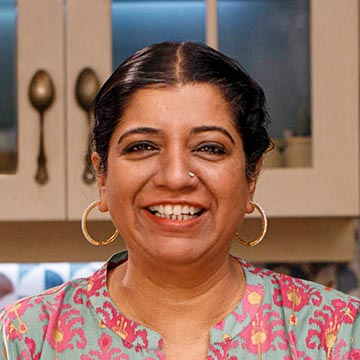
Asma Khan, owner of famed London eatery Darjeeling Express and bestselling cookbook author of “Asma’s Indian Kitchen” teaches her favorite family recipes, inspired by her childhood in Kolkata, India. The chef, restaurateur, and activist is the first UK-based chef to be featured on Netflix’s Emmy-nominated Chef’s Table and, in 2019, was listed number 1 on Business Insider’s ranking of “100 Coolest People in Food and Drink”. Join Asma on a nostalgic culinary journey to explore the smells, flavors, and ingredients of her ancestral Bengali roots.