How to Make Samosas: Dough, Filling and Frying the Asma Khan Way
To make samosas, rest a simple flour dough, cook a spiced filling, fold filled cones and fry them slowly in deep oil. This guide follows Asma Khan's Bengali shingara, stuffed with cauliflower, potato and peanuts, from the dough to the frying pan.

How do you make samosas from scratch?
Asma Khan teaches Bengali samosas, which are called shingara in Bengal, in her Samosas & Chutney lesson. The work comes down to four jobs: a dough that rests, a spiced filling, folding and frying. She makes the winter version, filled with cauliflower, the one she says everyone in Bengal waits for. Her dough is cut into six pieces and each piece makes two samosas, so one batch gives 12. The method below follows the lesson, and watching the folding in the video is the easiest way to learn it.
How do you make samosa dough?
The lesson lists:
White flour (maida): 300 grams, sifted, plus extra for dusting
Groundnut oil (peanut oil): 4 tablespoons
Salt: 1½ teaspoons
Sugar: a pinch (the lesson lists ⅛ teaspoon)
Cold water: 6 tablespoons
1. Sift the flour into a bowl. Asma says this matters: it keeps lumps out and brings in some air.
2. Make a dent in the middle and add the oil, salt and sugar. Mix until the oil has gone in everywhere and the flour looks like breadcrumbs, with no lumps. A little effort here saves a lot of hassle later.
3. Add the cold water slowly, not warm, in the middle of the flour. It is better to start with a dry dough and add water bit by bit than the other way around.
4. Knead gently in the bowl, then tip the dough onto a lightly floured surface and keep kneading slowly. She is gentle on purpose: you do not want to be brutal with it.
5. Put the dough back in the bowl, cover it with a damp cloth that is not dripping wet and leave it for about 30 minutes.
Her reasons are worth copying. She uses white flour because brown flour changes the texture, and she uses groundnut oil because the dough has to be sturdy enough to hold the filling, survive deep frying and take some rough handling. The lesson’s tip says another oil will do. There is no yeast or baking powder in it, so the dough will not puff up while it rests: the cloth is there to let it relax, not to make it grow.
What goes into the filling?
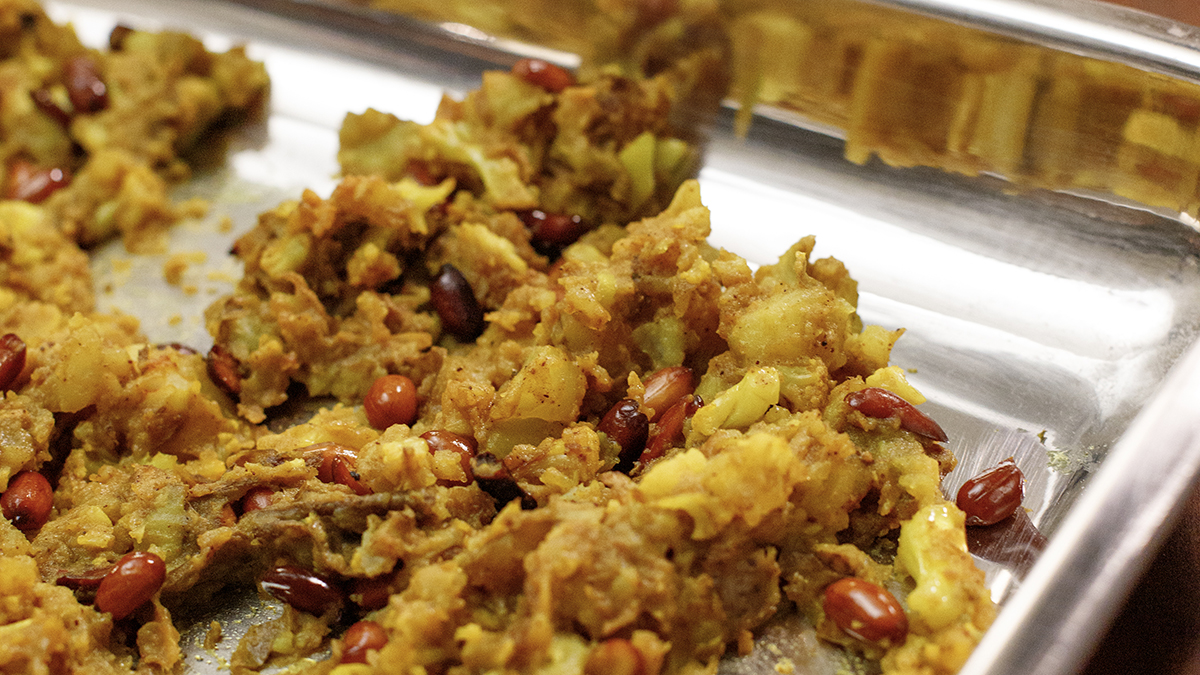
In the lesson the filling is its own sub-recipe, Aloo Gobi Filling, a spiced mash of potato, cauliflower and peanuts that she also serves as a side dish. She makes it while the dough rests. Here is her order of work:
1. Boil the potatoes ahead of time with the skins on, until a fork goes through. The skins keep them dry inside. Cut them roughly, because you will mash them further in the pan.
2. Wash the cauliflower well, with salt, then cut it small. Getting the balance of cauliflower to potato right matters.
3. Fry whole dried red chilies in oil first, without breaking them, and lift them out. They are the only chili in the filling: no chili powder goes in, because Bengali samosas are not very spicy.
4. Fry blanched peanuts separately, stirring all the time, since they cook at a different rate and keep cooking after you take them out. Pick out any burnt ones and fry more than you need.
5. Let the oil cool down if it is smoking, then add ginger until it is fragrant but not colored. This style of Bengali vegetarian cooking uses no garlic or onion.
6. Add the cauliflower and potatoes, just under a teaspoon of turmeric and some salt, and break up the potatoes as you stir. Go easy on the salt, because the dough is salted too.
7. Return the chilies and peanuts, add garam masala and a little water, then cover and cook on low heat until it is done. Spread the filling out to cool before you use it.
The peanuts are traditional in this filling. If anyone at the table has a peanut allergy, Asma says not to use them. The other quantities are on the Aloo Gobi Filling recipe page.
How do you fold and fill a samosa?
Folding is the part to watch in the video, but the steps are simple. Asma starts by dividing the rested dough into six pieces.
1. Roll one piece out thin, but not so thin that it tears when you stuff it.
2. Cut the round in half to make two semicircles. Each half becomes one samosa.
3. Hold a semicircle with the straight side along your forefinger, and wet the whole straight edge with water using your other forefinger.
4. Bring the edges around into a cone and press the seam tight. If it is not tight, it will open.
5. Fill the cone with the cooled filling, using your hands to press it in. Do not overfill it, or it will break.
6. Fold the open top over and seal it shut. That is the very traditional Bengali shape.
If a samosa opens in the oil, do not worry: it happens to the best of cooks. Next time, wet the edge more and squeeze it tighter. The full lesson is in the Samosas & Chutney recipe.
How do you fry samosas so they stay crisp?
Use a deep pan with plenty of oil, because a samosa is tall and has to be completely covered. Asma fries in groundnut oil, or any oil with a very high burning point, since a light oil will burn quickly. The lesson gives no oil temperature and no frying time, so go by her cues:
Test the oil: drop in a small scrap of rolled dough from the side. If it comes up at once, the oil is hot. If it stays down, wait.
Fry in small batches: in her pan, no more than three or four at a time. Too many stick together and drop the oil temperature sharply.
Fry slowly: slide them in, then lower the heat so they do not cook too fast. The hot oil seals each samosa at first, which keeps it from breaking, and then they brown slowly. The filling is already cooked, so you are browning the dough.
Leave them alone: do not poke them.
Drain on a cool surface: take them out one at a time and set them on a cool surface, not on kitchen paper. They keep cooking a little and turn crisp, and on paper they will not.
One more tip from her filling pan applies here too: when oil is smoking, stay away and let it come down to a reasonable temperature.

What do you serve with samosas?
Asma serves hers with tomato chutney, and says you need it: the moist, sweet and fiery chutney against the crunchy samosa is the point. Cauliflower and tomatoes are both winter crops in Bengal, which is why the two go together, and it makes the pair a good fit for a cold-weather party table. Our tomato chutney guide covers the chutney on its own. If you are not in the mood to fold samosas, the filling also works as a side dish, and she says it goes well with roast meat. Once the fold is in your hands, she says you can fill samosas with anything, including meat mince. To cook along with her, learn it from Asma Khan.

Asma Khan, owner of famed London eatery Darjeeling Express and bestselling cookbook author of “Asma’s Indian Kitchen” teaches her favorite family recipes, inspired by her childhood in Kolkata, India. The chef, restaurateur, and activist is the first UK-based chef to be featured on Netflix’s Emmy-nominated Chef’s Table and, in 2019, was listed number 1 on Business Insider’s ranking of “100 Coolest People in Food and Drink”. Join Asma on a nostalgic culinary journey to explore the smells, flavors, and ingredients of her ancestral Bengali roots.