Are Oysters Safe to Eat Raw? A Guide to Buying, Shucking, and Cooking Them
Yes, oysters are safe to eat raw, as long as they're alive right up until you eat them and came from a reputable source that keeps them properly refrigerated. The real risk isn't "raw" itself, it's a dead or mishandled oyster. Here's what actually determines whether an oyster is safe, how to tell a fresh one at the counter, how to shuck it without cutting yourself, and what changes once you cook it instead.
What actually makes an oyster safe to eat raw
An oyster needs to be alive when it’s shucked and eaten. A live oyster’s shell is either tightly closed or closes on its own when you tap it; one that’s open and stays open is dead and should be thrown out. Beyond that, sourcing matters more than almost anything else: buy from a market or supplier with real turnover and proper refrigeration, and keep them cold (ideally on ice) from the moment you get them home until you shuck them. People who are pregnant or immunocompromised are advised to skip raw shellfish entirely, since even a healthy-looking oyster can carry bacteria that a compromised immune system can’t handle.
How to tell if an oyster is actually fresh
A fresh oyster smells like clean ocean water, not fishy or sulfurous. It should feel heavy for its size, which usually means it’s still full of its own liquor, the briny liquid inside the shell that carries most of its flavor. Pass on anything with a cracked or chipped shell, or one that feels unusually light, since that often means it’s already lost its liquor and dried out inside.
Cooking turns the same oyster into something completely different
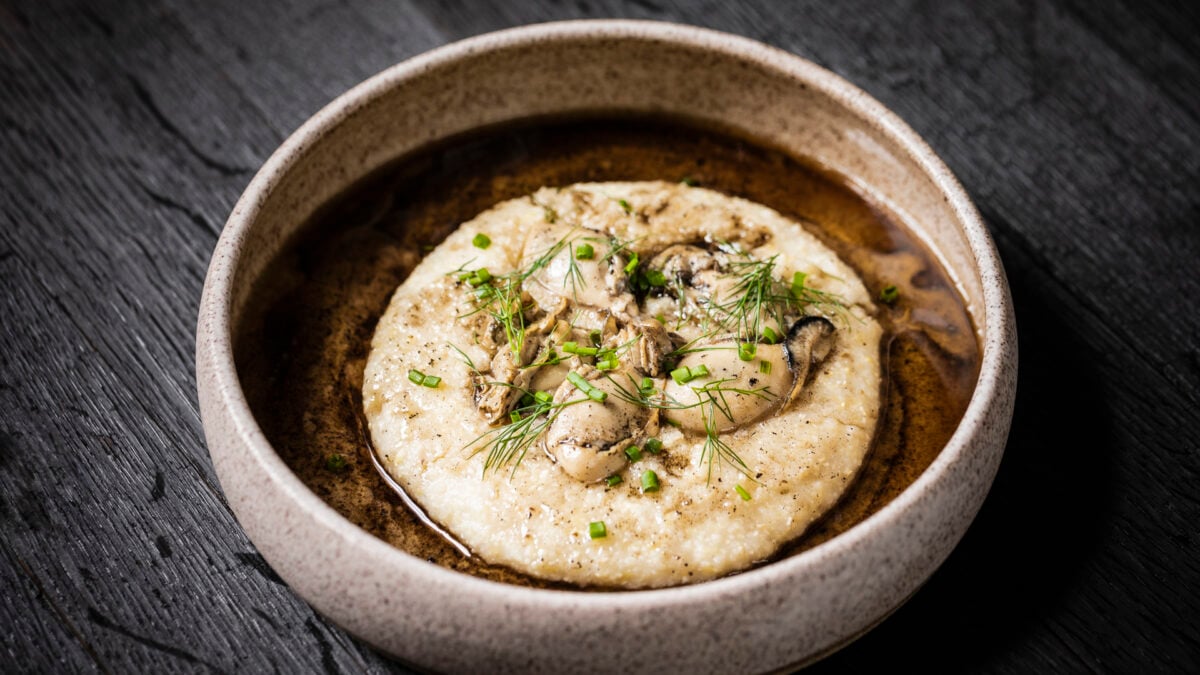
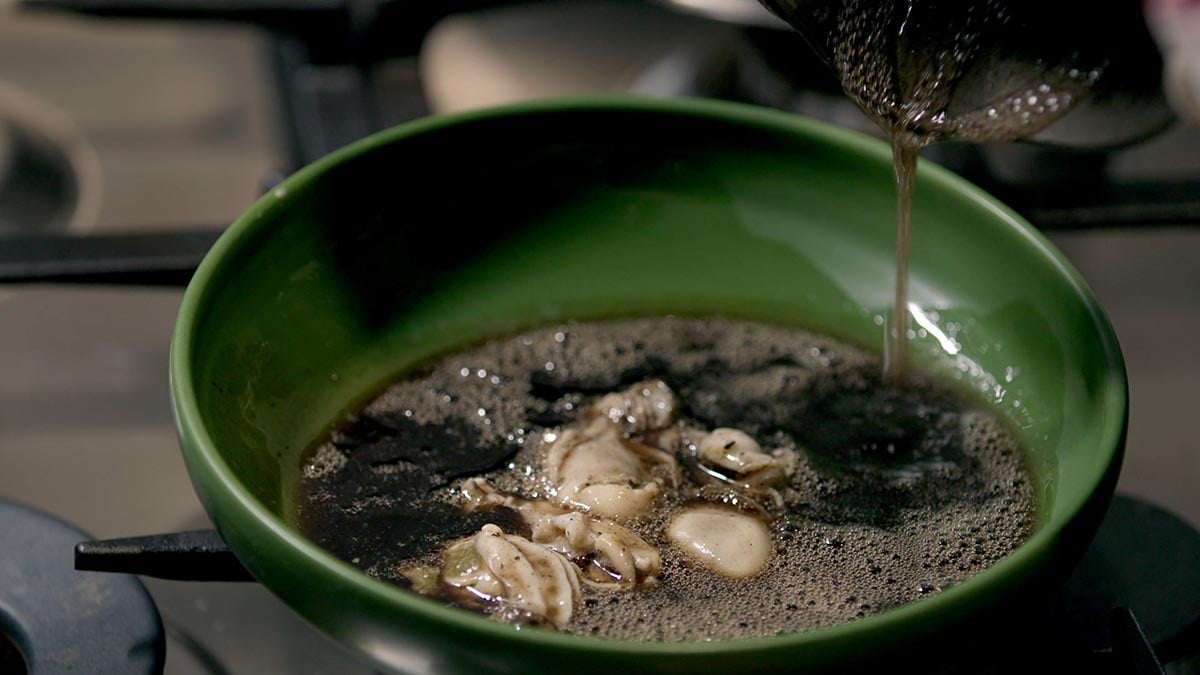
Chef Edward Lee‘s Poached Oysters, the technique behind his Oysters & Grits in Bourbon Brown Butter, show how much a gentle cook changes an oyster: the raw, cold, briny bite turns plush, warm, and almost custardy once it’s poached, closer to a delicate piece of seafood than a shellfish snack. It’s the same animal, just a completely different eating experience, and neither version is the “correct” one.
How to shuck an oyster without cutting yourself
Hold the oyster flat-side up in a thick folded towel, cupped in your non-dominant hand, never bare palm. Find the hinge, the narrow pointed end where the two shells meet, and work the tip of an oyster knife in at a slight downward angle. Twist, don’t force, until you feel the hinge pop, then slide the knife along the inside of the top shell to release the muscle before lifting it off. Most shucking injuries happen from the knife slipping when someone pushes too hard instead of twisting, so let the knife do the work at the hinge rather than trying to pry from the side.
Raw, poached, or fried: what changes each way
Raw is coldest and brinest, served straight in the shell over ice with nothing more than a squeeze of lemon or a mignonette. Poaching, the technique in Edward’s recipe, firms the edges while keeping the center soft, and takes on whatever the poaching liquid is seasoned with. Frying goes furthest from raw, wrapping the oyster in a crisp cornmeal or breadcrumb crust that trades almost all of that briny liquor-forward flavor for crunch and richness. None of these are more “correct” than the others; they’re genuinely different dishes built from the same ingredient.
Storing oysters before you're ready to eat them
Unshucked oysters keep for about a week in the fridge, cupped-side down, covered with a damp towel rather than sealed in plastic or a closed container, since they need to breathe. Never store them submerged in fresh water or directly on ice that’s melting into standing water, either can kill them early. Check any oyster’s shell right before you shuck it, not just when you bought it, since a live oyster can still die during that week in the fridge.

James Beard Award winning writer and best-selling cookbook author Edward Lee takes viewers from the farm to his restaurants and home in Louisville, Kentucky and teaches lessons on his beloved dishes including Fried Chicken with Gochujang Sauce, Oysters and Grits, Cabbage-Steamed Fish, and more.