How to Make Curry Powder: A Jamaican-Style Blend, and How It Differs From Garam Masala
To make curry powder, toast whole spices in a dry pan until fragrant, grind them fine, then stir in ground turmeric. This is the Jamaican-style version from Kwame Onwuachi's class, where anise seed gives the Caribbean version its signature flavor. Below: the spice list, the steps, and how it differs from garam masala.
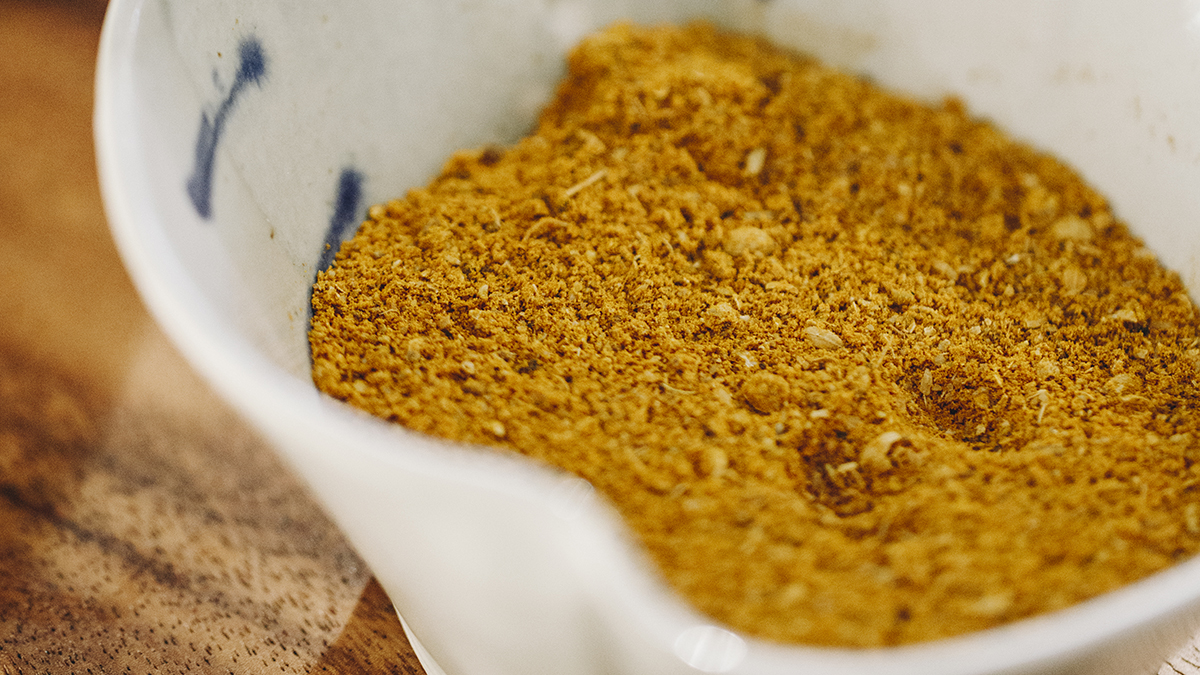
What makes Jamaican curry powder different?
The anise seed. In his pantry lesson, Kwame Onwuachi says anise seed is what gives Caribbean curry powder its signature flavor, and turmeric gives it its bright yellow color. The blend has a history behind it: East Indians are the largest ethnic minority in Jamaica, and they arrived as indentured servants and brought many of their spices with them. That is why so much Jamaican food has similarities to Indian cooking, from curry goat to curry chickpeas. Kwame uses this powder on his goat and on his curry crab.
What spices go into Kwame Onwuachi's curry powder?
Nine spices, most of them whole. The lesson lists:
Coriander seeds: 8 tablespoons, whole
Turmeric: 5 tablespoons, ground
Cumin: 4 tablespoons, whole
Anise seeds: 2 tablespoons, whole
Allspice: 1½ tablespoons, whole
Yellow mustard seeds: ¾ tablespoon
Fenugreek seeds: ½ tablespoon, whole
Cinnamon: ¼ of a stick
Clove: 1 teaspoon, marked optional in the lesson’s list
You also need a dry sauté pan, a spoon, a bowl, and a blender or spice grinder. The tablespoons add up to just under 22, plus the cinnamon and clove, so this is a big batch for a home kitchen, and the lesson gives no yield. If you want less, cut every amount in half.
How do you make curry powder from whole spices?
This follows the Curry Powder recipe in the Kwame’s Pantry lesson, where he also makes his all-purpose seasoning, jerk paste and marinade.
1. Measure out the spices and set the turmeric aside. Everything else goes into the pan.
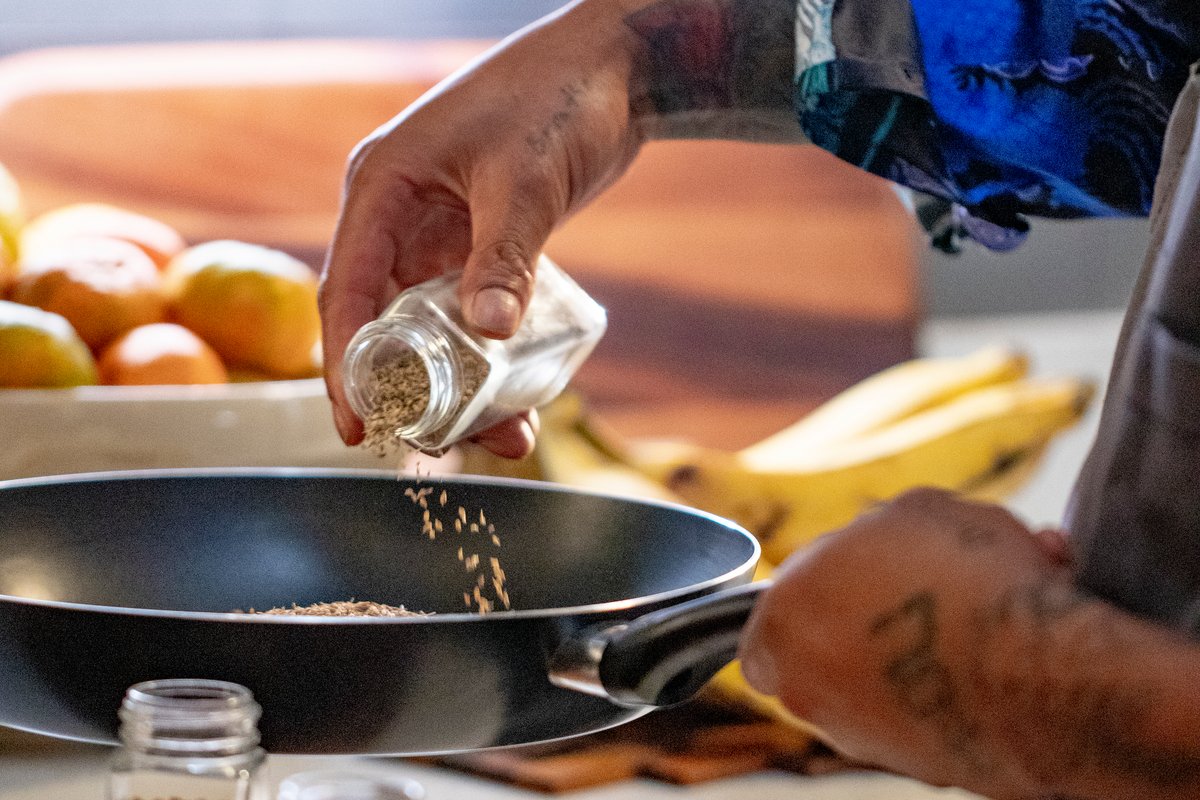
2. Add all the spices except the turmeric to a dry sauté pan. No oil.
3. Toast over medium heat, stirring and tossing constantly, until the spices are super aromatic.
4. Turn off the heat and move the spices to a bowl to cool.
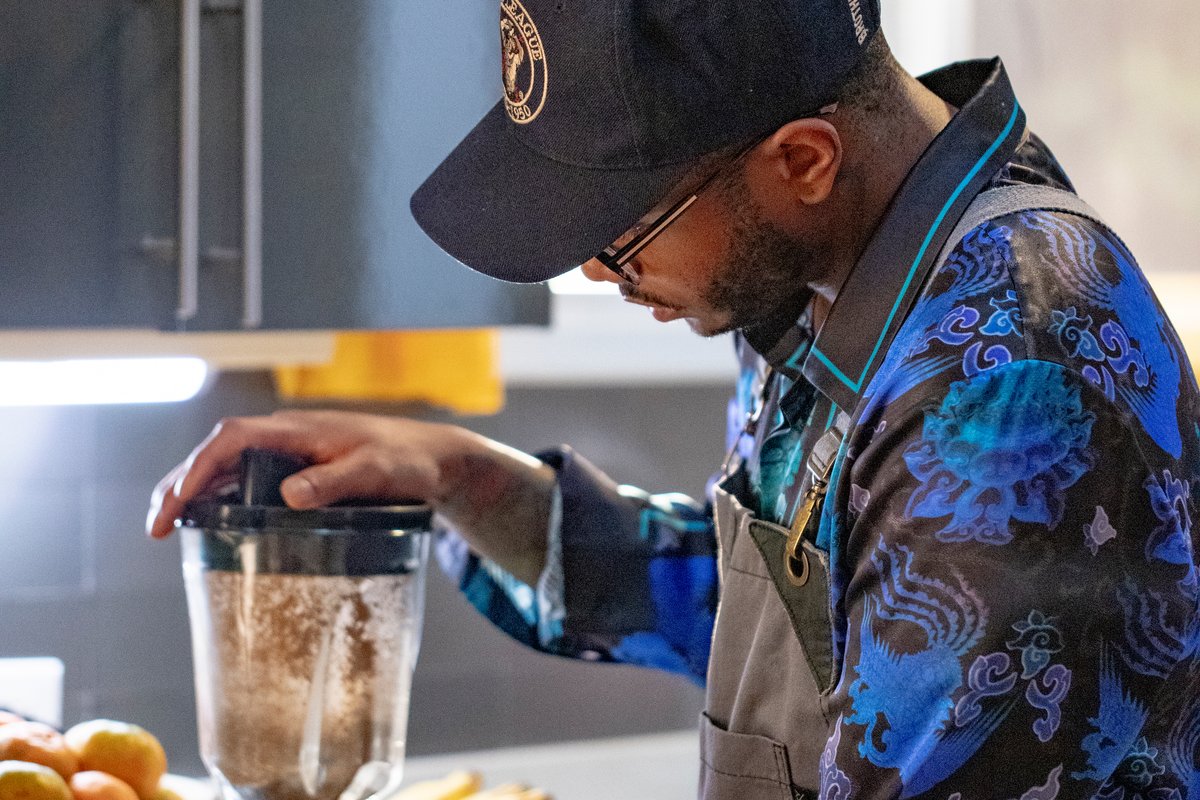
5. Transfer them to a grinder or blender and grind until finely ground, like a powder.
6. Pour the ground spices into a bowl, add the turmeric and stir to mix.
The lesson gives no toasting time, so go by smell and by the constant stirring, not the clock.
Why toast the spices, and how fine should you grind them?
Kwame toasts the whole spices first because, he says, it releases much more flavor and makes them fragrant. He does not go by color. He says cooking is about using all your senses, and he takes the pan off the flame once the spices smell super fragrant. For the grind, the lesson’s tip is to blitz until the spices are finely ground, almost a powder. His own batch came out a little coarse and, he says, still tasted really great, so a slightly rough grind is no reason to start over. The turmeric goes in last, stirred into the ground spices after grinding, not into the pan.
Is curry powder the same as garam masala?
No, they are two different blends. Kwame’s curry powder is built on coriander, turmeric and cumin, with anise, allspice, mustard seed, fenugreek, cinnamon and clove, and the turmeric makes it yellow. Asma Khan’s Garam Masala, from her Saffron Chicken Korma lesson, is four whole spices: Indian bay leaves, cassia bark, green cardamom pods and clove. There is no turmeric in it, and she adds it to the hot onion oil before the chicken goes in. Serious Eats’ garam masala recipe is also toasted whole spices with no turmeric, and its history of curry describes curry powder as a ready-made, standardized mix that developed in Britain to reproduce Indian flavors and later took its own forms in Caribbean and other kitchens. Recipes for both vary by cook and by region, so use the spice list in each lesson as your guide.

What can you cook with homemade curry powder?
Start where Kwame does: on goat and on crab. The supplies lists in his Curried Goat with GBD Potatoes lesson include curry powder, and so do those in Jamaican Patties with Coco Bread, so a jar of the blend gets used all through his class. Next, make the other pantry staples from the same lesson, since the all-purpose seasoning and the jerk paste are built the same way, from a few spices and a blender. To cook the full menu alongside the chef, learn it from Kwame Onwuachi.

Kwame Onwuachi started peeling shrimp and stirring roux at 5 years old in his mother’s catering kitchen in the Bronx. The James Beard Award-winning chef has received many accolades since then, including FOOD & WINE’S Best New Chef, Esquire Magazine’s 2019 Chef of the Year, 30 Under 30 honoree by both Forbes and Zagat, and has appeared on Bravo’s Top Chef as both a contestant and judge. In his class, Onwuachi embraces the richness of Afro-Caribbean culture and cuisine, and teaches home cooks how to cook his favorite Jamaican recipes.