Get Ready to Wow Your Guests with the Best Hummus Recipe Ever
Learn how to make the best hummus recipe, along with tips and tricks that make it ultra creamy. The master of Middle Eastern cuisine, chef Erez Komarovsky, teaches us how to perfect his warm hummus masabacha. Serve it with a generous drizzle of olive oil and you'll instantly see that this delicious homemade hummus is unlike any store-bought version.
Enjoy it as part of a complete mezze spread with schug (or zhug, a spicy Yeminite condiment), tatbileh (lemon, garlic, chili relish), falafel, and warm pita to scoop up all that creamy garbanzo bean goodness.
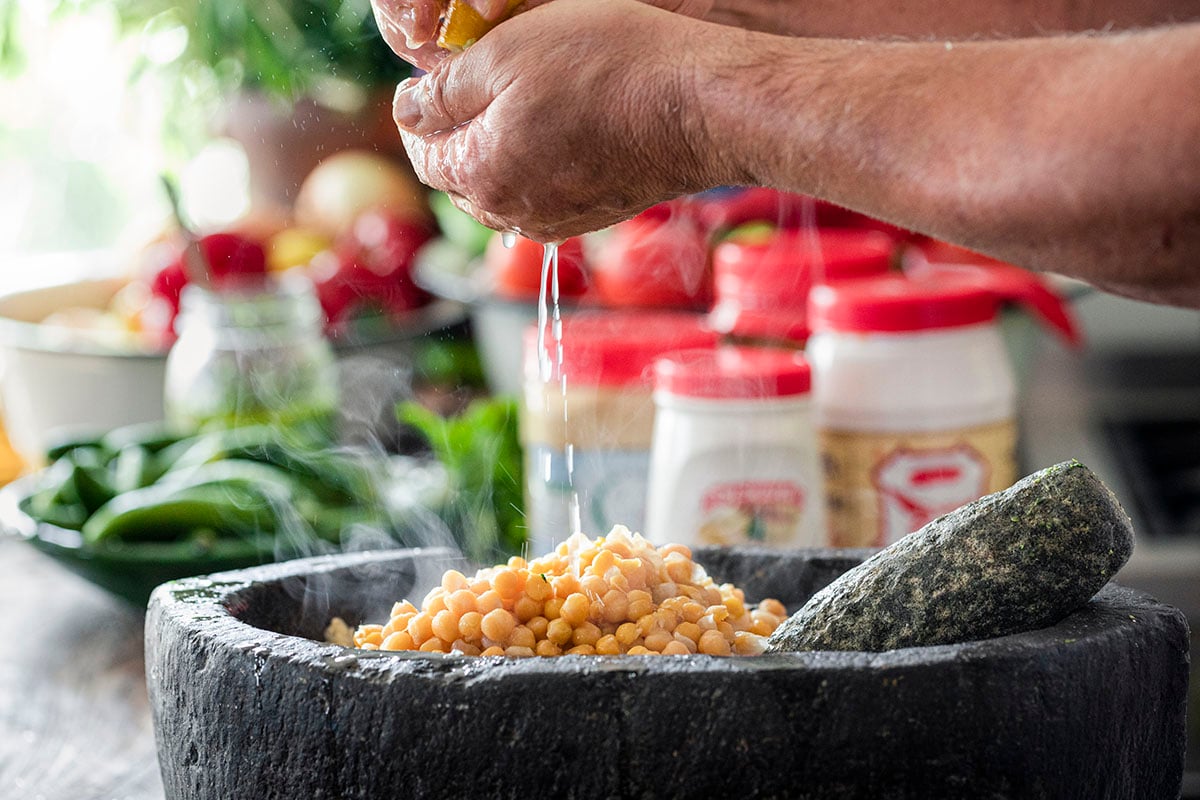
What is Hummus?
Hummus consists of chickpeas, garlic, lemon juice, and Tahini (sesame seed paste) which are salt-blended or mashed into a smooth purée. Sometimes chili can be added for some heat. Hummus is almost always finished with a generous drizzle of olive oil, then served as a dip or spread with Pita Bread.
Chickpeas vs. Garbanzo Beans
Is it chickpeas or garbanzo beans? There is actually no difference between the two. Garbanzo is simply the Spanish name for chickpea.
When chickpeas are sold as garbanzo beans, however, this generally refers to the larger and more robust chickpea.
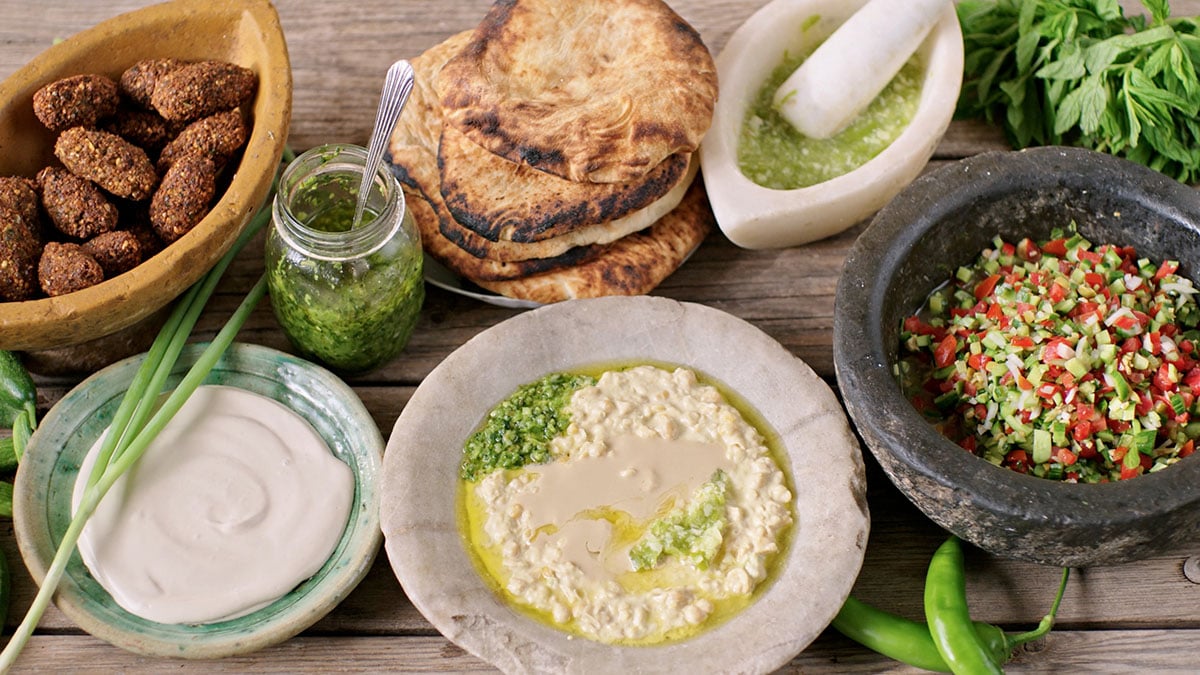
Best Chickpeas For Hummus
Chef Erez Komarovsky recommends Bulgarian chickpeas for his hummus masabacha. These are perfect because they are smaller in size and will ultimately make the hummus sweeter, he says. Although chickpeas (garbanzo beans) are readily available in most supermarkets, Erez recommends seeking out Bulgarian chickpeas – they are sold in specialty stores in the United States – for making the best flavored and textured masabacha hummus.
Masabacha Hummus vs Traditional Hummus
Hummus Masabacha is widely consumed in the Middle East. Like with a more standard hummus recipe, masabacha is also commonly eaten as a dip for Pita Bread. Typically, what most differentiates masabacha from a more traditional hummus is that masabacha requires the use of whole chickpeas whereas a more traditional hummus is made with chickpeas that are completely crushed. In masabacha, whole chickpeas will be visible in the creamy tahini sauce; with masabacha, you do not blend all of your chickpeas into the tahini sauce as you would with your regular hummus.
According to some masabacha recipes, you begin with a pile of chickpeas (seasoned), then add tahini and parsley on top of them. Another way of making masabacha is by mixing the tahini sauce and chickpeas together.
A masabacha hummus recipe can produce a dip that is mild or spicy, thin or thick, cool or warm. Erez makes his masabacha warm. It’s made of warm Bulgarian chickpeas, which are small and sweet compared to other varieties of chickpeas, and tahini. The ultimate result is a warm, sweet dish.
Usual seasonings for masabacha include parsley, ground cumin, and lemon. Some people who make masabacha add an egg to it and some even add roasted cherry tomatoes.
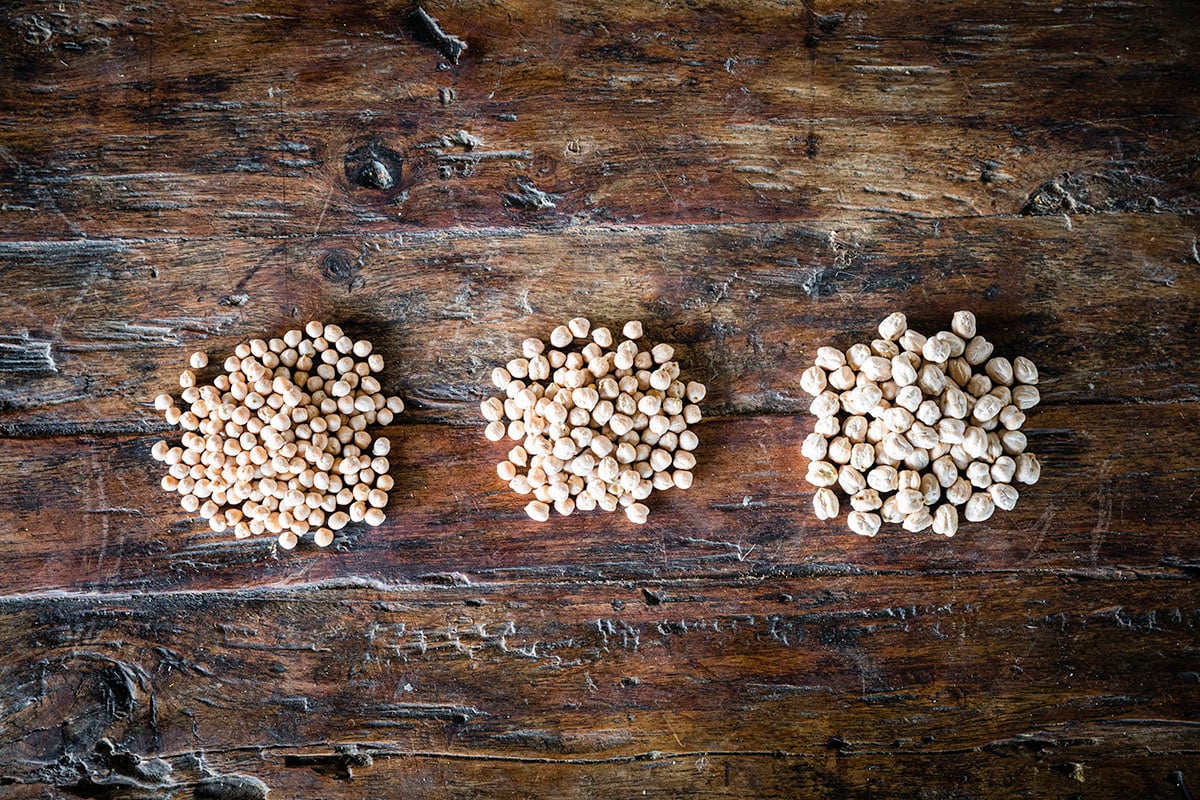
How to Cook Dried Chickpeas
- First, the dried beans need to be rinsed, then soaked in water for 24 hours on the kitchen counter or for 48 hours in the refrigerator. Then, you must drain and rinse the dried chickpeas again and add it to a large pot covered with 2 inches (about 5 cm) of water.
- Add a teaspoon of baking soda and bring to a boil over high heat, then reduce to medium-low for 2½ hours, skimming the foam off the top as necessary. To make this recipe, Erez recommends that you cook chickpeas along with baking soda, which softens the chickpeas’ skins. This is a traditional recipe for cooked chickpeas on a stovetop method.
Is Hummus Healthy?
Hummus, like other healthy chickpea recipes, is packed with a multitude of vitamins, minerals, fibers, and plant-based proteins, making hummus a nutritious dip, spread or snack to be enjoyed as part of a well-balanced diet.
Fun Fact: According to some traditions, it is customary for a mother-in-law to assign the tedious task of removing each and every outer coat of skin from chickpeas to their son’s wife. Taking off the chickpeas’ skin is a common technique used to make hummus extra smooth. But Erez notes that because chickpea skin is simply fiber, it’s best to leave the skins intact for the highest healthy nutritional benefit as well as for texture.
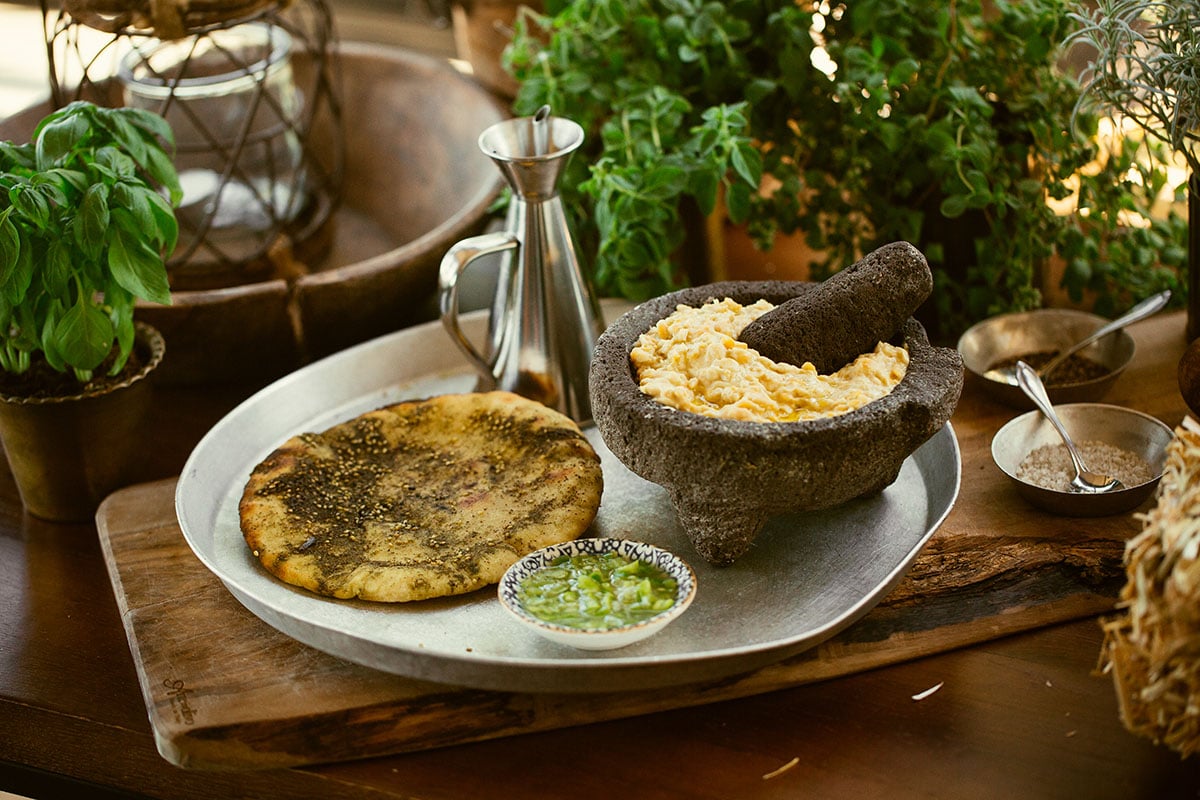
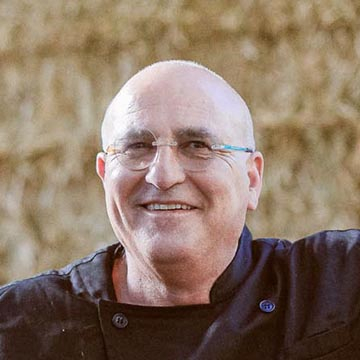
Renowned chef, baker, and cookbook author celebrated as the “Godfather” of modern Israeli cuisine, Erez Komarovsky takes viewers on a journey to discover the roots of his Middle Eastern cuisine. Starting from the bustling markets of Tel Aviv, Israel to his blissful home in the North Galilee, Erez teaches viewers how to bake his “flowering” Challah and Pita breads, plus his signature dishes including Lamb Kebabs, Hummus Mezze with Falafel, Harissa Chicken, Fish Crudo and more.